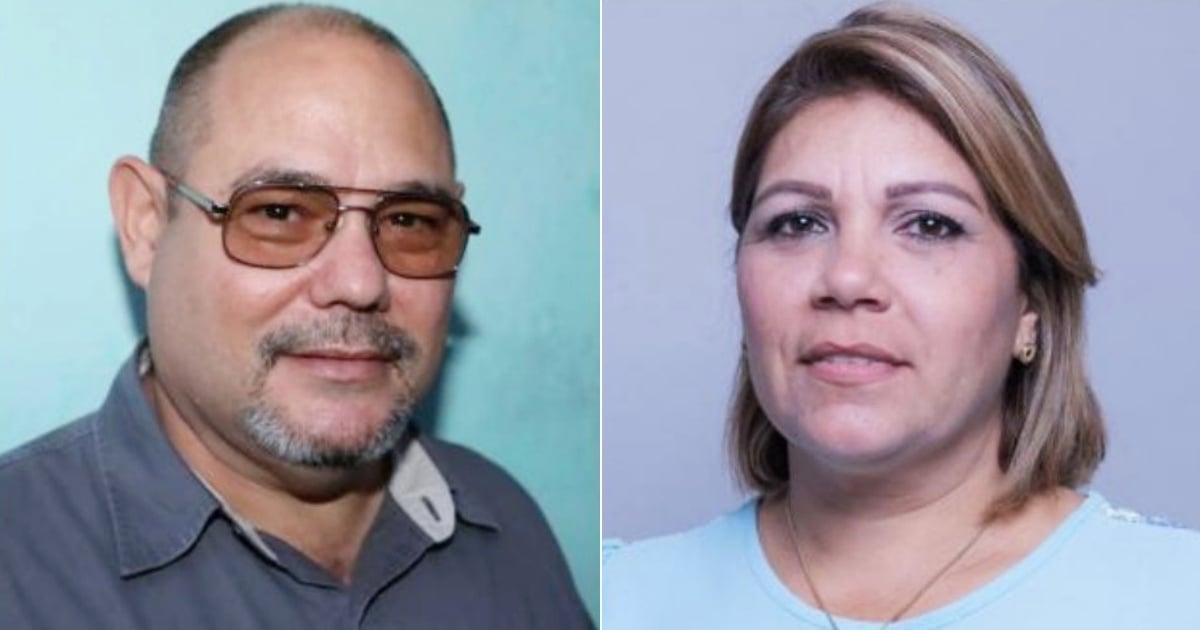
Instead of urgently addressing Cuba's dire economic situation, the regime has chosen to bolster its ideological machinery. Recent announcements of appointments within the Communist Party of Cuba's (PCC) Central Committee highlight a priority not on economic recovery but on strengthening political and ideological activities. This week, the Politburo approved the appointment of Yuniasky Crespo Baquero as the new head of the PCC's Ideological Department, a key figure in the regime's propaganda strategy.
Crespo steps into this role from her previous position leading the Department of Social Sector Attention. According to the official publication Granma, her appointment is aimed at "reinforcing" the ideological component during the national crisis.
A Career Shaped by Political Control
Yuniasky Crespo, 48, holds a degree in Education specializing in Marxism-Leninism and History. Her career has been deeply rooted in structures of ideological control, from the FEU and the UJC, where she served as first secretary, to her rise within the PCC. As a member of the National Assembly, she held posts in Havana's Executive Bureau and was the first secretary of the Party in Mayabeque for over three years until her dismissal in May this year. Crespo is a familiar figure, embodying the typical profile of a cadre shaped within the framework of political loyalty and discipline, disconnected from any transformative proposals outside the state socialism dogma.
Reinforcing Ideology Over Solutions
The vacancy left by Crespo in the Department of Social Sector Attention will be filled by Rolando Ernesto Yero Travieso, a 55-year-old internist with a political background in the UJC. He has also navigated through Party structures, particularly in roles linked to controlling sensitive sectors like health and science, previously serving as the department's deputy chief. These appointments underline that the regime's priority is not economic management or responding to the growing precariousness but reaffirming ideological control as a political lifeline against deterioration.
Marrero's Clear Message: Ideology Above Economy
The backdrop of these moves is explicit. In December 2024, during a National Assembly session, Prime Minister Manuel Marrero made it clear that political-ideological work would be the regime's priority in 2025, overshadowing the economy, production, or social investment. Marrero stated, as reported by Canal Caribe, that the country's top priority would be "strengthening political-ideological work across all structures and levels," deeming it "essential" for national cohesion in a nation he claims is "attacked and blockaded."
This narrative aims to justify the absence of structural reforms by citing "external aggression" while ignoring the urgent demands of citizens facing rampant inflation, power outages, food shortages, and unprecedented mass emigration.
A Party Entrenched in Dogma
With these appointments, the PCC's Central Committee sends a clear signal: there will be no real changes or openness. The focus is on reinforcing doctrinal apparatus, shielding discourse, and containing social unrest through increased propaganda and control, rather than implementing practical solutions or changes to the failed model that has led the country to collapse.
Instead of investing in technocrats capable of addressing economic challenges or competent managers in key areas, the regime rewards ideological loyalty, as if indoctrination were sufficient to fill empty refrigerators or stabilize the currency. These new appointments merely confirm the regime's unwillingness to take real responsibility for the crisis it has created.
As millions of Cubans leave the country and countless others survive under extreme conditions, the Party reorganizes to continue perpetuating its own dogma. The priority is not Cuba; it is the Party. And for the Party, ideology remains more important than food, health, or the future.
Understanding Cuba's Political Landscape
Who is Yuniasky Crespo Baquero?
Yuniasky Crespo Baquero is a Cuban political figure recently appointed as the head of the Ideological Department of the Communist Party of Cuba. Her career has been deeply embedded in the country's structures of ideological control.
What is the significance of the recent appointments in the PCC?
The recent appointments in the PCC signify the regime's focus on bolstering ideological control over addressing the economic crisis, highlighting its priority on political-ideological activities.