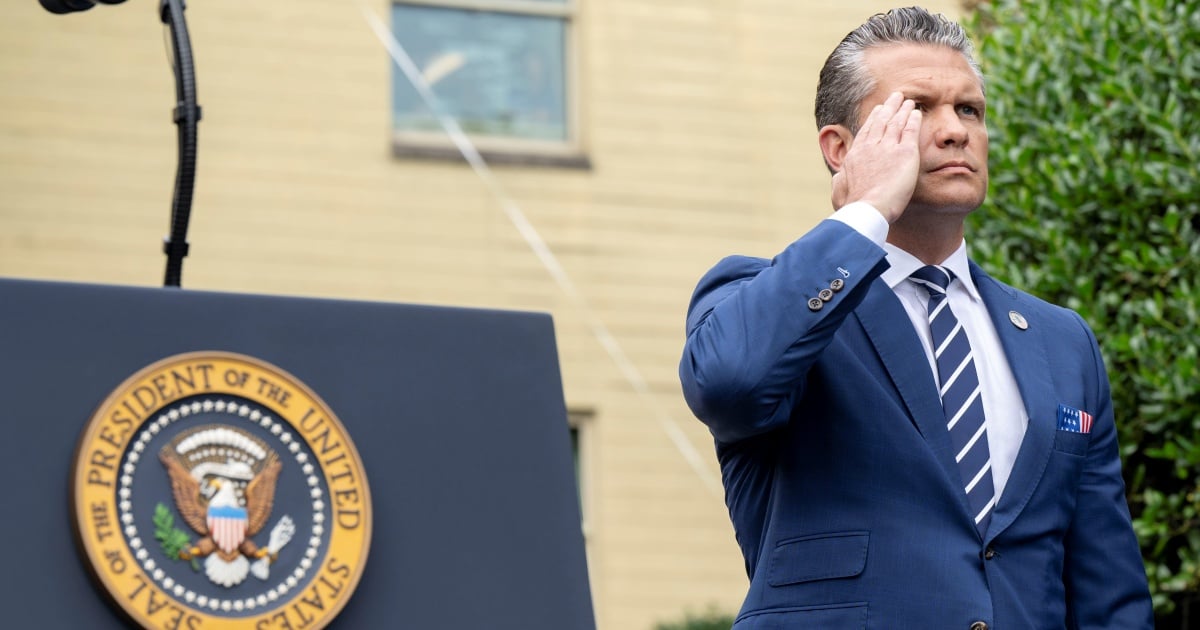
The U.S. government has announced an extraordinary assembly of hundreds of its top military leaders at the Quantico Marine Base in Virginia, scheduled for next Tuesday. This meeting, commanded by Secretary of War Pete Hegseth, will occur under an intense veil of secrecy, stirring unease both within and outside the U.S. military framework.
The Washington Post disclosed that the call for this meeting was issued early this week without any explanations to the officers, leading to rampant speculation in military and political circles. This rare directive includes all brigadier generals and above—or their naval equivalents—stationed both domestically and internationally, along with their senior advisors. However, officers in staff positions are not part of this assembly.
"People are very worried. They have no clue what it means," an anonymous source with direct knowledge of the order told the Post.
A Groundbreaking Gathering
Tuesday's meeting not only disrupts the traditional protocols of what was previously known as the Department of Defense, now the Department of War, but is also considered by analysts to be an unprecedented maneuver in recent U.S. history. Although the Secretary of Defense typically holds regular meetings with high-ranking officers, never before has such a diverse and extensive group of commanders been summoned in person to a single location.
This directive affects over 800 active-duty generals and admirals, though it is understood not all will physically travel to Quantico. Among these leaders are figures with strategic responsibilities in conflict or geopolitical tension zones like the Middle East, Asia-Pacific, Eastern Europe, and the Caribbean.
Pentagon spokesperson Sean Parnell confirmed the meeting's existence, adding only that Hegseth will address his senior military leaders at the beginning of the next week, without providing further details. Even the attendees remain in the dark about the agenda.
A Climate of Reform and Tension
This extraordinary gathering takes place amidst growing political and military uncertainty for the United States. On one hand, the nation faces a potential federal government shutdown, looming on October 1 if Congress fails to pass a provisional budget. On the other, tensions are escalating with Venezuela, accused by Washington of orchestrating a drug trafficking network into U.S. territory.
Recently, the U.S. bombed four vessels in the Caribbean, three allegedly Venezuelan, while new Russian drone incursions near Alaska indicate heightened activity in the Arctic theater. Concurrently, the Trump administration's control over the Pentagon has resulted in a drastic restructuring of the military command chain.
Pete Hegseth, a war veteran and former conservative media analyst, has spearheaded this transformation process. His controversial decisions include:
- Renaming the Department of Defense to the "Department of War" as a symbolic reaffirmation of the new doctrine.
- Cutting 20% of high-ranking officers, including four-star generals.
- Dismissal of multiple military leaders without cause, some with critical responsibilities in intelligence and special forces.
- Imposing media restrictions, including requiring non-disclosure agreements for Pentagon access, thus limiting independent coverage.
According to a source consulted by The Wall Street Journal, only a handful within the government are aware of the meeting's true purpose. "You don't just do this without reason," warned a military official under anonymity. "They're gathering top combat commanders without telling them why."
Internal Criticisms and Strategic Concerns
This move has sparked criticism within the military establishment itself. Active and retired officers have voiced their bewilderment over the decision to gather so many operational leaders in one geographic spot simultaneously, especially when many are in charge of sensitive operations. Such gatherings, they argue, pose not only logistical but also strategic risks, potentially leaving certain areas vulnerable or facilitating targeted attacks in case of leaks.
There is also concern about the exclusion of staff members, suggesting a focus more tactical or operational than administrative or political. "The decision follows the Trump administration's dismissal of numerous high-ranking leaders this year," notes The Washington Post, referring to internal purges shaking the Pentagon.
The fact that this meeting is shrouded in such secrecy, amidst radical reforms, has fueled all sorts of theories. Possibilities range from an international intervention announcement to a total restructuring of regional commands or even an internal show of strength ahead of significant political decisions.
Secrecy as a Norm
Since Donald Trump returned to the presidency, the Pentagon's operational logic has shifted towards a more closed, hierarchical, and nationalist model. The media has been increasingly sidelined, and personnel changes occur without public communication. This is compounded by the use of the term "Department of War," which seeks to project a more aggressive image, in contrast to the traditional "defensive" approach of the Department of Defense.
This shift is particularly noticeable in decisions affecting gender policy, civilian oversight of the Armed Forces, and relations with NATO allies. In many cases, the government has prioritized personal loyalty over commanders' professional trajectory.
All these factors make Tuesday's meeting not just a logistical assembly, but also a barometer of the military and ideological direction of the United States under its current administration.
Key Questions About the Emergency Military Meeting
Why is the U.S. Secretary of War convening an emergency meeting?
The meeting has been called by Secretary of War Pete Hegseth under a veil of secrecy, without public explanation, leading to widespread speculation in military and political circles.
What is the significance of renaming the Department of Defense to Department of War?
Renaming it to the Department of War is seen as a symbolic reaffirmation of a new, more aggressive military doctrine under the Trump administration.
How are military leaders reacting to the emergency meeting?
Military leaders, both active and retired, have expressed concern and confusion over the decision to assemble so many operational leaders simultaneously, citing logistical and strategic risks.