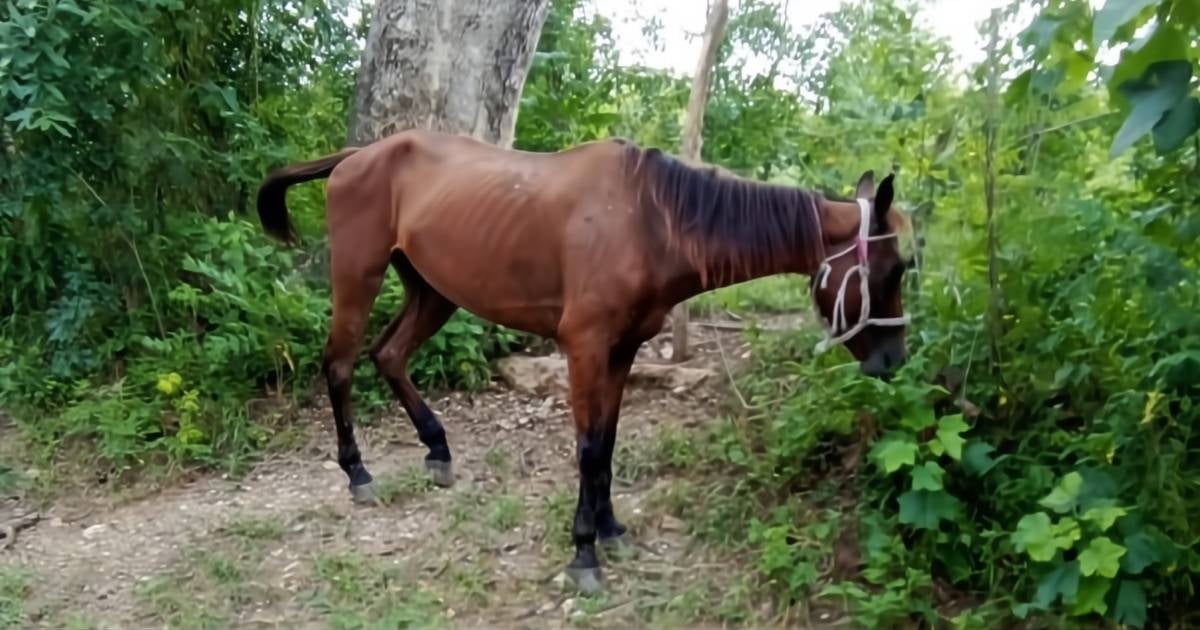
In a shocking incident of livestock theft, the province of Sancti Spíritus was recently rattled when a prisoner on temporary leave took the opportunity to steal a horse and slaughter it at his residence on Bayamo Street. According to a Facebook post by "Mi lealtad acrisolada," associated with the MININT, the individual, identified as Anniel, was caught red-handed thanks to the swift actions of neighbors and authorities, preventing him from selling or using the horse's meat.
The perpetrator is now facing legal repercussions for the theft and illegal slaughter of livestock, a crime that carries stiff penalties in Cuba.
An Out-of-Control Situation: Livestock Theft in Cuba
Back in June, Cuban farmers raised alarms about the rampant theft and slaughter of livestock, which continues to severely impact the agricultural economy and food security on the island. Despite the regime's proclaimed efforts, farmers and ranchers reported that the stealing of cattle and subsequent illegal meat sales remain almost unpunished, particularly in high-cattle-activity provinces such as Camagüey, Sancti Spíritus, Villa Clara, and Ciego de Ávila, as cited by the state-run media outlet Cubadebate.
These comments emerged during the Third National Exercise focused on crime prevention, corruption, drug issues, and illegal activities. According to unofficial data, hundreds of illegal slaughter cases were reported in just the first half of 2025.
Government Measures and Their Impact
Although the government has outlined an action plan that includes neighborhood patrols and the reactivation of CDR surveillance teams and rural patrols, consulted ranchers warn that these measures are ineffective without resolving the shortages of resources, livestock feed, fuel, and particularly without exemplary punishment for organized networks involved in illegal slaughter and clandestine sales.
In fact, in April, a 71-year-old Cuban farmer made headlines when he decided to sell his livestock out of fear of theft or illegal slaughter. In an interview with EFE, the farmer, Julio, who lives in Vegas between Cárdenas and Santa Marta, Matanzas, shared his distress. "They have killed a lot of cattle from many farmers. They started killing mine (cows) every two or three days, then every 15 days. They killed up to eight of mine! And I told my brother: 'Look, I can't go on. We have to sell everything because at this rate, we'll be left with nothing, and we're already old,'" he explained.
FAQs on Livestock Theft in Cuba
What are the penalties for livestock theft in Cuba?
In Cuba, the theft and illegal slaughter of livestock can result in severe legal penalties, including imprisonment and fines, as it significantly impacts the agricultural sector and food security.
How are Cuban authorities addressing livestock theft?
Cuban authorities have implemented action plans involving neighborhood patrols and surveillance teams to combat livestock theft. However, farmers argue these measures are insufficient without addressing resource shortages and punishing organized crime networks effectively.