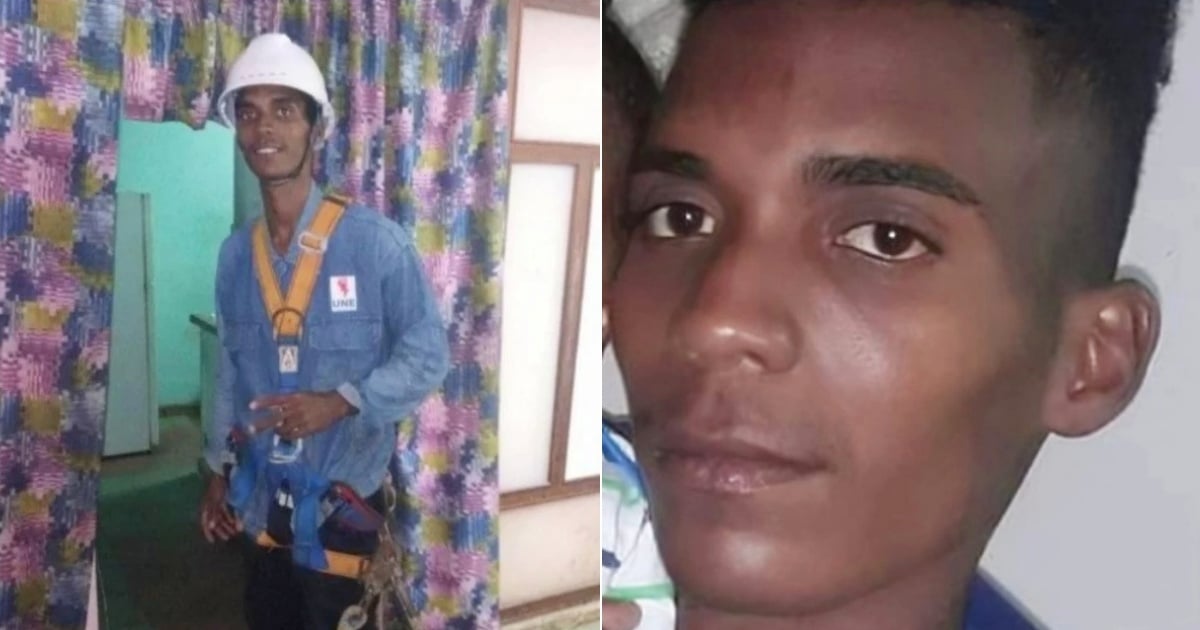
Four gang members have received prison sentences ranging from 11 to 22 years for the vicious attack in January 2024 that resulted in the right-hand amputation of young lineman David Enrique Perdomo Álvarez, an employee of the Electric Company in Santiago de Cuba. For a year and eight months, the judicial system in Cuba delayed bringing the feared "Banda 59" to trial, the group responsible for the machete assault that not only ended David's career but also deprived him of the simple act of hugging his child.
Independent journalist Yosmany Mayeta Labrada documented the story from the start, sharing the case after direct conversations with David and his family.
A Night That Changed Everything
In the early hours of January 7, 2024, David Enrique, then 26, wrapped up his workday and decided to have some beers with friends at a neighborhood kiosk in Reparto Abel Santamaría, known as El Sala’o. Little did he know, this would be the last night he would use both hands.
Around 5:40 a.m., as he left the kiosk, he was ambushed by over ten youths armed with machetes and stones, members of a gang infamously known as the “Banda 59 de Micro III.” They pursued, knocked him down, and attacked him brutally. A machete blow severed his right hand and inflicted deep wounds on his shoulder and clavicle.
They also took his wallet and other belongings, but the emotional aftermath was even more devastating. Facing his child without the ability to embrace him like before left a profound scar. "When he saw me, my child asked, 'Dad, what happened to you?'... and when I tried to hug him, he backed away. He would look at me in the mirror and cry a lot. He even said, 'Dad, I'll give you my hand so you can keep working,'" David recounted during the trial, according to the source.
The Burden of a Trial
After months of waiting and an investigation marred by silence, the trial for five members of the “Banda 59” finally took place this week. The provincial court handed down sentences for attempted murder, serious injury, and illegal possession of weapons.
According to Mayeta Labrada, the sentences were as follows: Wilmer received 22 years, Dayron Elvis 16 years, Alexander Sosa 14 years, Diosvanis 13 years, and Brian 11 years. The prosecutor argued the attack was an attempted murder rather than a simple injury case, as the defense claimed.
The court agreed with the prosecutor's perspective, acknowledging the severe nature of the crime and its irreversible consequences. In addition, the accused must pay 113,000 Cuban pesos in compensation to the victim.
Impunity in Question
Beyond the verdict, the trial exposed a possible network of cover-ups and institutional leniency. Yosmany Mayeta reported that neighborhood residents claimed authorities were aware of the “Banda 59” activities but failed to act decisively.
“The sector chief had a relationship with the mother of one of the gang members, and they were always released even if caught committing crimes,” a resident revealed. The community acknowledged that the gang's criminal activities were frequent and well-known, but complaints fell on deaf ears.
This pattern of complicity and institutional negligence not only allowed David's attack to occur but also delayed the trial process significantly. David's case is not isolated. It reflects a Santiago de Cuba plagued by youth violence, where armed gangs enforce their rule under the passive gaze of authorities.
In neighborhoods like El Sala’o, Micro III, or Altamira, machetes replace dialogue, and fear replaces coexistence. The community lives amid threats, reprisals, and distrust, while the police act sluggishly or with questionable ties.
Open Wounds, Delayed Justice
Since the attack, David has had to leave his lineman job. He now works as a maintenance technician, limited by his physical and emotional injuries. Despite the pain, he remains steadfast in his faith. "I leave everything in God's hands. All I ask is for justice and that no other worker suffers what I suffered," he said in statements months ago.
During his stay at the Juan Bruno Zayas Clinical Surgical Hospital, he received countless expressions of solidarity. Even local musicians composed a song for him. David left the hospital surrounded by his parents and siblings, grateful to be alive but bearing an indelible scar. For David and many others, the sentences against his attackers come too late, fail to mend the damage, and do not prevent future cases.
The trial closed one chapter, but the underlying issue remains unresolved. In Santiago de Cuba, fear persists, violence continues, and the number of victims grows.
Frequently Asked Questions about the Trial and Violence in Santiago de Cuba
What were the charges against the gang members in the trial?
The gang members were charged with attempted murder, serious injury, and illegal possession of weapons.
How did the attack affect David Enrique Perdomo Álvarez's life?
The attack resulted in the amputation of his right hand, forcing him to abandon his lineman job and affecting his ability to perform everyday tasks, including hugging his child.
What compensation did the court order for the victim?
The court ordered the accused to pay a compensation of 113,000 Cuban pesos to David Enrique Perdomo Álvarez.
What systemic issues contribute to youth violence in Santiago de Cuba?
Youth violence in Santiago de Cuba is fueled by structural issues like inequality, lack of opportunities, family disintegration, and an almost complete absence of effective preventive policies.