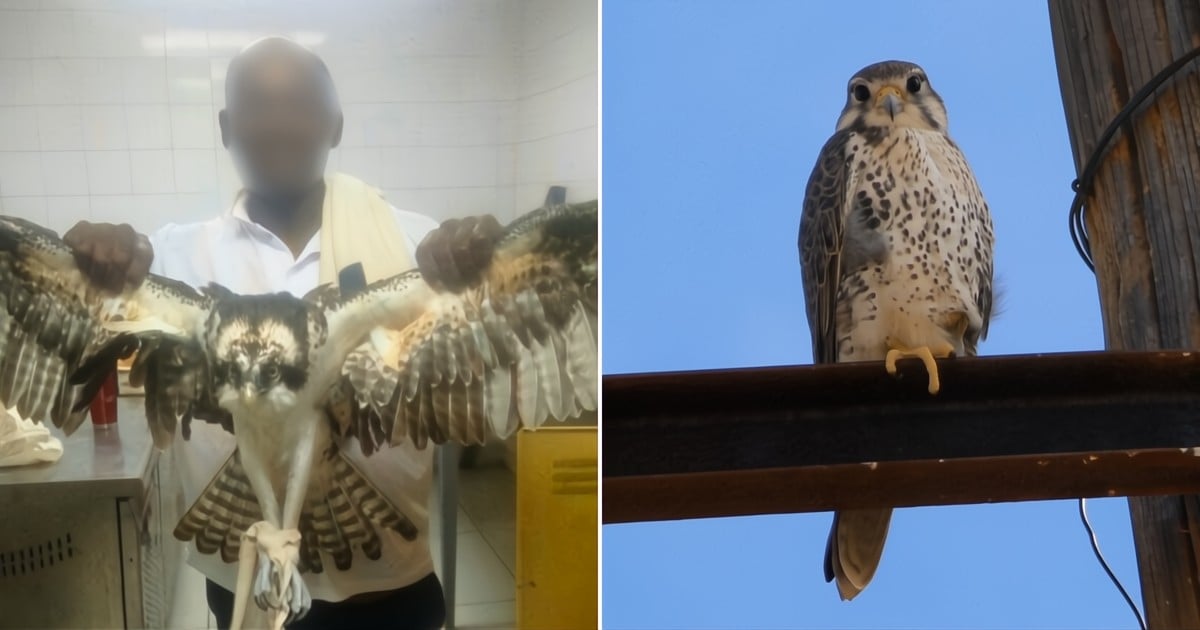
A social media post has ignited widespread outrage after a man identified as Leyder Milanés was found to be auctioning a peregrine falcon from the city of Cárdenas, Matanzas. On Wednesday, the animal protection organization BAC-Habana condemned the act as "completely unacceptable" and demanded that authorities investigate and severely punish those responsible.
The shared photo shows the individual holding the live bird with its wings spread and legs bound, highlighting a blatant case of animal cruelty and illegal wildlife trafficking as outlined by Cuban law. Milanés's post reads, "Peregrine falcon for sale. Interested parties call 59614106 or 55219699. Located in Cárdenas. Highest bidder wins. It's rare in our country," along with contact numbers for carrying out the transaction, treating it as an ordinary sale.
The International Protection of Peregrine Falcons
The peregrine falcon (Falco peregrinus) is an internationally protected species, included in conservation lists by the Convention on International Trade in Endangered Species of Wild Fauna and Flora (CITES). Its capture, possession, and sale are serious environmental crimes under both Cuban law and international treaties signed by the nation.
"The peregrine falcon not only holds significant ecological value but also plays a crucial role in maintaining ecosystem balance," emphasized BAC-Habana in their denunciation message. The organization stressed that this action threatens biodiversity and violates wildlife protection laws in Cuba.
Wildlife Trafficking: A Growing Concern
"Wildlife is not for sale; it deserves respect," BAC-Habana stated, urging the public to share the denunciation to prevent such environmental crimes from continuing "with complete impunity and in plain sight on social media."
The auction of the peregrine falcon on social media is not an isolated incident. The illegal trade and trafficking of wild animals in Cuba are becoming increasingly common, often with minimal intervention from authorities and openly visible to the public. This trend has raised growing concern among environmental organizations and citizens aware of the ecological damage these practices cause.
Recently, a Cuban was detained at Miami International Airport for attempting to smuggle live birds into the country. He had five specimens hidden in his luggage, exposing weaknesses in customs controls and the risk of these species entering the international black market.
Additionally, there have been arrests within Cuba. In Villa Clara, police apprehended two men transporting over 60 caged wild birds, many in poor conditions without any documentation. The motivation behind such practices is often financial gain, whether for local market sales or clandestine orders.
Environmental Crimes Unchecked
Animal protection organizations have also condemned the sale of protected species. One group publicly criticized the sale of parrot chicks on social media, with photos showing the young birds, still dependent, taken from their nests and offered as exotic pets.
In another shocking incident, citizens reported the sale of an injured black vulture on a public street in Havana. The visibly hurt bird was displayed on social media as if it were an ordinary object, without any regard for its suffering or the country's conservation laws.
FAQs on Wildlife Trafficking in Cuba
Why is the trafficking of peregrine falcons illegal?
Peregrine falcons are protected under international and national conservation laws. Their trafficking is illegal because it threatens biodiversity and disrupts ecosystem balance.
What actions can be taken to prevent wildlife trafficking in Cuba?
Strengthening law enforcement, raising public awareness, and international cooperation are key actions that can help prevent wildlife trafficking.
How do organizations like BAC-Habana combat illegal wildlife trade?
Organizations like BAC-Habana combat illegal wildlife trade by raising awareness, reporting illegal activities, and pushing for stricter enforcement of laws protecting wildlife.