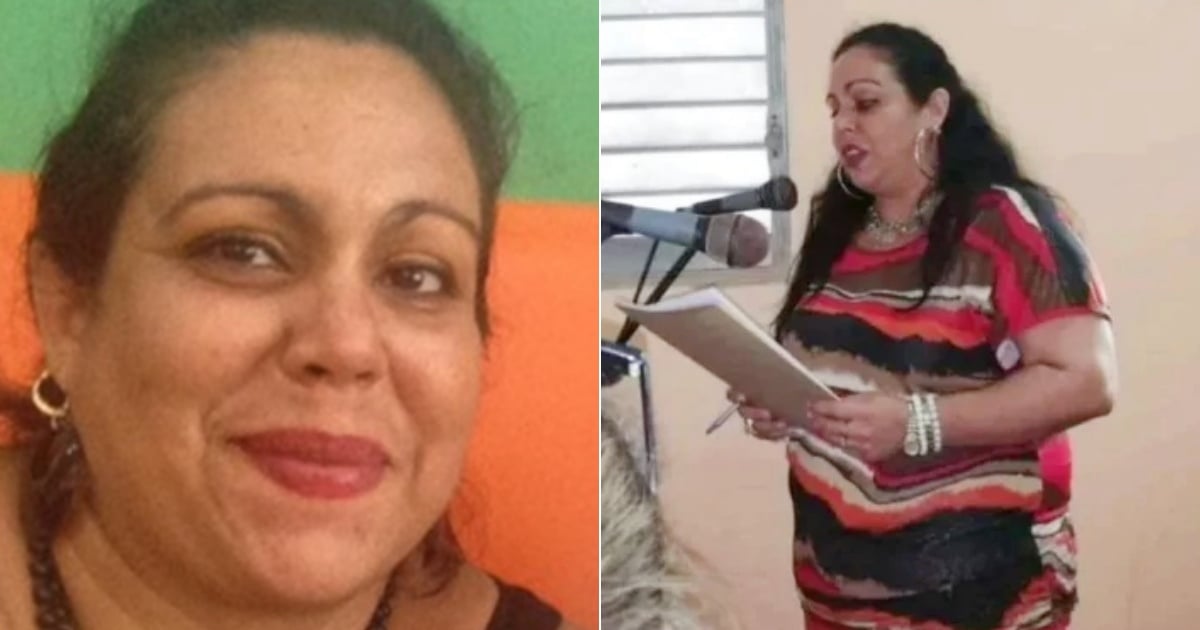
Melody González Pedraza, a former Cuban judge, is on the verge of being deported to Cuba, possibly as soon as this Thursday, September 25, according to her cousin Roberto Castellón, who spoke to the independent outlet Diario de Cuba (DDC). Castellón also confirmed that González's brother, Ruber González Pedraza, is currently detained in an immigration facility and is expected to be deported swiftly as well.
"He has already signed his self-deportation papers, and it will be quick. His sister will be deported tomorrow," Castellón announced on Wednesday to the cited media outlet. If González Pedraza's deportation is executed, it would conclude a temporary legal stay that lasted over four months after an immigration judge ordered her deportation in June.
Brother's Arrest and Political Ties
Ruber González, the ex-judge's brother, was apprehended last Tuesday while dropping off his daughter at a daycare center. Castellón suggests that his arrest is linked not only to his connection with Melody González but also to his academic and political background in Cuba. "They associated him with his sister and his studies at UCI, showing clear targeting," said Castellón.
The University of Informatics Sciences (UCI) has often been accused of acting as a technological arm of the Cuban regime, engaging in cyberattacks against independent journalists, activists, and political opponents. These attacks reportedly involve hacking and attempts to infiltrate social media accounts, as denounced by members of the Cuban civil society, both domestically and abroad.
Ruber González's past includes managing a pro-government blog during his student years, as reported by CubaNet. The blog propagated content supporting the release of the five Cuban spies from the Wasp Network, who were convicted in the United States.
Who is Melody González?
Melody González Pedraza served as the president of the Municipal Court of Encrucijada in Villa Clara province. She entered the United States on May 30, 2024, through the humanitarian parole program during President Joe Biden's administration. Her arrival, alongside her husband William Hernández Carrazana, came shortly after she had issued prison sentences to four young Cubans without sufficient evidence—a decision she later admitted to Diario de Cuba was made under coercion from the State Security.
Despite her testimony and request for political asylum, González was initially denied formal entry into the U.S. and later denied asylum. Her continued affiliation with the Communist Party of Cuba (PCC) until shortly before her departure overshadowed her judicial actions in the U.S. immigration decisions against her. Her husband, William Hernández Carrazana, has already been sent back to Cuba.
Potential Consequences Upon Return to Cuba
Diario de Cuba, which has closely followed her case, warned in a June article that if returned to the island, González could face scenarios ranging from arrest to prosecution on charges such as "enemy propaganda," "disrespect," "incitement to hatred," and spreading "false news." These would relate to her statements about the manipulated trial where she sentenced young Cubans without proof.
The outlet also suggested that due to her former judicial position, she might be accused of breaching ethical norms, revealing official secrets, or contributing to actions deemed harmful to state security. Even if she avoids arrest, González might be subjected to police surveillance, home harassment, "preventive" summoning, interrogations, and defamation campaigns. DDC notes that this pressure could also extend to her immediate family. "One certainty for the jurist is that she won't work in the Cuban judicial system again and might struggle to find any employment," Diario de Cuba concluded.
Debate Over Melody González's Role
While some argue for redemption and cooperation with justice in exile, others demand more scrutiny regarding former regime officials seeking refuge in the U.S. Many, like attorney Santiago Alpízar from Cuba Demanda, argue against portraying González as a victim. Alpízar criticized Diario de Cuba for treating her case as such, considering her a perpetrator instead.
Alpízar emphasized that their organization actively participated in the U.S. judicial process, presenting a report that argued against granting González asylum. "We believed Melody wasn't a victim of the communist system but an active agent of the PCC and a repressor who committed judicial misconduct in favor of State Security and the government," he stated. "She's not a victim. Nothing will happen to her upon her return to Cuba; she might even be rewarded," Alpízar remarked with irony.
He also pointed out that González had access to all procedural guarantees within the U.S. legal system, opportunities that have not been available to many other Cubans being deported from the U.S.
Key Questions About Melody González's Deportation and Future
What led to Melody González's deportation order?
González's deportation was ordered following her involvement in sentencing young Cubans without sufficient evidence, a decision she claims was made under duress from Cuban State Security. Her ties to the Communist Party of Cuba also played a significant role.
What are the risks for González if she returns to Cuba?
If returned, González could face arrest and charges related to "enemy propaganda" and "disrespect." She might also be subjected to surveillance, harassment, and defamation campaigns, and it's unlikely she could resume any judicial role.
What is the controversy surrounding González's portrayal as a victim?
Some argue that González should not be seen as a victim, but rather as an active participant in the Cuban regime's oppressive actions, pointing to her judicial misconduct and ties with the Communist Party of Cuba.