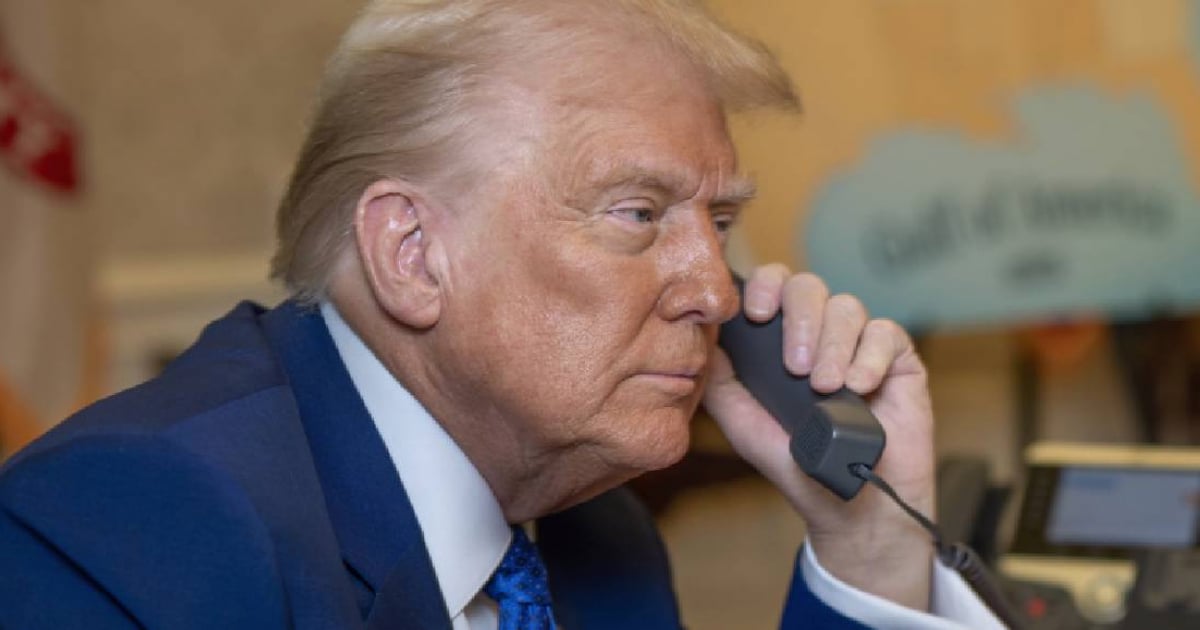
United States President Donald Trump has earmarked $400 million to confront the "Marxist and anti-American" regimes of Cuba, Venezuela, and Nicaragua, according to an official document sent to Congress and accessed by Reuters news agency. This initiative is part of a reallocation of $1.8 billion in foreign aid to align with the current Republican president's America First policy, which began in his second term in January 2025, the outlet explained.
Out of the total, $400 million will be specifically allocated to activities within the Western Hemisphere, including combatting illegal migration, competing with China in strategic sectors, and dealing with the governments of Havana, Caracas, and Managua. "The national security interests of the United States require these funds to make America safer, stronger, and more prosperous," states the official notification sent on September 12.
The document reviewed by Reuters also highlights that a portion of the funds will be directed towards initiatives in Europe, such as energy development in Ukraine and projects in Greenland. Since returning to the White House, Trump has initiated a major overhaul of the U.S. foreign aid system, which has included the dissolution of the United States Agency for International Development (USAID), the dismissal of thousands of employees, and significant cuts affecting key humanitarian programs.
A State Department spokesperson stated that new foreign assistance programs must align with the government's strategic objectives: "The United States will prioritize trade over aid, opportunity over dependency, and investment over assistance."
This decision has sparked criticism in Congress. Democratic Senator Jeanne Shaheen condemned the reallocation of funds, stating that it disregards the authority of the Legislature and diverts resources to "politically motivated and irresponsible" projects, such as investing in Greenland or pressuring African governments on migration issues.
In contrast, Secretary of State Marco Rubio, appointed by Trump at the start of his second term, defended the strategy: "We are moving away from a charitable model to focus on empowering countries and their sustainable development," he stated in July during the formal transfer of USAID to the State Department.
Trump's policy marks a radical departure from traditional U.S. diplomacy, replacing the soft power of humanitarian aid with an aggressive geopolitical approach focused on strategic competition and direct pressure on governments deemed hostile to Washington. For Cuba, this decision signals a new chapter of confrontation amid an internal crisis marked by economic collapse, repression of citizen protests, and the international isolation of the Havana regime.
Key Questions on Trump's Foreign Aid Shift
What is the purpose of the $400 million allocation by Trump?
The $400 million is designated to confront the Marxist regimes in Cuba, Venezuela, and Nicaragua, as well as to address illegal migration and strategic competition with China in the Western Hemisphere.
How does Trump's foreign aid strategy differ from traditional U.S. diplomacy?
Trump's approach replaces humanitarian aid's soft power with a more aggressive geopolitical strategy focused on strategic competition and pressure on hostile governments.
What criticism has Trump's foreign aid reallocation faced?
Critics, including Democratic Senator Jeanne Shaheen, argue that it disregards congressional authority and misallocates funds to politically motivated projects.