Amid an unprecedented economic crisis affecting the Cuban populace, Miguel Díaz-Canel, Cuba's leader, has once again resorted to overly simplistic rhetoric to address the crippling inflation. Instead of proposing genuine solutions, he continues to rely on clichéd statements that overlook the consequences of his own policies on the current economic crisis.
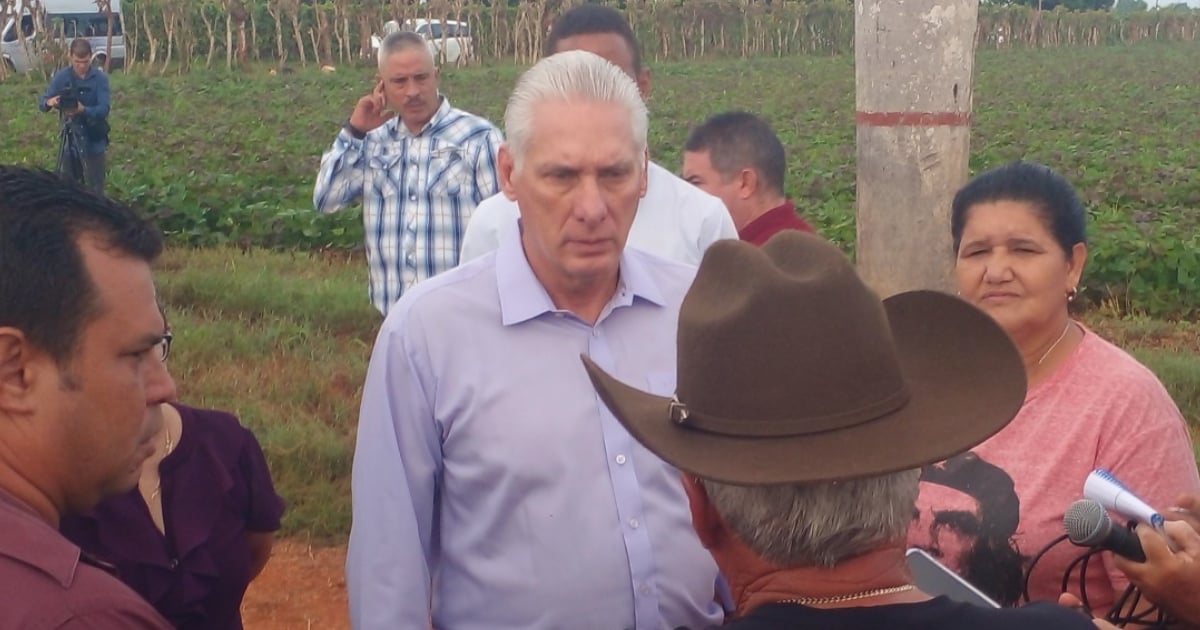
During a visit to Consuelo Farm in Alquízar, Artemisa, Díaz-Canel stated, "If we have food available, prices will inevitably drop," reducing the complex economic crisis to a naive formula. This perspective ignores the scarcity, lack of resources, and state-imposed controls, which are products of his administration.
While touring a mere 0.20 hectares of sweet potatoes and 0.60 hectares of bananas cultivated by producer Wilfredo Vallés Rodríguez, Díaz-Canel presented these as models to emulate nationwide. Accompanied by senior PCC leaders, this visit was yet another staged display that deliberately sidestepped the root of the issue: the regime's own economic policies.
Empty Promises Amidst Sanctions
Díaz-Canel emphasized replicating Vallés' experience, as if a few plots could solve the widespread food shortage affecting the nation. His remarks followed closely on the heels of a "price control" announcement by the Ministry of Finance and Prices in Alquízar, which found that prices generally matched regulations, except for an outdated price board.
This scenario underscores the government's fixation on penalizing vendors and imposing fines, while simultaneously minimizing the resources allocated to agriculture. Just this week, a sales point in the same municipality faced 11,000 pesos in fines due to price board discrepancies and labor contract violations.
Such penalties do not resolve the severe scarcity of goods nor prevent wages from diminishing in value as inflation continues to rise each month.
Realities of Economic Hardship
Díaz-Canel's comments starkly contrast with his recent admissions. In July, he conceded to Parliament that Cuba's revenue "is insufficient to cover even the most basic raw materials," acknowledging that economic management is reduced to "redistributing scarcity."
He also admitted that the country lacks the foreign currency needed to sustain a viable exchange market and that the crisis fundamentally stems from an inability to generate wealth. Despite these confessions, Díaz-Canel remains steadfast in delivering repetitive speeches about "price control" and "preventing abuses," without proposing a change in the existing economic model or freeing farmers from state constraints.
By March 2024, he had already foreshadowed that prices would "remain high" due to structural issues in supply and demand, although he called for intensified checks to curb speculation.
Beyond these hollow slogans, daily life for Cubans grows increasingly difficult: 70% of family income is spent on food, markets are barren, price ceilings discourage production, and farmers continue to receive fewer resources and less freedom to trade.
The so-called "Tarea Ordenamiento," implemented in 2021, only accelerated the decline: devalued wages, insufficient pensions, and runaway inflation. Cuban agriculture is producing less, and the population is burdened with unaffordable prices.
As Díaz-Canel poses for photos among rows of sweet potatoes and bananas, the nation remains ensnared in a vicious cycle of scarcity, controls, and penalties that fail to halt rising prices or ease the suffering of millions of families.
Understanding Cuba's Economic Struggles
What are the main causes of inflation in Cuba?
Inflation in Cuba is primarily driven by structural economic issues, including scarcity of goods, lack of resources, and state-imposed price controls. These factors are compounded by the government's economic policies and the inability to generate sufficient wealth.
How does the government's approach affect food availability?
The government's approach, which includes strict controls and penalties for vendors, discourages production and limits resources available to farmers. This results in ongoing food shortages and high prices for basic necessities.
What is the impact of the Tarea Ordenamiento on the Cuban economy?
The Tarea Ordenamiento, introduced in 2021, has exacerbated economic challenges by leading to devalued wages, inadequate pensions, and uncontrolled inflation, further straining the Cuban population's economic situation.