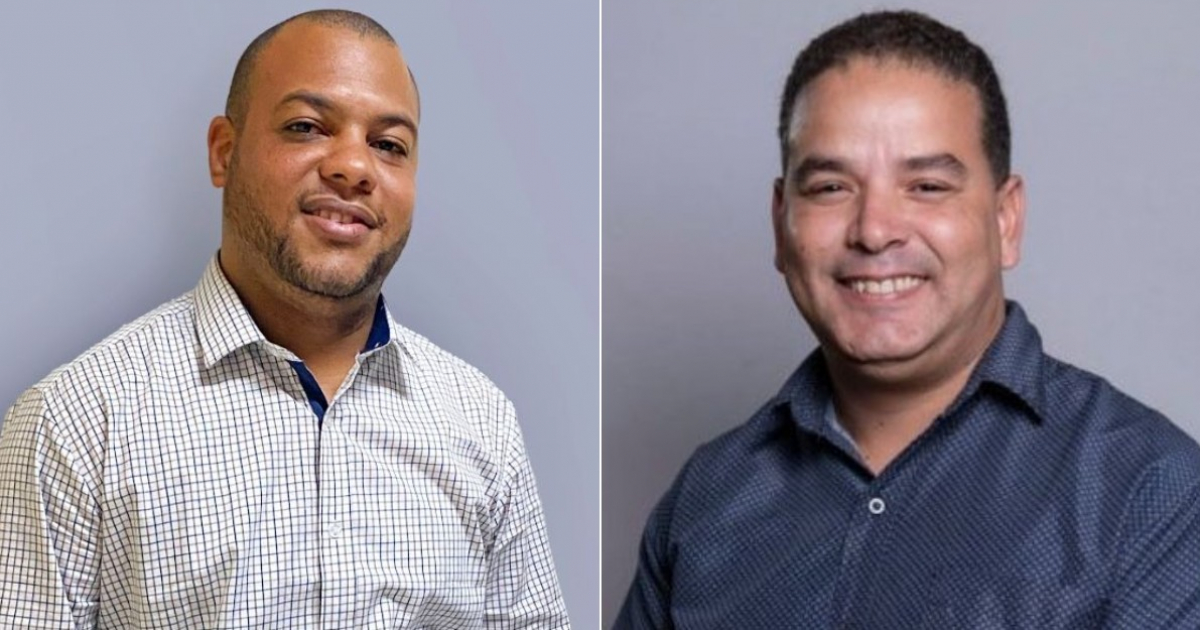
The Cuban Communist Party's (PCC) Political Bureau has announced leadership changes within the top tiers of the state-controlled press. Yoerky Sánchez Cuéllar, previously at the helm of Juventud Rebelde, has been elevated to direct Granma, while Yuniel Labacena Romero, aged 36, steps into the role at the youth publication of the Communist Youth Union (UJC).
This reshuffling is nothing more than a routine exchange within the regime's media apparatus, where leadership roles in state journalism rely not on journalistic merit but on political loyalty. At 41, Sánchez is not just a journalist but also a deputy in the National Assembly, a member of the PCC Central Committee, and part of the Council of State. His promotion to Granma underscores that allegiance to the party machinery remains the sole credential for steering the official PCC newspaper.
Meanwhile, Labacena Romero, a 2014 graduate, has spent his entire career at Juventud Rebelde, rising from reporter to deputy editorial director. He is also part of the UJC's National Committee, ensuring the continuation of the Party's prescribed ideological path.
Silent Dismissals and Their Precedents
This shift occurs more than a year after Yailín Orta Rivera was quietly removed as Granma's director. Her dismissal was never formally announced, though by May 2024, two months after her departure, internal sources confirmed to CubaNet that her tenure had caused a journalist exodus and tension within the newsroom. Influencer Alexander Otaola alleged she was accused of embezzling resources, including car parts, complete vehicles, and hundreds of chicken boxes meant for the staff's meals.
Orta, who previously led Juventud Rebelde, directed Granma from December 2017 until she was temporarily replaced by Dilbert Reyes Rodríguez. Now, Sánchez's appointment as director is official. The secrecy surrounding executive changes is a recurring theme. Granma kept Orta listed on their "About Us" page for months, even as Díaz-Canel visited the facilities with the ousted official, without acknowledging the changes.
This opacity reveals the system's lack of transparency, where leadership shifts occur at party levels without accountability to the public.
A Press Without Its Own Voice
In Cuba, the state press does not act as a watchdog for power nor caters to the readers' needs. Much of its content is dedicated to echoing slogans, defending government policies, and glossing over the deep crisis the country faces. Social criticism, citizen complaints, or open debates find no space in publications like Granma or Juventud Rebelde, leading to a growing disconnect between the population and these media outlets.
During a 2023 visit to Granma, Díaz-Canel urged the paper to become "Cuba's most read newspaper" and draw in young readers with "originality and innovation." However, he avoided addressing the credibility issues of its content, a major concern among Cubans who largely reject the triumphant and propagandistic tone used to mask the national reality.
Propaganda Over Journalism
The transfer of directors between Juventud Rebelde and Granma is part of a long-standing pattern: when a director falls out of favor, another is shifted from a similar outlet, regardless of performance or quality of work. This is not about strengthening journalism but maintaining strict control over the official narrative.
As the nation grapples with one of its worst economic and social crises, the island's leading newspapers remain mere mouthpieces for the Party, unable to challenge the government's management or reflect the daily struggles of Cubans, marked by scarcity, inflation, and power outages.
Understanding the Cuban Press Landscape
Why was Yailín Orta Rivera removed from her position at Granma?
Yailín Orta Rivera's removal was reportedly due to internal tensions and allegations of embezzlement, including theft of car parts and food resources intended for staff.
What is the significance of Yoerky Sánchez Cuéllar's promotion to Granma?
Yoerky Sánchez Cuéllar's promotion to Granma highlights the emphasis on political loyalty over journalistic achievement within Cuba's state media.
How does the Cuban state press operate differently from independent media?
The Cuban state press serves as a governmental mouthpiece, focusing on disseminating official narratives and avoiding critical coverage or open debates, unlike independent media which often criticize the government.