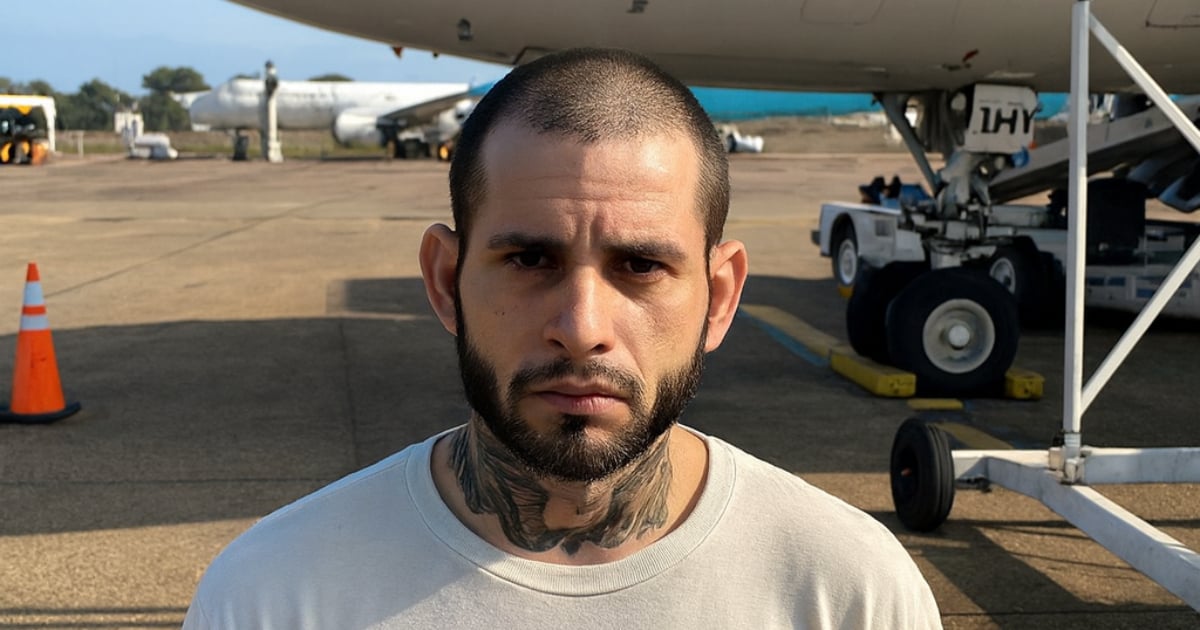
Maidelin Bolaño Aguado, the mother of Cuban national Henry Negrín Bolaño, has reached out for assistance through multiple emails to CiberCuba, seeking her son's return to Cuba after learning of his deportation by the U.S. Immigration and Customs Enforcement (ICE). In her messages, she emphasizes her son's mental health issues and opposes his treatment as a criminal.
"My son is not a criminal. He was suffering from nervous disorders, having been hospitalized four times in psychiatric facilities in the United States. I do not agree with my son's deportation to other countries; he is Cuban, and I want to claim him," she wrote.
Henry Negrín, aged 33, was deported from New Orleans on September 20, as reported by ICE on their official X account, following a five-year sentence for an assault committed under "extreme emotional disturbance." Before his deportation, he was held on an "immigration detainer" in Clay County, Indiana. ICE did not disclose the country to which he was deported.
Questions Surrounding Deportation
Despite the official information released by the agency, Bolaño maintains that her son has not yet been removed from U.S. soil. "My son is at the Mexico-U.S. border in immigration; those reports were false, and he has not been deported," she affirmed in one of her messages to the media.
In another message, she expressed uncertainty about how to proceed with her son's claim or whether the Cuban government would accept his return. "I don't agree with him being sent to any other country. Henry is from Cuba, and I want my son back. I'm unsure if the Cuban government is willing to accept deported Cubans, but I want my son in Cuba. I need help to claim my son," she wrote, providing her phone number for guidance.
U.S. Deportation Policies and Cuban Nationals
The deportation of Henry Negrín comes as the United States has ramped up its policy of expelling immigrants with criminal records. In June, the U.S. Supreme Court approved the Trump administration's plan to resume deportations to third countries, even without assessing the risk of persecution or torture for migrants in those destinations.
Since then, ICE has carried out deportations of Cuban citizens to countries such as Eswatini, South Sudan, Uganda, El Salvador, and Mexico, as Cuba has refused to accept nationals with criminal histories. One of the recent cases involved Cuban Adermis Wilson González, convicted for hijacking a plane in 2003, who was deported to Mexico after serving 20 years in the United States. Similarly, a Cuban identified as C.R.L., with a bank fraud history, was deported to the same country after months in a detention center, as the Cuban government did not accept him.
While Havana has officially declared its willingness to accept deported citizens, numerous court rulings and specific cases reveal selective rejections, especially concerning individuals with prior convictions. This leaves many migrants caught in a legal limbo or at risk of being sent to nations where they have no family ties or protection guarantees.
In her final plea, Maidelin Bolaño reiterated her request: "I want my son back in Cuba, please. I am his mother. Help."
Understanding the Challenges of Cuban Deportations
Why was Henry Negrín deported?
Henry Negrín was deported after serving a five-year sentence for an assault committed under "extreme emotional disturbance."
What challenges do Cuban deportees face?
Cuban deportees often face challenges such as being sent to countries with which they have no ties, due to Cuba's selective acceptance of deported nationals, particularly those with criminal records.
How has the U.S. policy on deportations changed recently?
The U.S. has intensified its deportation policy, now permitting deportations to third countries without assessing the risk of persecution or torture for the deportees.