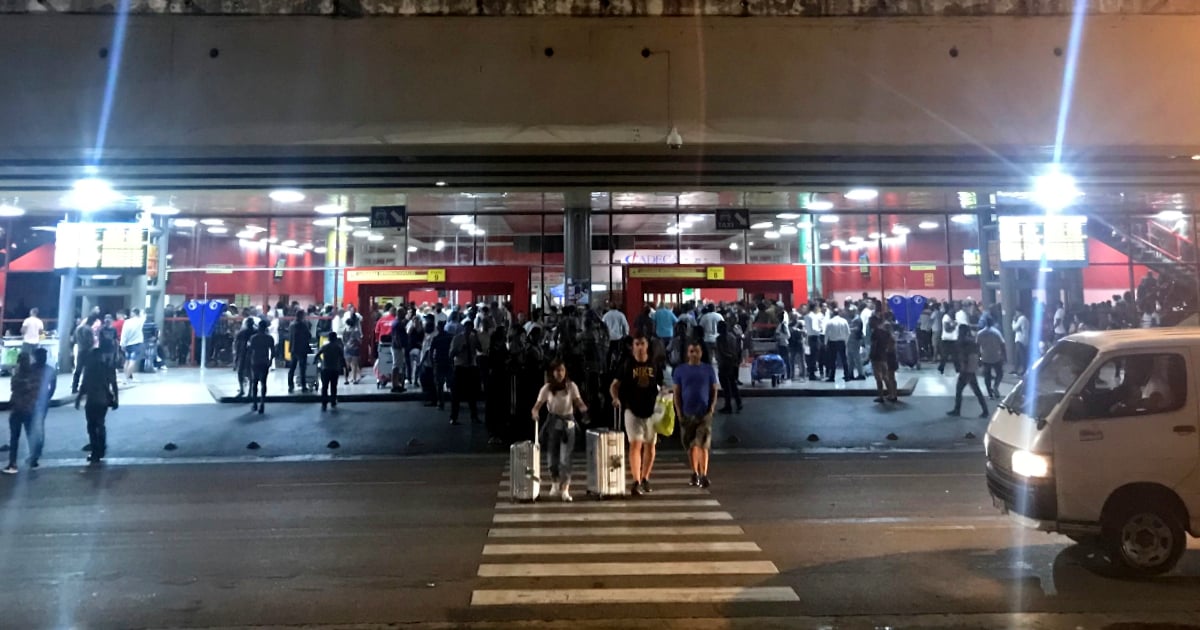
A burst water pipe forced the temporary closure of Terminal 3 at Havana's José Martí International Airport on Monday night, according to an official statement shared by the airport on social media. The water leak disrupted the passenger check-in area at Immigration, necessitating the urgent relocation of several airlines, like Conviasa, Copa Airlines, and Neos, to Terminal 2.
The disruption primarily affected flights scheduled from Sunday night into early Monday morning. Airport officials worked diligently to resolve the issue, with operations resuming in Terminal 3 by 3:00 a.m. on Monday. "José Martí International Airport apologizes for the inconvenience caused and appreciates the understanding of its passengers," stated the airport's official communication.
The announcement did not specify the extent of the damage or if other terminal areas were impacted. However, unverified reports from the independent channel "Juan Juan Al Medio" suggested a possible air conditioning failure alongside the plumbing issue. This claim has yet to be confirmed by official sources.
As the main gateway for international flights and immigration services, Terminal 3 is crucial to the country's air travel. Any disruption to its operations significantly affects passengers and airlines alike. No personal injuries have been reported, nor have additional changes to flight schedules been announced. Passengers are advised to check with airlines for updates on flight departures in case of further disruptions.
Terminal 3 Under Scrutiny Amid Structural Problems
This latest incident adds to a series of structural and operational challenges reported at José Martí International Airport's Terminal 3, the busiest in the nation. On September 3, an unexpected power outage left hundreds of passengers in the dark for several minutes in the boarding area, sparking complaints about the lack of information and basic amenities.
Authorities provided no technical explanation for the electrical failure, leaving travelers uneasy. Earlier, on August 14, a video went viral showing water pouring from the ceiling of Terminal 3 during a heavy rainstorm. The leak, witnessed by passengers lined up to board, drew criticism about the deteriorating infrastructure at this key international tourism hub.
Furthermore, on September 10, CiberCuba reported that Cuban airports, including Havana's, continue to operate on alternative systems due to a shortage of spare parts and difficulty maintaining essential technical systems such as air conditioning, lighting, and security scanners.
These incidents highlight the critical state of Cuba's airport infrastructure, plagued by inadequate maintenance, resource shortages, and a lack of responsiveness to emergencies, resulting in recurrent inconvenience for both domestic and international travelers.
FAQs About the Havana Airport Incident
What caused the closure of Terminal 3 at José Martí International Airport?
A burst water pipe in the Immigration check-in area necessitated the temporary closure of Terminal 3.
How were airline operations affected by the incident?
Airlines such as Conviasa, Copa Airlines, and Neos had to relocate operations to Terminal 2 due to the disruption.
Were there any personal injuries reported?
No personal injuries were reported following the incident at the airport.
Is this incident part of a larger issue at the airport?
Yes, Terminal 3 has faced multiple structural and operational challenges in recent months, including power outages and infrastructure leaks.