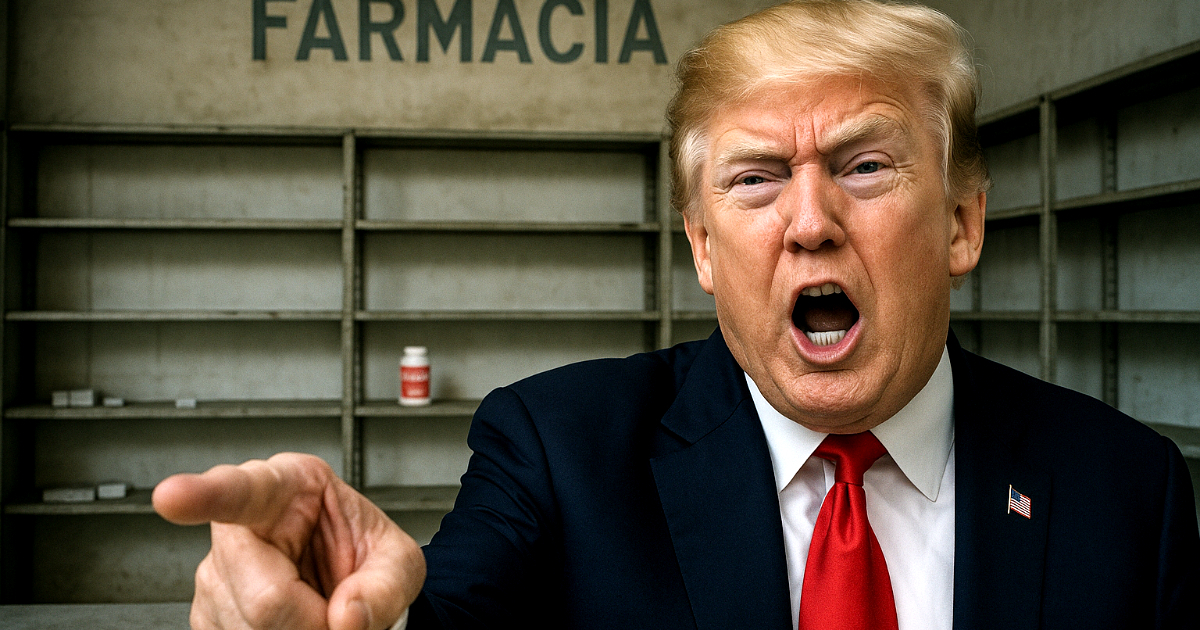
Former U.S. President Donald Trump has once again stirred controversy with his remarks suggesting that the absence of autism in Cuba might be linked to the scarcity of common medications like Tylenol. During a recent speech, Trump stated, "There's a rumor, and I don't know if it's true or not, that in Cuba, they don't have Tylenol because they can't afford it, and they practically have no autism. OK, tell me something about that," he remarked from the White House.
Trump's comments implied a potential connection between the use of paracetamol (the active ingredient in Tylenol) and the rising incidence of Autism Spectrum Disorder (ASD) in the United States. However, he did not provide any scientific evidence or cite credible sources to support his claim.
Tylenol, known medically as acetaminophen in the U.S., is a widely used analgesic and antipyretic to treat fever and mild pain. While some studies have investigated possible links between prenatal exposure to acetaminophen and neurodevelopmental disorders, no conclusive scientific evidence directly associates it with autism.
Medical authorities such as the FDA and WHO do not recognize any causal relationship between acetaminophen and autism, and the scientific community largely views such claims as speculative at best. Trump's statement has drawn immediate backlash from health experts, media outlets, and social media users, who have criticized the comment as irresponsible and baseless.
The Reality of Autism Data
According to the latest official report from the U.S. Centers for Disease Control and Prevention (CDC), published in 2023, the prevalence of autism in 8-year-old children in 2020 was 27.6 per 1,000 children, equivalent to one in 36 children. This figure marks an increase from previous years and highlights disparities among different ethnic groups: Black, Hispanic, and Asian children had higher diagnosis rates compared to White children in prior studies.
In contrast, there are no recent official data or national epidemiological studies from Cuba accurately documenting autism prevalence on the island. Cuba is also not part of international monitoring networks like the CDC's ADDM Network. Nevertheless, this does not mean autism is absent in Cuba. Parent organizations, professional testimonies, and local clinical studies confirm the presence of autism cases, although their documentation may be limited by a lack of diagnostic resources and public statistics.
Experts have pointed out that attributing autism prevalence to medication usage, such as Tylenol, lacks scientific backing. While potential environmental and genetic factors have been studied, there is no consensus linking acetaminophen directly to ASD development.
Controversy and Misinformation
Trump's remarks, rather than contributing clarity to the debate on child health, add to a long list of controversial statements trivializing complex and sensitive medical issues. Following the video's viral spread, users on the social media platform X (formerly Twitter) added a "contextual note" to the clip, citing an alleged fact-check by The Times indicating that Cuba had an autism rate of 83.3 per 10,000 children in 2023, slightly higher than the U.S.'s 80.9. However, these figures do not appear in official reports from the CDC or the Autism and Developmental Disabilities Monitoring (ADDM) Network, the cited source. The most recent official CDC figure for the U.S. is 276 per 10,000 children (27.6 per thousand) in 2020. As for Cuba, there are no verifiable public figures to support or refute the claim.
Cuba's Ongoing Medication Shortages
Beyond Trump's controversial statements, the reality is that Cuba faces chronic shortages of basic medications, directly impacting the population. Common analgesics like aspirin or paracetamol frequently run out in the state pharmacy network, forcing Cubans to rely on foreign donations, the informal market, or natural alternatives promoted by the regime itself.
Recently, the Cuban government announced plans to produce aspirin in China to meet the island's demand, a move highlighting the national pharmaceutical industry's inability to provide an everyday medication. Meanwhile, state media have attempted to "rescue" products like noni or promote homemade syrups and medicinal plants as substitutes amid the lack of essential drugs.
The Public Health Minister, José Ángel Portal Miranda, has publicly acknowledged the lack of medicines and resources to meet patient needs, exacerbating the collapse of the healthcare system. This shortage affects not only those with chronic illnesses but also pediatric, obstetric, and emergency hospital care.
The medication shortage in Cuba is not a rumor or anecdote but a structural problem worsening the country's healthcare crisis, forcing thousands of families to survive without access to basic medicines considered essential worldwide.
Understanding Autism and Medication Shortages
Is there a proven link between Tylenol and autism?
Currently, there is no conclusive scientific evidence linking Tylenol, or its active ingredient acetaminophen, directly to autism. Ongoing research is exploring potential connections, but no causal relationship has been established.
What are the reported autism rates in Cuba?
There are no recent official statistics or national studies documenting autism prevalence in Cuba, and the country is not part of international monitoring networks like the ADDM Network. Claims about autism rates in Cuba lack verifiable public figures.
How does medication shortage impact Cubans?
Cuba's chronic medication shortages significantly impact the population, forcing reliance on foreign donations, the informal market, or natural alternatives. This shortage affects chronic illness management, pediatric care, and emergency treatments.