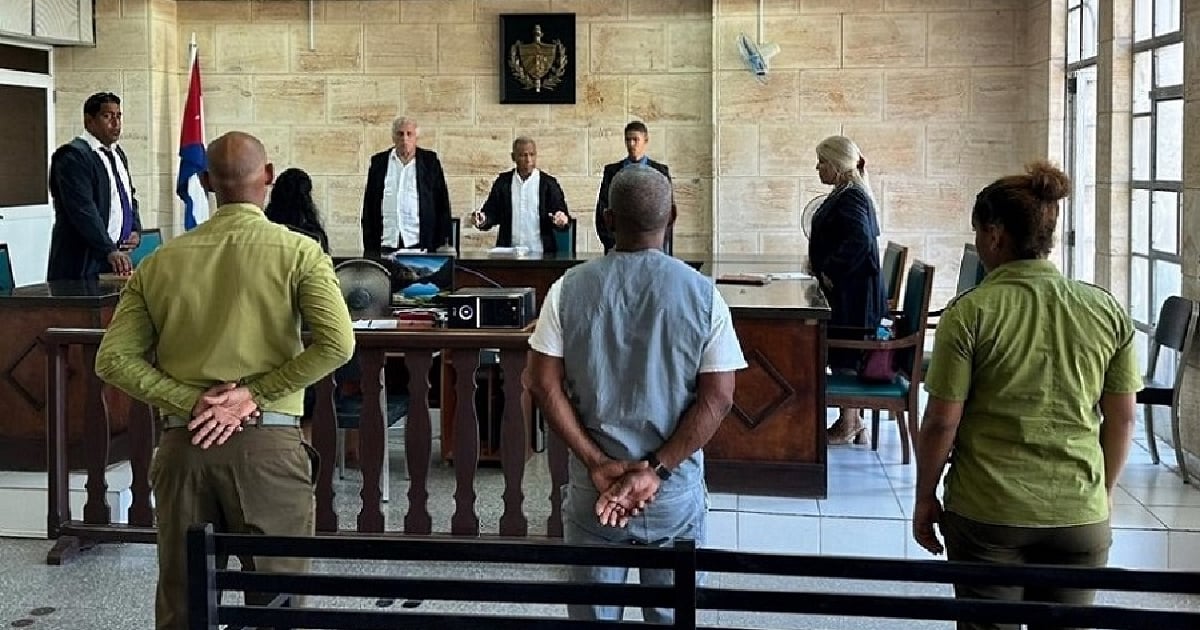
A Havana court has handed down a 15-year prison sentence to a Cuban national found guilty of trafficking cocaine and synthetic cannabinoids. The sentencing, delivered by the State Security Crimes Chamber of the Provincial Popular Court of Havana, was directed at José Alberto Ducá Valón. He was convicted under the Penal Code's category of "Crimes related to illicit drugs or substances with similar effects."
According to an official statement from the Provincial Court of Havana, evidence presented during the trial demonstrated that since August 2024, the accused had been transporting "drugs such as cocaine and synthetic cannabinoids in packages" from Santiago de Cuba to the Cuban capital, where he sold them. The court's report detailed that Ducá Valón sold cocaine at 14,000 pesos per gram and synthetic cannabinoids at 4,000 pesos per gram.
On September 12, 2024, Ducá Valón was apprehended by Anti-Drug Enforcement officers while attempting to travel to Santiago de Cuba. At the time of his arrest, authorities confiscated five packages containing a net weight of 3.38 grams of synthetic cannabinoids and a digital marijuana scale.
Legal Proceedings and Additional Sanctions
The court's statement emphasized that "during the investigation and trial, the accused was afforded all guarantees under procedural criminal law, exercised his right to defense, and was represented by a court-appointed attorney since he did not choose one himself." Alongside his prison sentence, Ducá Valón faces additional penalties, including a travel ban and the confiscation of "crime-related assets," among others.
Efforts to Curb Drug Trafficking
This trial is part of the Cuban regime's broader campaign to curb the rising tide of criminal activity in the country, particularly the surge in drug trafficking. Synthetic cannabinoids, commonly referred to as "chemical" or "papelillo," have seen unprecedented growth in recent years. Despite harsher penalties and exemplary sentences for drug traffickers, both the sale and use of these substances continue to rise, highlighting the inadequacy of the government's current strategy.
In August, Cuba's Supreme People's Court issued a stern warning about the increasing sale and consumption of synthetic drugs, especially in Havana, and approved stricter punitive measures against those possessing or distributing these dangerous substances.
The Ministry of the Interior (Minint) disclosed last week that anti-drug operations have resulted in the arrest of over 1,500 individuals, many of whom remain in pre-trial detention. Authorities reported the seizure of 81 kilograms of narcotics, 11,000 plants, 23,000 seeds, five firearms, and traffickers' assets, and the dismantling of five criminal networks operating out of Havana's José Martí International Airport.
Understanding Cuba's Drug Trafficking Challenges
What were the charges against José Alberto Ducá Valón?
He was charged with trafficking cocaine and synthetic cannabinoids, as outlined under Cuba's Penal Code for crimes related to illicit drugs.
How have Cuban authorities responded to the rise in drug trafficking?
Cuban authorities have intensified penalties and launched anti-drug operations, resulting in numerous arrests and the dismantling of criminal networks.
What substances were involved in the trafficking case?
José Alberto Ducá Valón was found to be trafficking cocaine and synthetic cannabinoids.