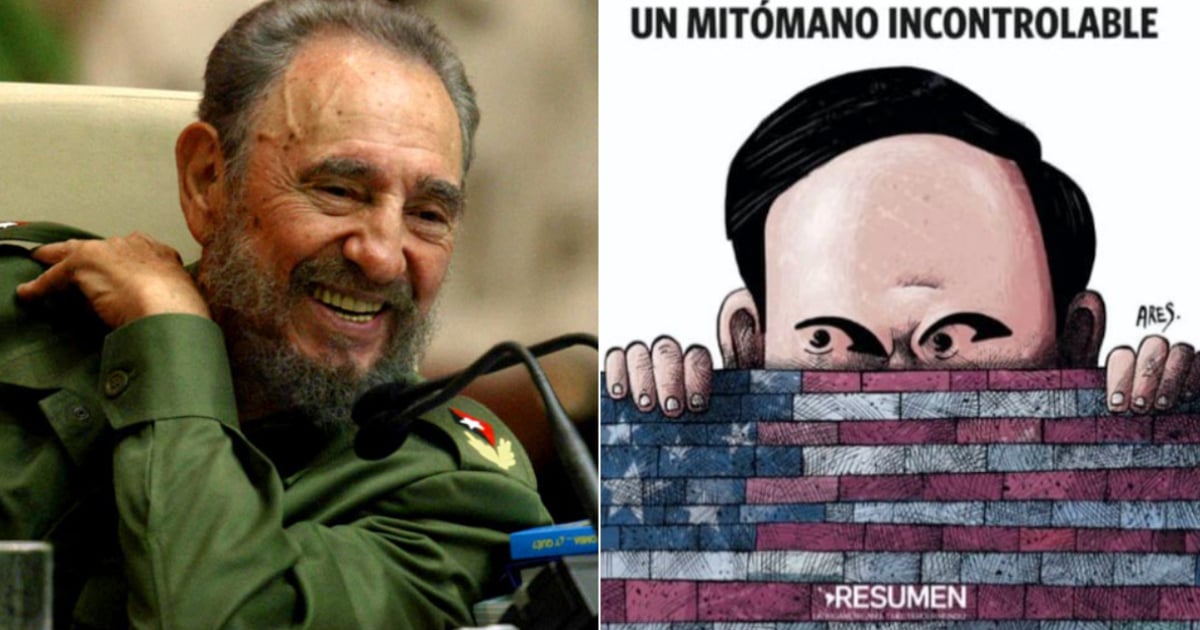
The Cuban regime has once again drawn attention with a politically extravagant gesture. In Havana, the unveiling of the book “Rubio: An Uncontrollable Mythomaniac” served as an occasion to honor the late dictator Fidel Castro. Graciela Ramírez, head of the Resumen Latinoamericano's bureau in Cuba, explained, "Despite the challenges faced in bringing this volume to fruition, with the selfless help of several collaborators, we managed an initial run of 300 copies, completed on a significant and symbolic date for the Cuban people: August 13, Castro's birthday."
Published by Editorial Ciencias Sociales with the support of Resumen Latinoamericano, the book is described by its promoters as a “political and moral anatomy” of U.S. Secretary of State Marco Rubio, whom they accuse of being financed by the CIA and spearheading "regime change" campaigns against Cuba. The initial print run wrapped up on August 13, coinciding with Castro's birthdate, lending a "symbolic" tone to this publication crafted by pro-government journalist Hedelberto López Blanch.
During the book launch, René González Sehwerert, one of the so-called "Five Heroes" (failed spies of the regime) and author of the foreword, referred to the text as a tool for understanding "the corrupting machinery of American politics." He mentioned that Rubio acts as a bridge between the old leaders of the Cuban American Foundation and the current opposition YouTubers, all thriving on the same business of criticizing the Cuban regime, albeit with different methods according to the times.
Beyond the allegations against the American official, what has drawn the most attention is the propagandistic tone and chosen publication date. Turning Castro’s birthday into an opportunity to launch a book of insults against a foreign adversary highlights how deeply the official rhetoric remains entrenched in confrontation and the idolization of the deceased dictator.
The Cuban Regime's Obsession with Marco Rubio
The Cuban regime's hostility towards Marco Rubio is not new, but it has escalated to an almost obsessive level in recent years. For Havana, the U.S. Secretary of State represents the external enemy with internal roots: a Cuban-American who, from the high echelons of power in Washington, has become one of the dictatorship's main critics.
Rubio has repeatedly highlighted the systematic human rights violations on the island, pointing to repression, arbitrary detentions, and forced exile as integral to the Cuban political system. In both national and international forums, he has depicted the regime as a threat to regional security due to its alliances with Russia, China, Iran, and other authoritarian allies.
Furthermore, he has advocated for sanctions against judges, prosecutors, and officials linked to the repression of the July 11 protests and has supported visa restrictions for high-ranking Cuban government officials. His messages on symbolic dates, such as the anniversary of the July 11 protests, are often received in Cuba as direct attacks on the ruling elite.
The regime’s response has been aggressive. State media label him a "mythomaniac," "corrupt," or "CIA tool," while accusing Cuban dissidents of being "paid agents" acting under his orders. Even figures like Foreign Minister Bruno Rodríguez Parrilla have publicly suggested that Rubio "instructs" the internal opposition to destabilize the country.
This clash is not only political but also symbolic. For the Cuban government, Rubio embodies the threat of a voice that combines ethnic legitimacy with real power in Washington. By targeting him, they strengthen the narrative that the island’s opposition is directed and funded from abroad. Hence, it is not surprising that the official propaganda, such as the book presented in Havana, places him at the center of their confrontational rhetoric, choosing the ill-fated date to offer the dictator a new "revolutionary holocaust."
Understanding the Conflict Between Cuba and Marco Rubio
Why did the Cuban regime target Marco Rubio with a book?
The Cuban regime sees Marco Rubio as a significant adversary due to his strong criticism of Cuba's human rights record and his influence in U.S. policy against the Cuban government.
How does the book's release date relate to Fidel Castro?
The book was released on August 13, which is Fidel Castro's birthday. This timing was intended to add symbolic weight to the publication, aligning it with Castro's legacy.
What accusations does the book make against Marco Rubio?
The book accuses Marco Rubio of being funded by the CIA and leading regime change campaigns against Cuba. It portrays him as a tool of American politics aimed at destabilizing the Cuban government.