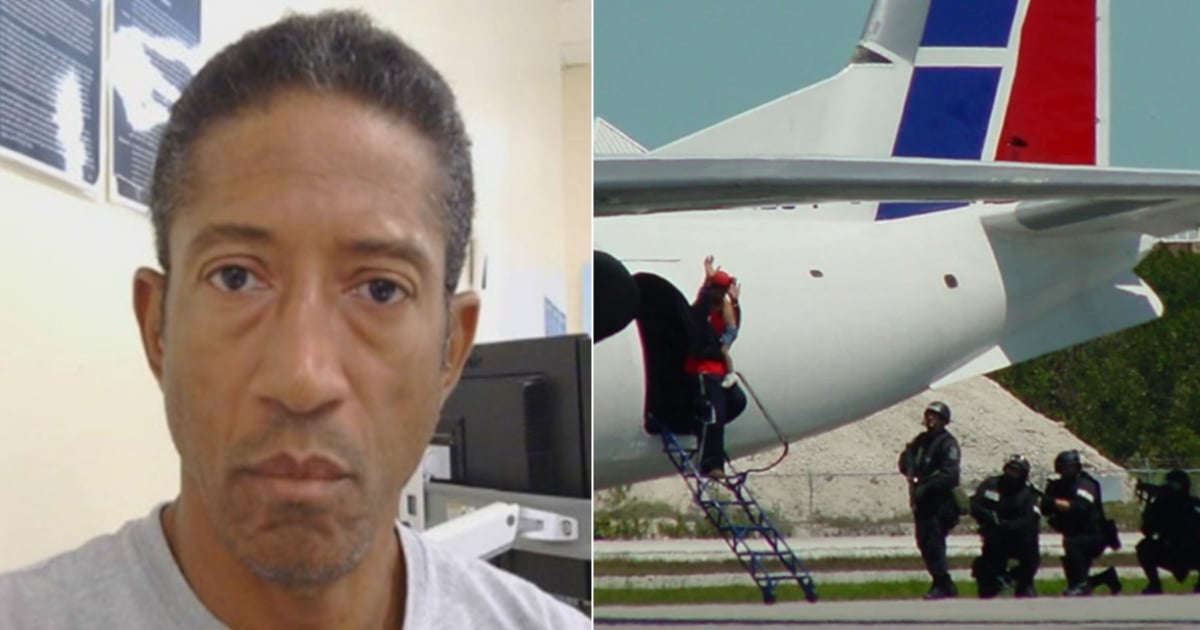
Adermis Wilson González, a Cuban national who gained notoriety for hijacking a plane in 2003, was deported to Mexico after spending nearly three months in a Texas immigration facility. This decision came after the Cuban government refused to take him back. Wilson, now 56, had served a 20-year sentence for air piracy and was released in 2021 on humanitarian grounds due to his fragile health condition.
Wilson was transported to Mexico by bus alongside a group of 40 individuals, including other Cubans, without receiving any official documents, as reported by his sister Yolaine Wilson to Café Fuerte. "They were released after having their photos taken. We've been in touch and sent him some money to help him get by," she explained.
The Wilson family disclosed that he managed to rent a shared room with another deportee, though they chose not to disclose the specific location. His sister added that they are at least relieved he wasn't sent to an African country, which could have further complicated his situation.
The Notorious Hijacking Incident
Wilson became internationally known for his role in the hijacking of a Cubana de Aviación flight from Nueva Gerona to Havana on March 31, 2003. Armed with two fake grenades, he demanded that the pilot of the Antonov-24, carrying 46 passengers, fly to Miami. However, due to a lack of fuel, the plane was forced to make an emergency landing in Havana.
After 14 hours of negotiations, involving both Fidel Castro and the then-head of the U.S. Interests Section, James Cason, the aircraft eventually took off for Key West, escorted by F-15 fighters and a Black Hawk helicopter. Upon arrival, Wilson surrendered to U.S. authorities without causing any injuries.
Post-Incarceration Journey
During his time in prison, Wilson learned English, earned a civil engineering degree from the University of Pennsylvania in 2013, and obtained a master's in Logistics from the University of North Carolina. After serving his sentence at a federal prison in South Carolina, he was moved to an ICE detention center to begin deportation proceedings, which were temporarily halted for humanitarian reasons.
On June 29, he was detained in Houston during an ICE operation. ICE reported that Wilson was among 1,361 immigrants arrested in recent operations in the Houston area, which included individuals with a history of serious criminal offenses.
U.S. Crackdown on Deportations
His deportation is part of a broader initiative by the Trump administration, following a Supreme Court decision in June that allowed for the resumption of deportations to countries other than migrants' countries of origin. In a recent statement, the Department of Homeland Security (DHS) listed countries such as Eswatini, Uganda, South Sudan, and El Salvador as destinations for migrants rejected by their home countries. Although Mexico was not on the list, there have been several known cases of deportees sent to Mexico.
Cuba consistently refuses to accept back its citizens with serious criminal records, leaving many undocumented Cubans in a legal limbo, and providing the U.S. the opportunity to deport them to third countries. Wilson's case is unprecedented as he is the first Cuban to be expelled from the U.S. after escaping the island through an aerial hijacking and completing his sentence.
The family highlights the added difficulty of the situation given the age and health of their mother, who is 87 and suffers from Alzheimer's, residing in Houston. Wilson had previously expressed his frustration over the uncertainty of his deportation outcome, fearing for his family and his life.
"It would be the greatest irony of life, fleeing Cuba only to die in an immigration center of the most powerful country in the world, where I came seeking freedom," he said in a 2021 phone conversation with CiberCuba from prison.
The deportation occurs amid intensified raids and mass arrests of undocumented immigrants by the U.S. administration, targeting individuals with criminal records or serious offenses. Cuba's policy of not accepting citizens with criminal backgrounds has forced the U.S. to deport these individuals to other countries.
Frequently Asked Questions About Adermis Wilson's Deportation
Why was Adermis Wilson deported to Mexico?
Wilson was deported to Mexico after the Cuban government refused to accept him back, despite completing a 20-year sentence for air piracy in the United States.
What was Adermis Wilson's crime?
Adermis Wilson hijacked a Cubana de Aviación flight in 2003 using fake grenades, demanding to be flown to Miami. The plane had to make an emergency landing in Havana due to fuel constraints.
How did Wilson spend his time in prison?
While incarcerated, Wilson learned English, earned a degree in civil engineering from the University of Pennsylvania, and obtained a master's in Logistics from the University of North Carolina.