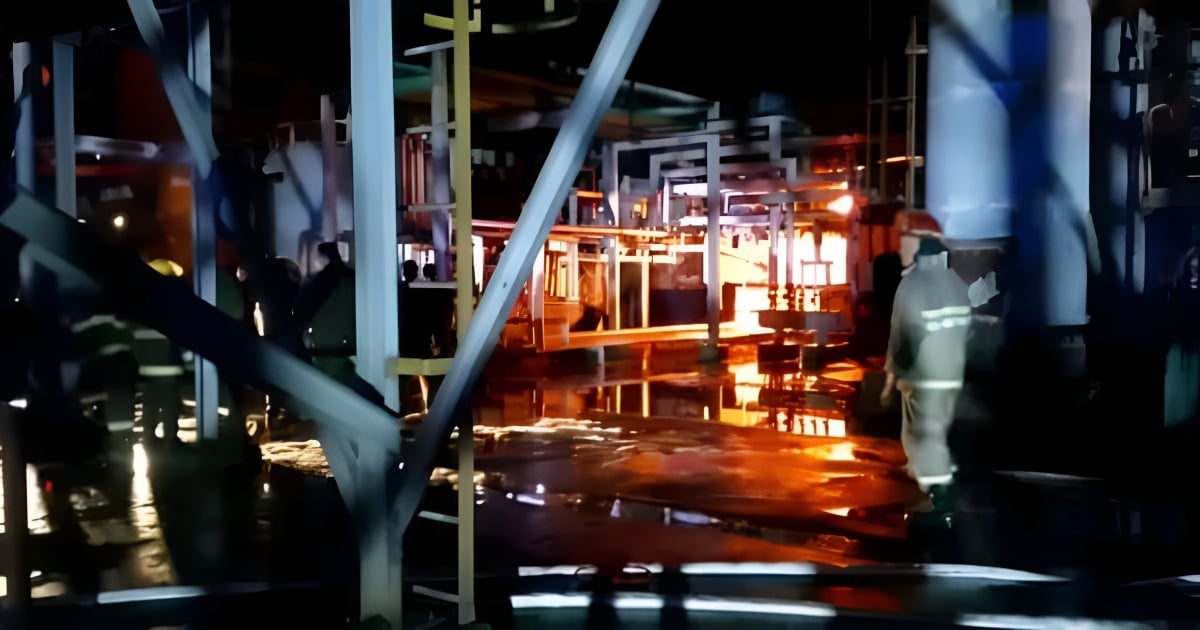
In the early hours of Sunday, a fire broke out at the fuel oil generators of the Antonio Maceo Thermal Power Plant (Renté) in Santiago de Cuba, exacerbating the already dire energy crisis in the country. According to local reports on social media, the blaze started around 1:00 am on September 21, when flames were detected in the auxiliary generation facilities using heavy fuel oil. This information was shared by Aris Arias Batalla, a Public Health Ministry (MINSAP) official, on Facebook.
Firefighting teams from commands 1 and 4, located in Martí and Vista Alegre, were quickly deployed along with water tanker trucks from Agua Santiago, Red Cross teams, and technical brigades from the Electric Union (UNE). This incident prompted the presence of top officials from the Communist Party, provincial government, and the Ministry of the Interior (MININT), highlighting the seriousness of the situation.
Fortunately, no injuries or fatalities have been reported. The Facebook page of the El Purial Popular Council in Holguín municipality stated that there was "no direct danger to the main generating plant." However, efforts are ongoing to completely extinguish the flames and commence investigations to uncover the fire's cause.
Recent Failures at Renté
The fire occurred just hours after Unit 5 at Renté was taken offline due to a leak in the furnace at 6:50 am on Saturday, as confirmed by the UNE in their daily report. Just a day before, Unit 3 of the same plant also went out of operation merely 11 hours post-synchronization because of a "low vacuum" issue.
These consecutive failures have rendered Renté nearly incapable of providing a stable contribution to the National Electric System (SEN), despite being one of the most crucial plants in eastern Cuba. This situation underscores the accumulated deterioration of the facility, which has endured over four decades of operation with incomplete maintenance and a chronic shortage of spare parts.
Critical Context in the National Electric System
This event unfolds amidst a deficit that often exceeds 1,800 megawatts during peak hours, accounting for more than half of the national demand. Simultaneously, other plants like Felton, Mariel, Santa Cruz, and Céspedes have units out of service due to breakdowns or maintenance, while over fifty distributed generation groups are halted due to diesel shortages, and more than 100 MW are inactive because of a lack of lubricants.
Even though authorities maintain that the main Renté plant was not at risk, the fire at the fuel oil generators underscores the structural fragility of the SEN. Each malfunction or incident exacerbates the crisis, leading to prolonged blackouts across the country.
Understanding the Impact of the Renté Power Plant Incident
What caused the fire at Renté Power Plant?
The exact cause of the fire is still under investigation, but it started in the auxiliary facilities that use heavy fuel oil.
Were there any injuries reported?
No injuries or fatalities have been reported from the incident.
How does this incident affect Cuba's energy supply?
The incident highlights the fragile state of Cuba's National Electric System, potentially leading to more frequent and prolonged blackouts.