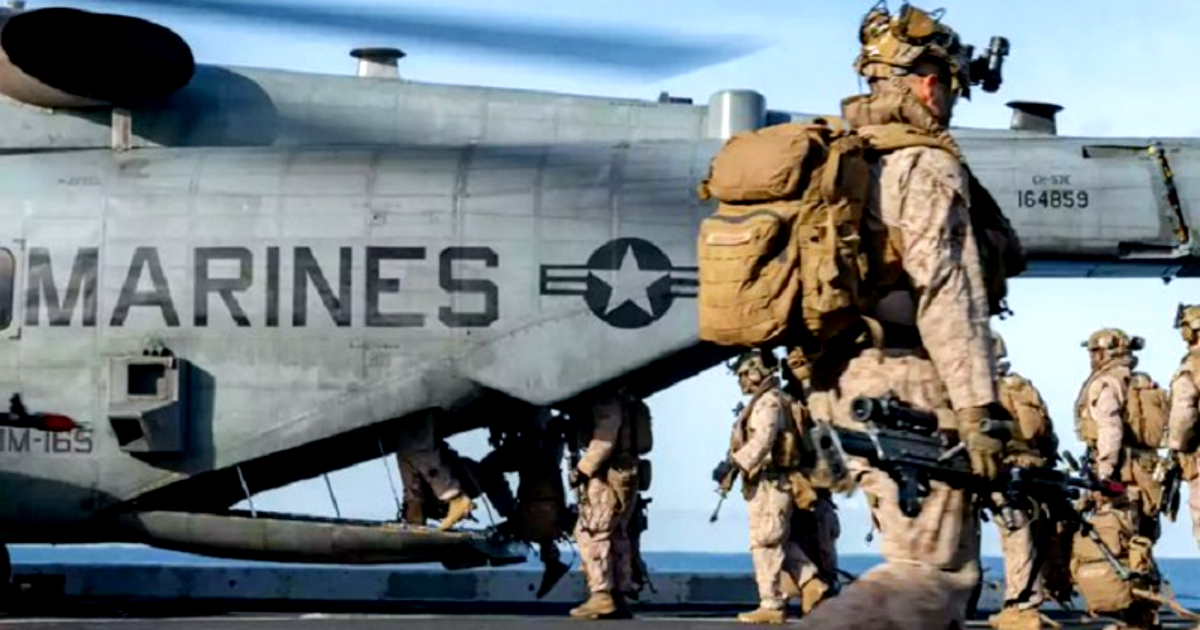
In recent weeks, the Trump administration has ramped up its military deployment in the Caribbean Sea, citing a campaign against drug trafficking. However, analysts and officials interviewed by the New York Times agree that the true aim is to intensify pressure to oust Venezuelan President Nicolás Maduro. This enhanced U.S. presence includes eight warships, an attack submarine, several P-8 surveillance aircraft, and ten F-35 stealth fighters recently relocated to Puerto Rico. These forces are poised to deter Venezuelan aviation and are ready should Trump order air strikes. Approximately 4,500 troops are involved in this operation, according to Pentagon sources.
Secretary of State Marco Rubio made the administration's stance clear: "We will not allow a cartel, disguised as a government, to operate in our hemisphere." Rubio emphasized Maduro's status as a "fugitive from U.S. justice," facing charges in the United States.
Since early September, the U.S. military has destroyed three vessels that, according to Washington, were transporting drugs to the United States. In contrast, Venezuelan President Maduro condemned these actions as "heinous crimes" against unarmed civilians, accusing the White House of attempting to start a war.
Military Experts Question Antidrug Narrative
Military experts suggest that the deployment extends beyond antidrug operations. Retired Admiral James G. Stavridis, former head of the Southern Command, described it as "a clear signal that the Trump administration is serious about provoking a change of regime or behavior from Caracas."
Defense Secretary Pete Hegseth announced forthcoming attacks targeting "narco-terrorists," asserting on social media that the U.S. will "track, kill, and dismantle their networks throughout the hemisphere."
Regional Concerns and Diplomatic Tensions
The heightened military presence has sparked regional concern. Elizabeth Dickinson, an analyst at the International Crisis Group in Colombia, warned that attacks on alleged drug trafficker boats "are being read as warning shots that could lead to greater escalation."
Simultaneously, Democratic lawmakers in Washington have questioned the legality of these attacks. Congressman Jim Himes described the use of lethal force without conclusive evidence against alleged traffickers as "morally reprehensible and strategically unwise."
Although the White House maintains that the operation focuses on drug interdiction, the military buildup and the administration's rhetoric suggest a broader strategy against Maduro.
The memory of U.S. military interventions in Latin America, like the 1989 invasion of Panama to capture Manuel Noriega, heightens fears that the region is on the brink of another direct confrontation.
Diplomatic Escalation and New Alliances
The U.S. military reinforcement in the Caribbean occurs amid escalating tensions between Washington and Caracas. Though Trump recently denied discussing "regime change" with his military advisers, his actions and the administration's rhetoric indicate a clear hardening against Maduro's illegitimate government.
Simultaneously, Venezuela has sought to strengthen its international alliances. Maduro has deepened cooperation with Cuba and other political and economic partners, aiming to project support against what he views as an "imperialist threat" from the United States.
Adding to this dynamic is Trump's ultimatum demanding the immediate repatriation of prisoners and psychiatric patients allegedly sent from Venezuela to U.S. territory. The president warned that failure to comply would result in "incalculable" repercussions for Caracas.
These episodes reveal that the confrontation extends beyond the military sphere, spilling into diplomatic and political arenas, placing the region in a state of heightened tension with unpredictable potential consequences.
Key Questions About U.S. Military Operations in the Caribbean
What is the United States' stated reason for increasing its military presence in the Caribbean?
The United States claims that the increased military presence is part of a campaign against drug trafficking.
How has the Venezuelan government responded to U.S. military actions?
The Venezuelan government has condemned the U.S. military actions as "heinous crimes" against unarmed civilians and accused the White House of trying to provoke a war.
What concerns have been raised about the legality of the U.S. military operations?
Democratic lawmakers in the U.S. have questioned the legality of using lethal force without conclusive evidence against alleged drug traffickers, calling it morally and strategically questionable.