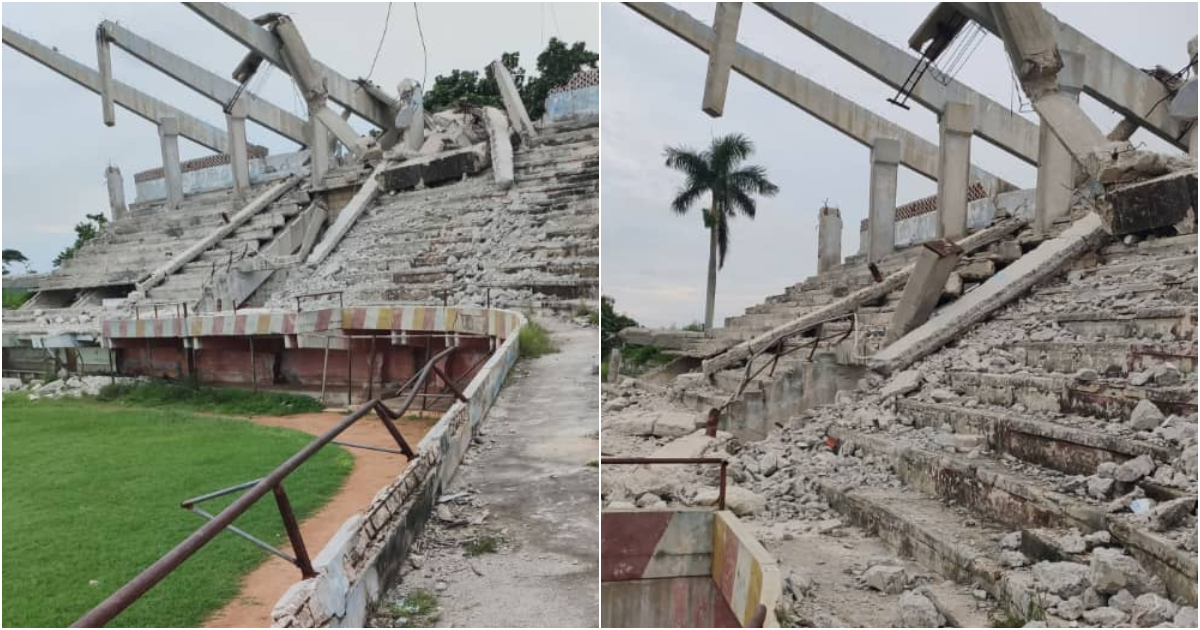
The Jesús Suárez Gayol Stadium, once a beacon of baseball excellence in the Mariel municipality of Artemisa province, now lies in ruins. Once home to talents like Jonder Martínez and Miguel Alfredo González, this stadium has succumbed to decades of neglect and the devastating impact of Hurricane Rafael.
Constructed between 1970 and 1982, Suárez Gayol was among the best-equipped stadiums in the former province of Havana, boasting artificial lighting and capable of hosting national baseball series. The split of the province into Artemisa and Mayabeque in 2011 marked a turning point for the stadium's fate. Despite its historical significance and the emergence of prominent Cuban athletes, the stadium's proximity to the sea and lack of upkeep led to its gradual decay, as noted by Cuban sports journalist Yasel Porto on Facebook via Dporto Sports LLC. He highlighted unsuccessful restoration attempts starting in 2012 and mentioned that by 2019, the stadium could still host press softball events, although today, the stands have vanished, rendering the site unrecognizable.
Three years ago, Hurricane Rafael exacerbated the already dire situation. The plight of Suárez Gayol is not an isolated incident. Other sports facilities in places like Baracoa (Guantánamo), Manzanillo (Granma), and Puerto Padre (Las Tunas) have similarly suffered from neglect and infrastructure loss, underscoring a troubling pattern that hampers the development of Cuban athletes.
According to Porto, "Cuban sports, in the majority of its components, are more of a relic from the past than a testament to the present, and more present than future." Despite a struggling economy and a dearth of venues, talent continues to emerge, yet structural apathy imposes an unavoidable barrier to the growth of sports in the province and the nation.
The alarming number of abandoned public spaces, heritage sites, and iconic locations in Cuba highlights a systemic failure to preserve them, plagued by official indifference and a populace resigned to deterioration amid economic turmoil. In Artemisa, the San Pedro camp suffers from neglect and institutional abandonment, with only half of its cabins operational. Issues include vandalism, illegal occupations, and resource shortages.
In Guanajay, the Carlos Baliño Museum, designated a National Monument, remains shuttered after six years. The San Rafael Cemetery in Guantánamo displays cracked tombs, illegible or destroyed headstones, and corroded marbles in graves of Liberation Army heroes, exemplifying institutional neglect, public ignorance, and systematic vandalism of heritage sites.
Another example is the El Arte Printing House in Manzanillo, a cultural icon of eastern Cuba, now languishing in abandonment as its historical and editorial legacy crumbles under state indifference. The Máximo Gómez Airport in Ciego de Ávila, constructed at a cost exceeding 100 million pesos, stands as a purposeless ruin, a testament to public investment lost to neglect and absurdity.
In Marianao, the former Oriental Park Racetrack, once a symbol of Havana's grandeur, has been reduced to a state warehouse amid rubble. The once-vibrant Spanish Casino of Havana in Playa, the iconic Havana Musical Theater, and the old Venus Hotel in Santiago de Cuba are further examples of cultural and architectural gems laid to waste.
The State of Cuban Sports and Infrastructure
What caused the deterioration of the Suárez Gayol Stadium?
The decline of the Suárez Gayol Stadium was due to decades of neglect, exposure to the sea, and the impact of Hurricane Rafael.
Are there efforts to restore other sports facilities in Cuba?
There have been attempts to restore facilities, but many have not succeeded, leading to a pattern of neglect and decay.
How does the current state of Cuban sports affect athletes?
The lack of proper facilities and infrastructure limits the development and future of Cuban athletes, despite the emergence of new talents.