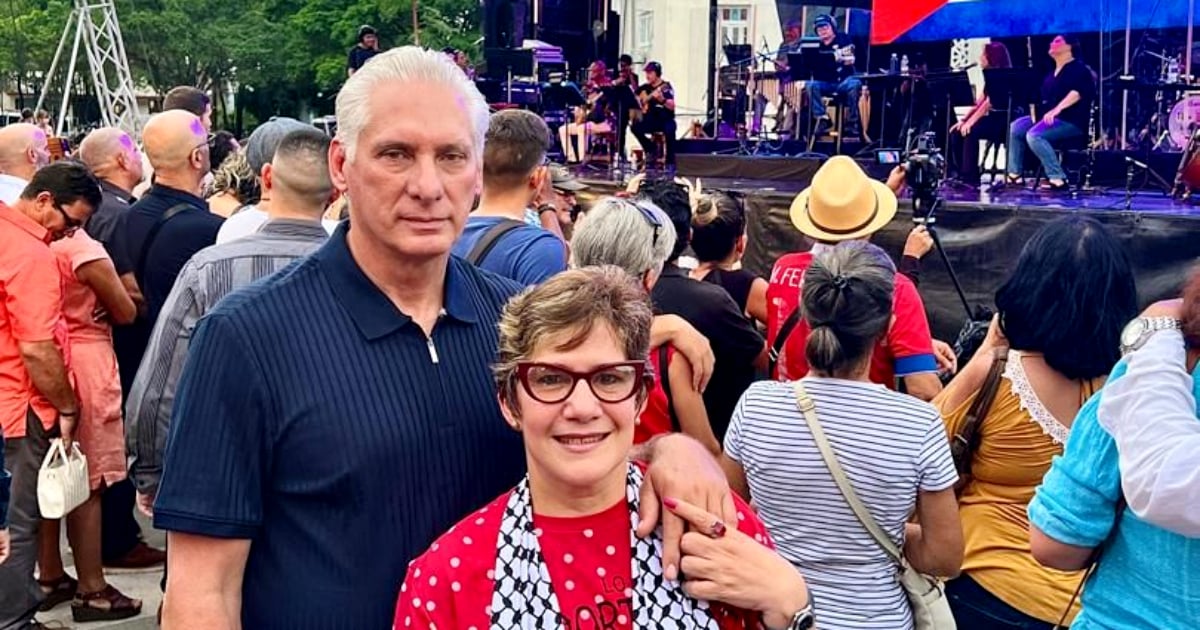
On Friday, Cuban leader Miguel Díaz-Canel attended a concert by Silvio Rodríguez on the steps of the University of Havana. The event was ostensibly dedicated to the University Student Federation (FEU) for its involvement in protests against ETECSA's tariffs. In a tweet following the concert, Díaz-Canel described the evening as a "poetic break before resuming the challenging daily life," sparking outrage in a nation mired in an unprecedented crisis.
While the leader, chosen by former general Raúl Castro, enjoyed the cultural event alongside his wife, Lis Cuesta Peraza, millions of Cubans faced power outages exceeding 20 hours, water supply failures, and widespread shortages. On the same day, instead of offering real solutions to the national electro-energy system's collapse, Díaz-Canel requested the Electric Union to "better" distribute power cuts.
Despite lacking funds to pay for the Turkish power barges essential to sustaining the electrical grid or to build new thermal power plants, the Cuban regime spent resources on a concert filled with security to ensure the comfort of the man largely responsible for the water shortages in Central Havana and other municipalities. Meanwhile, Díaz-Canel enjoyed a "poetic break" from his "arduous work."
The irony grows when considering that only hours earlier, Díaz-Canel and Prime Minister Manuel Marrero Cruz led an emergency meeting with provincial leaders to address the energy and water crisis. They acknowledged the national electro-energy system was in a "critical moment," with outages exceeding 24 hours in several provinces, and that 50% of water supply issues stemmed from a lack of electricity. However, instead of announcing concrete measures, Díaz-Canel reiterated the need for "revolutionary vigilance" and "resistance," repeating a hollow message to an exhausted populace.
This "poetic break" occurs as social unrest is rising, with protests in Santiago de Cuba, Gibara, and Havana neighborhoods where citizens demand electricity, water, and food. Repression and fear haven't stopped the visible discontent in a country where the official promise to "move forward" seems detached from daily life.
The contrast is further highlighted by images of Raúl Castro's grandson enjoying a lavish party at a tourist cay, circulated this week. While the people endure hardship, the symbols of power revel in concerts, hotels, and exclusive beaches, disconnected from the national reality.
Ultimately, Díaz-Canel's message on X (formerly Twitter) felt like a mockery to those enduring darkness and thirst. Cuba, far from being "love and Revolution" as the leader proclaimed, is experiencing one of its darkest periods, where "poetic breaks" seem privileges reserved for the elite.
Cuba's Current Crisis and Leadership
What was the purpose of Silvio Rodríguez's concert in Havana?
The concert was dedicated to the University Student Federation (FEU) for its role during protests against ETECSA's tariffs.
How did Díaz-Canel describe the concert event?
Díaz-Canel described it as a "poetic break before resuming the challenging daily life," a statement that sparked public outrage.
What are the current challenges faced by Cuban citizens?
Cuban citizens are dealing with prolonged power outages, water supply failures, and widespread shortages.
How has the Cuban leadership responded to the crisis?
The leadership, instead of implementing concrete solutions, has emphasized "revolutionary vigilance" and "resistance," failing to address the immediate needs of the populace.