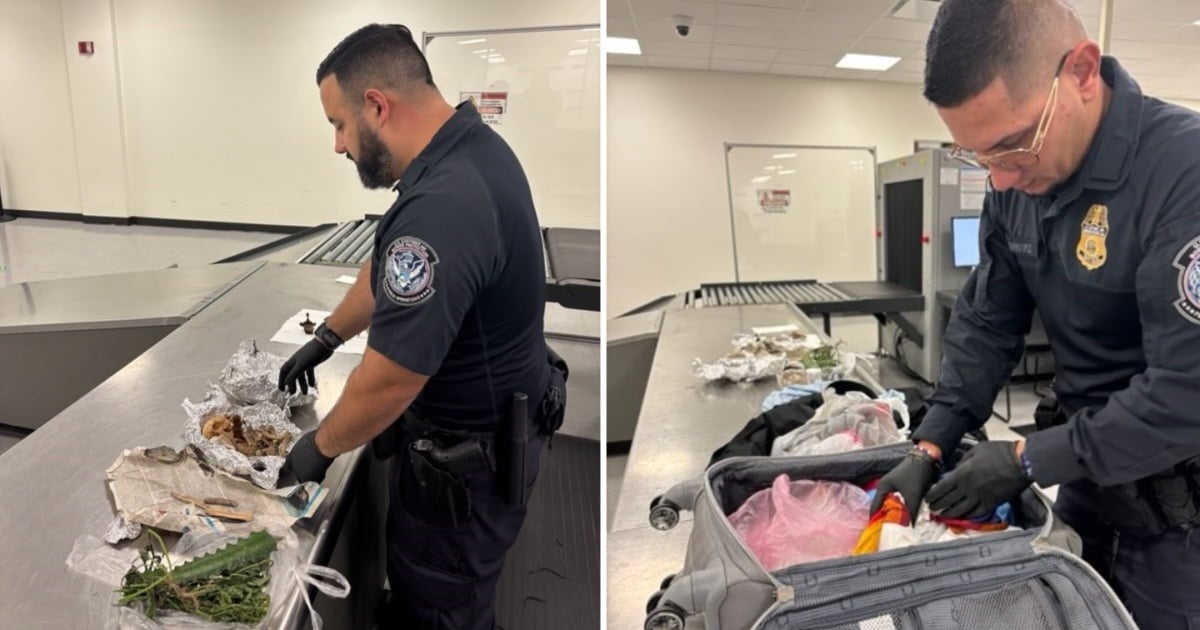
U.S. Customs and Border Protection (CBP) officers at Tampa International Airport in Florida uncovered what appeared to be human remains, including a portion of a skull, in a traveler's luggage. The passenger claimed that the items were intended "for rituals." Carlos C. Martel, the Director of Field Operations, shared on X that the items were seized and destroyed due to health risks.
During the inspection, officials found prohibited plants, undeclared cigars, and a duffel bag wrapped in aluminum foil containing bones. The identity and nationality of the passenger have not been disclosed, and he had declared only 10 cigars prior to the discovery, according to reports circulating on official networks.
CBP emphasized that, considering the potential threat to public health, all the materials were confiscated and destroyed. The agency did not provide further details regarding the origin of the remains. The public statement described the items as "apparent" or "suspected" human remains, a precautionary language used until verifications are complete.
Importing human remains and plant-based materials into the United States is subject to stringent health and biosecurity regulations. CBP enforces rules from other agencies and is authorized to confiscate and destroy items that pose risks or violate restrictions. In the context of international travel, CBP reminds travelers that there are specific procedures for legally transporting remains, such as ashes in an urn, which depend on the purpose of importation and adherence to health requirements.
Recently, a 22-year-old Cuban national was arrested at Miami International Airport, Florida, after attempting to smuggle 40 live birds hidden on his person. The operation was thwarted before he could board his flight, preventing what could have posed a significant risk to border security and public health.
Understanding CBP Regulations on Human Remains
What happens to items seized by CBP due to health risks?
Items that pose health risks are confiscated and destroyed to prevent potential threats to public safety and health.
Are there specific procedures for importing human remains into the US?
Yes, there are specific regulations and procedures for legally transporting human remains, such as ashes in an urn, which require compliance with health and safety standards.
How does CBP handle undeclared items found during inspections?
Undeclared items discovered during inspections are subject to seizure, and the traveler may face penalties or legal action depending on the nature and risk level of the items.