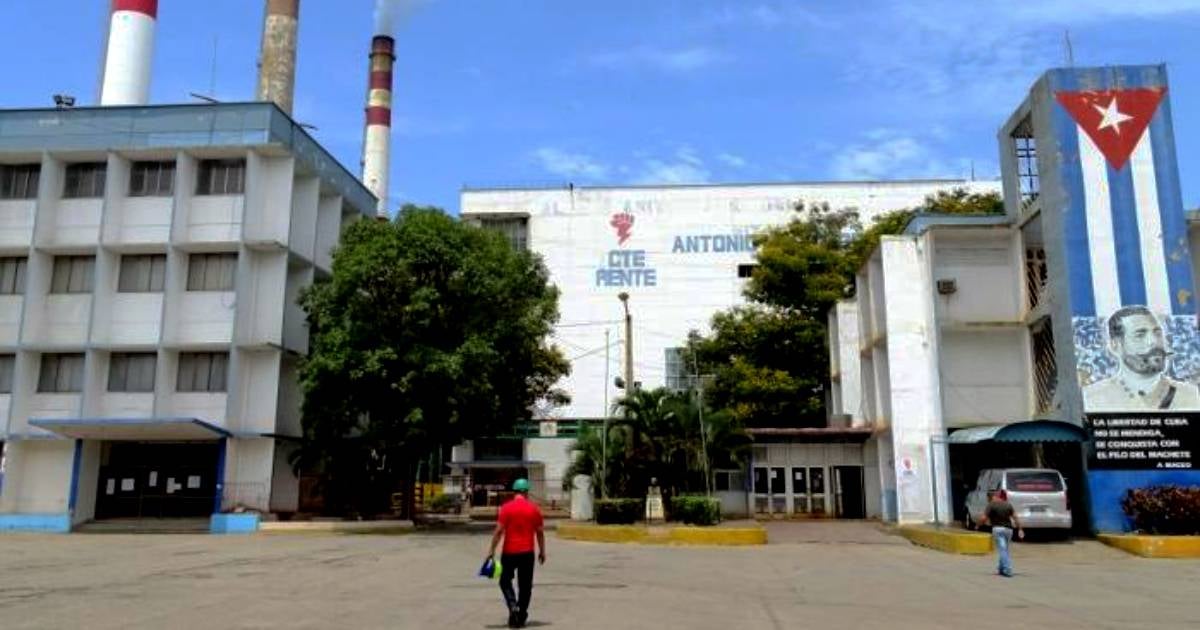
The Unit 3 of the Antonio Maceo Thermoelectric Plant, commonly referred to as Renté, located in Santiago de Cuba, has once again ceased operations just hours after reconnecting to the National Electric System (SEN). According to a statement from the Cuban Electric Union (UNE), the unit was shut down at 2:05 PM due to "low vacuum," a technical malfunction that disrupted its functionality. This breakdown occurred less than 11 hours after its reintroduction, which was officially announced at 3:35 AM on the same day.
Earlier that day, state media outlets were praising the supposed revival of the Santiago-based plant. Granma reported that Renté was contributing over 150 megawatts to the SEN, with units 3, 5, and 6 operating concurrently, promising an increase in output throughout the day. However, the technical collapse of Unit 3 highlights the vulnerability of Cuba's thermoelectric infrastructure, plagued by frequent outages due to aging equipment, inadequate maintenance, and shortages of spare parts.
The Renté shutdown adds to a growing list of technical failures and stoppages within the SEN, which have resulted in widespread power outages across the nation. On Friday, UNE acknowledged a shortfall of up to 1760 MW during peak evening hours, impacting more than half of the country's electricity consumption.
In addition to breakdowns in key plants like Felton, Mariel, Santa Cruz, and Cienfuegos, the energy crisis is exacerbated by a lack of fuel. Fifty-three distributed generation plants are offline due to diesel shortages, with many others halted by a scarcity of lubricants.
Cuba's energy situation has evolved into a structural issue affecting every aspect of daily life. Despite announcements regarding renewable energy and modernization projects, the national electric system remains heavily reliant on deteriorating thermoelectric plants and unsustainable supply agreements. Prolonged and frequent blackouts have sparked public protests in various provinces, including a recent demonstration in Gibara, Holguín, where at least 27 individuals were detained while demanding electricity and water.
Meanwhile, the Cuban populace finds itself ensnared in a cycle of unfulfilled promises, technical failures, and power cuts that have become the norm rather than the exception on the island.
Understanding Cuba's Energy Crisis
What caused Unit 3 at Renté to shut down?
Unit 3 at the Renté plant shut down due to a technical issue identified as "low vacuum," which disrupted its operation.
How has the shutdown of Renté affected Cuba's power supply?
The shutdown of Renté has contributed to a significant deficit in the National Electric System, with reports of up to 1760 MW shortfall during peak hours, affecting over half of the nation's electricity consumption.
Why is Cuba's energy crisis considered structural?
Cuba's energy crisis is deemed structural due to its reliance on outdated thermoelectric plants, insufficient maintenance, and unsustainable supply agreements, compounded by fuel shortages.