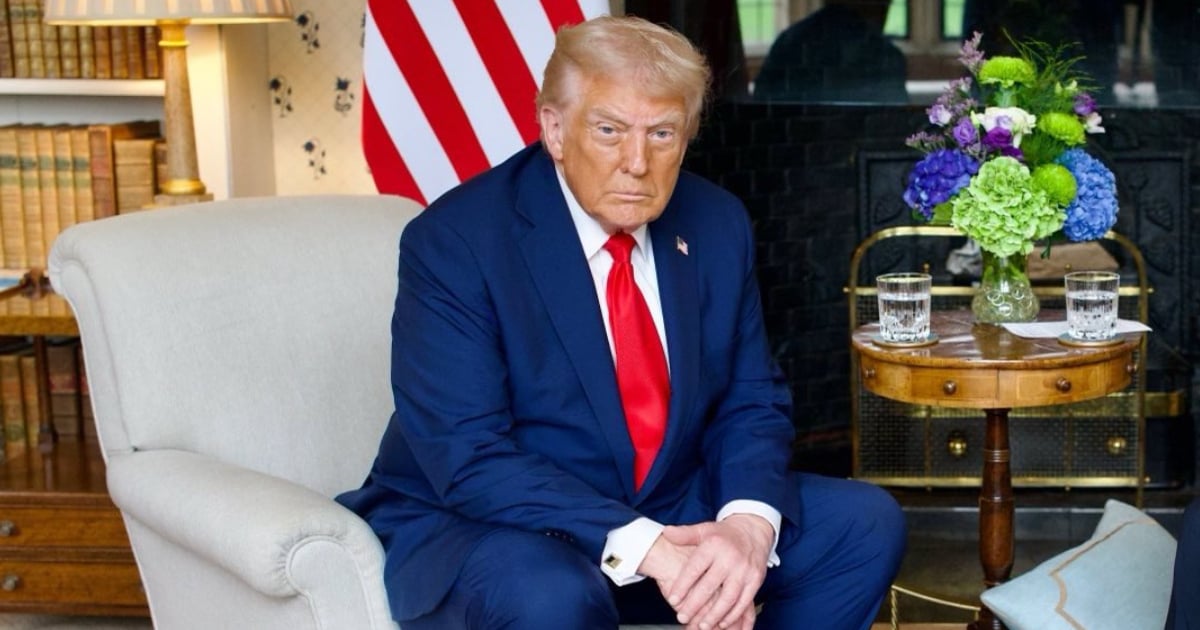
A federal judge in Florida has dismissed a $15 billion defamation lawsuit filed by former President Donald Trump against The New York Times and its publisher, citing the case as inappropriate and lacking in clarity and conciseness. Judge Steven D. Merryday of the U.S. District Court for the Middle District of Florida described the 85-page complaint as "decidedly improper and inadmissible," failing to meet federal standards for clarity, according to a report by EFE news agency.
The lawsuit accused the newspaper of large-scale defamation and slander, claiming that three articles published between September and October 2024 and the book "Loser: How Donald Trump Squandered His Father's Fortune and Created the Illusion of Success," released last year by Penguin Random House, harmed Trump's image and his presidential campaign. The complaint named reporters Peter Baker, Russ Buettner, Susanne Craig, and Michael S. Schmidt as authors, alleging the publications contained false statements about supposed tax evasion schemes, interviews with former allies, and comparisons of the ex-president to a potential dictator.
Trump also sent letters to the newspaper and its publisher, accusing them of acting as a "boisterous mouthpiece for the Democratic Party" and spreading malicious falsehoods. Both The New York Times and Penguin Random House denied the allegations, stating the lawsuit was unfounded and an attempt to suppress independent journalism.
This is not Trump's first legal battle with the media outlet; in 2018, he lost a lawsuit regarding his finances and was ordered to pay $400,000 in legal fees to the journalists involved. The ruling reinforces the legal protection American press enjoys against hefty lawsuits based on criticism and investigative reporting, underscoring that even a former president cannot utilize the judicial system to intimidate media that scrutinize his record.
Trump's confrontational stance with the media is not new and fits within his habitual strategy of discrediting journalists and sowing doubt about their reports, especially when the official narrative is questionable. In June, Trump accused The New York Times and CNN of being "enemies of the country" and "bad and sick people" for publishing reports that allegedly aimed to discredit American pilots and tarnish the country's image.
In a related media turmoil, ABC, owned by Disney, announced the indefinite suspension of "Jimmy Kimmel Live!" following a monologue in which the host commented on the murder of conservative activist Charlie Kirk. According to U.S. media reports, this decision came after Brendan Carr, the chairman of the Federal Communications Commission (FCC), harshly criticized Kimmel and threatened to "take action" against Disney and ABC.
During his segment, Kimmel speculated that the alleged murderer, Tyler Robinson, might be a Republican and Trump supporter, suggesting that the "MAGA crowd" was trying to portray him as someone other than "one of their own" to gain political advantage. ABC's suspension comes two months after CBS announced the permanent end of "The Late Show with Stephen Colbert," a move the network attributed to "purely financial" reasons amid the challenging late-night landscape. Colbert's fans perceived it as a punishment for his criticisms of former President Trump. ABC did not specify the duration of the suspension or what will replace the show in its time slot. Meanwhile, the debate intensifies over the limits of political satire and the role of regulators concerning content aired by open networks and their affiliates.
Legal and Media Implications of Trump's Lawsuit
Why was Trump's lawsuit against The New York Times dismissed?
The lawsuit was dismissed because it was deemed inappropriate and lacking in clarity and conciseness, failing to meet federal requirements for such cases.
What did the articles and book allegedly harm Trump's image?
The lawsuit claimed that the articles and book made false assertions about tax evasion schemes, interviews with former allies, and compared Trump to a dictator, all of which damaged his image and presidential campaign.
How did The New York Times and Penguin Random House respond to the allegations?
The New York Times and Penguin Random House denied the allegations, stating that the lawsuit lacked merit and represented an attempt to stifle independent reporting.