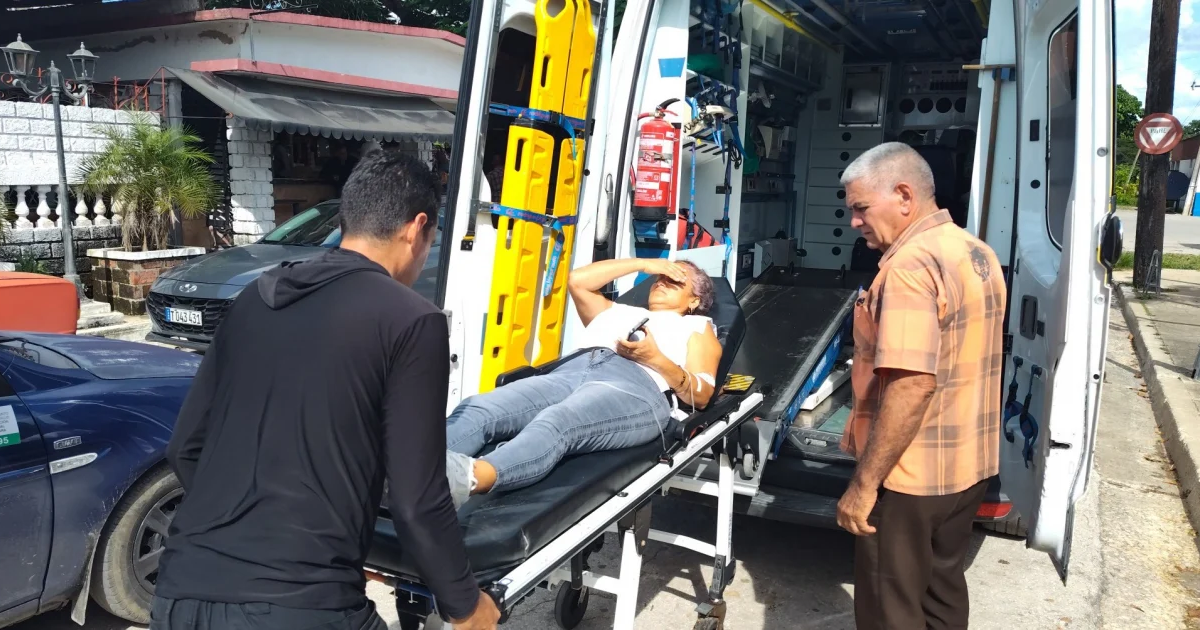
Transport Minister Eduardo Rodríguez Dávila recently took to Facebook to provide an update on the situation involving dozens of passengers on Train No. 18, running from Bayamo to Havana, who experienced food poisoning. The outbreak led to symptoms such as vomiting and dehydration, necessitating an emergency stop in the town of Jicotea, Ranchuelo municipality (Villa Clara), to administer urgent care to those affected.
According to the official report, 653 passengers were assessed, and 25 were hospitalized: 20 adults and five children. The children were admitted to José Luis Miranda Pediatric Hospital in Santa Clara, while the adults received care at Arnaldo Milián Castro Provincial Hospital. Additionally, three crew members became ill. Although no severe cases were reported, this incident highlights the vulnerability faced by travelers.
The train was carrying 38 children, five of whom fell ill. Among the 485 elderly passengers, 21 suffered from poisoning. There was one pregnant woman aboard who was unaffected, and 159 seniors over 60 also did not show any symptoms. Out of the 45 crew members, three were affected.
The minister stated that the "situation is now under control" due to the prompt response of medical institutions and the presence of Party and Government officials, alongside representatives from Ferrocarriles de Cuba.
Unknown Causes and Official Responses
Rodríguez Dávila mentioned in another post that upon reaching Havana, remaining passengers were transported by bus to their home municipalities. He noted that several units from the SIUM in the capital were on standby but ultimately not needed. The minister expressed concern about the incident, citing ongoing efforts to improve food services on national trains. "We will implement additional measures to prevent such incidents and improve service overall," he stated. Investigations are underway by specialized entities to determine the causes.
A Journey of Anxiety and Negligence
What started as a routine trip to the capital quickly turned into a public health scare, exposing the deteriorating state of the railway system and the negligence of the responsible institutions. Despite official statements, the source of the outbreak remains unaddressed. Independent media and social media users have pointed fingers at a contaminated snack sold onboard by the state railway company.
According to the Facebook page La Tijera, initial symptoms emerged around 11:00 am the day after the train's departure, worsening as the journey continued. Witnesses reported scenes of distress and a lack of immediate response from Empresa Viajero, which, according to complaints, failed to provide solutions for stranded passengers or transport for the sick to Havana. One passenger voiced the frustration of many, asking, "Were they just waiting for us to collapse from weakness?"
Eventually, buses were arranged for some passengers once they were discharged, while the train proceeded to Matanzas, reaching its destination at 8:30 pm, accompanied by local authorities and health and epidemiology personnel.
This incident is part of a series of failures that reveal the collapse of state-controlled infrastructure and services. The railway system, once a cornerstone of national mobility, has become a health and safety hazard for Cubans, failing to ensure basic hygiene and adequate emergency response. While the government speaks of a "quick response," the harsh reality is that train travel in Cuba has become a journey fraught with uncertainty, official neglect, and health risks.
Crucial Insights into the Bayamo-Havana Train Incident
What caused the food poisoning on the Bayamo-Havana train?
The exact cause of the food poisoning remains unknown, but independent reports and social media suggest a contaminated snack sold onboard by the state railway company may be responsible.
How many passengers were affected by the outbreak?
A total of 25 passengers were hospitalized due to food poisoning, including 20 adults and five children. Additionally, three crew members were also affected.
What measures is the government taking to prevent future incidents?
The government plans to implement additional measures to improve food services on trains and prevent similar incidents. Investigations are also underway to determine the causes of the outbreak.