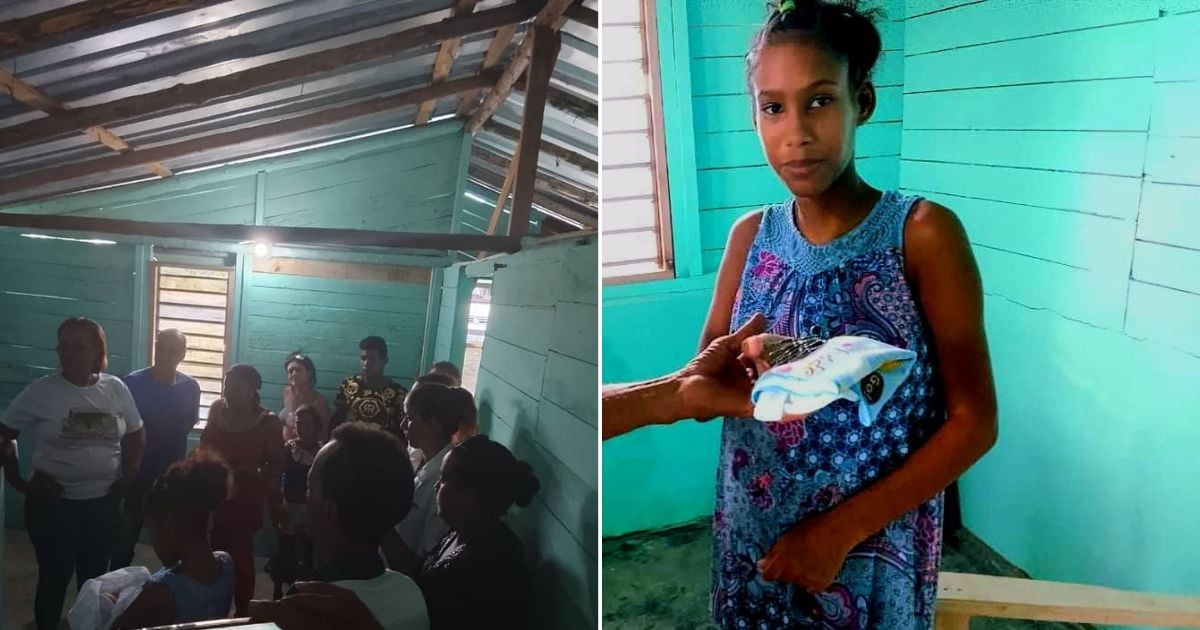
Once again, the Cuban government's propaganda machinery has turned a tragic situation into a so-called "social achievement": teenage pregnancy. In this recent instance, a young girl, merely 13 years old, was granted a home in Baracoa, with local authorities presiding over the event.
As reported on Facebook by regime spokesperson Carlos Pérez, the Municipal Administration Council provided a house to the young mother, calling it a "joint effort" among the education, health, and community sectors. This action was portrayed as an act of "solidarity and social commitment."
The Municipal Health Directorate in Baracoa also shared this news on social media, emphasizing the involvement of the People's Council president and the municipal mayor in the ceremony. These posts repeatedly framed the housing grant as a gesture of support for "vulnerable families, especially teenage mothers."
Unveiling the Harsh Reality of Child Pregnancy in Cuba
However, this case exposes a grim reality that is often hidden: child pregnancy in Cuba. More than a commendable act, the fact that a 13-year-old becomes a mother signifies a glaring lack of effective policies to prevent abuse, violence, and untimely pregnancies, which jeopardize the futures of countless adolescents on the island.
Early pregnancy remains a persistent issue in the country, officially recognized as a leading cause of school dropout and a factor exacerbating poverty. Yet, the regime prefers to tout it as a propaganda victory rather than addressing the underlying structural causes.
Public Reaction and Criticism
Despite the regime's attempt to portray this gesture as an example of "revolutionary solidarity," several online commenters have debunked the official narrative. Gustavo Fonseca questioned the "price" the teenager might pay in the future for this supposed help, while China GC highlighted that many working mothers who contribute to society have never had access to housing.
In a similar vein, Modesto Tamayo remarked that the house allocation "means nothing" in a country where thousands of women are homeless, arguing that such publications aim to disguise reality. Naranis Morales criticized past unfulfilled promises of housing for mothers with three or more children, expressing regret that a school-aged girl ended up in this situation.
Broader Social Issues in Cuba
Cuba faces severe social challenges, including mass migration, an aging population, and the deterioration of public services. Adding to these issues is the alarming fact of a high adolescent pregnancy rate. The United Nations Population Fund's (UNFPA) State of the World Population Report highlighted that although Cuba's overall fertility rate has been below the replacement level since 1978, the adolescent fertility rate remains high and is comparable to the rest of Latin America.
Juan Carlos Alfonso Fraga, deputy head of the National Office of Statistics and Information, noted that factors such as economic, labor, health, educational, and personal fulfillment contribute to the low overall birth rate. Nevertheless, these factors have not prevented early pregnancies, driven by a lack of comprehensive sexual education, gaps in family planning, and certain social leniencies towards early unions.
Data from a 2022 fertility survey of over a thousand Cuban families indicate a reduced reproductive ideal: 36% of women aged 15 to 45 had only one child, and 29% had fewer children than they desired.
Understanding Cuba's Teenage Pregnancy Crisis
What is the Cuban government's stance on teenage pregnancy?
The Cuban government often presents teenage pregnancy as a "social achievement," turning it into a propaganda tool rather than addressing the root causes.
How does teenage pregnancy affect young girls in Cuba?
Teenage pregnancy in Cuba leads to increased school dropout rates and exacerbates poverty, significantly impacting the future prospects of young girls.
What are the criticisms of the Cuban government's approach to teenage pregnancy?
Critics argue that the Cuban government uses cases of teenage pregnancy for propaganda, failing to address the underlying issues that contribute to this problem.