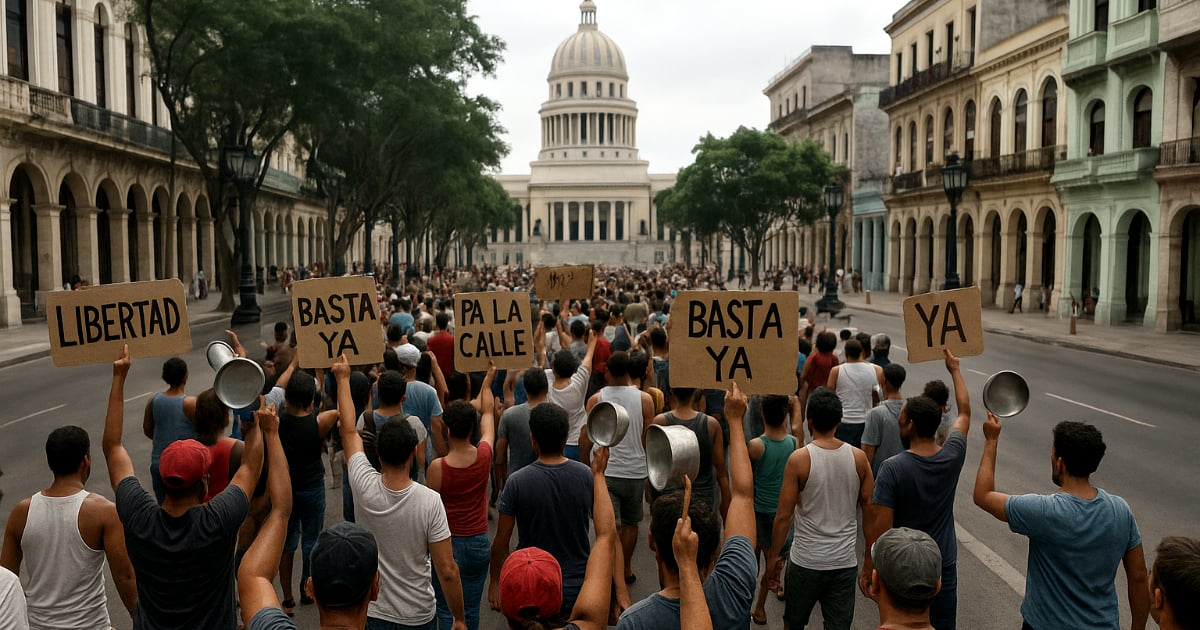
The frustration among residents of Old Havana over the scarcity of electricity, water, and food, highlighted in a video by CubaNet, went viral over the weekend, sparking a flood of reactions on CiberCuba's Facebook page. The footage, capturing the voices of locals chanting "Everyone to the streets," was shared by hundreds, igniting passionate comments that encapsulate the exasperation of a population enduring severe hardships.
A recurring sentiment in the comments is that the situation has reached an unbearable threshold. "We don't even have a single basic resource to live; demanding something as fundamental as water or electricity has become a crime," wrote one user. Another expressed anger, stating, "There's nothing left to lose; it's time to fight for the children who go to bed hungry."
Amid these messages, numerous calls to protest and unite were evident. "Stay in the streets and don't return home until all these corrupt officials are gone," read one of the most shared responses. Another user emphasized unity with, "If the people come together, they can't stop us." The slogan "Patria y Vida" resurfaced in many comments as a cry for freedom and a rejection of the current political system.
Widespread Discontent and Calls for Action
Outrage was not only directed at prolonged blackouts that disrupt daily life but also at the lack of water, gas, and food. Several residents described unsanitary conditions in local schools, overflowing sewage, and accumulated garbage, which, according to one comment, turns Old Havana into "a filth-ridden place where survival is among cockroaches and rats."
One user likened the scene to war zones: "This looks like Gaza, or worse, Nepal before its uprising." The general sentiment was one of exhaustion and despair. "It's depressing what we're living through; we can't take it anymore," said a woman, while others sarcastically suggested that "this country seems like a total collapse" or a "Nepal 2.0."
Unequal Burdens and Escalating Frustration
Some comments focused on the disparity between the common people and the political elite: "While the leaders travel the world, children here go to bed hungry." The publication also spurred debates about fear and repression. "If all of Cuba took to the streets, no police force could stop it," remarked one user, though others expressed skepticism, noting, "They won't do anything; it's always the same people who end up in jail."
Despite memories of repression during the July 11, 2021, protests, many insisted that taking to the streets is the only path forward: "The solution is in your hands; you're the only ones who can change your reality." While some blamed external factors, echoing the official narrative about the U.S. embargo, they were a minority compared to the overwhelming voices directly accusing the Communist Party and leaders of the collapse.
"This is criminal; they've condemned us to misery for over six decades," wrote one reader, while another declared, "Down with communism, freedom now." The comparison to Nepal—where mass protests toppled an authoritarian government—appeared in several responses, serving as a metaphor for what could happen in Cuba if the people shed their fear. "Follow Nepal's example, now or never," read a comment that received dozens of reactions.
The resonance of this protest on social media shows that the discontent is not confined to the affected neighborhoods. Testimonials collected on CiberCuba's page depict a nation at its breaking point, where demanding basic rights like water, electricity, or food becomes a national outcry. The phrase that titles the video, "Everyone to the streets," has turned into a digital mantra and a symbol of a society tired of waiting for solutions that never arrive.
Cuba's Struggle for Basic Rights: Questions and Answers
What sparked the recent social media uproar in Cuba?
A video by CubaNet showing the frustration of Old Havana residents over the lack of electricity, water, and food sparked widespread reactions on social media.
What are some of the main grievances of the Cuban people?
The main grievances include prolonged blackouts, lack of basic necessities like water, gas, and food, unsanitary conditions, and the disparity between the general population and the political elite.
How has the phrase "Everyone to the streets" become significant?
The phrase has become a digital mantra and a symbol of the Cuban population's frustration and desire for change, reflecting their readiness to protest against the current regime.
Why are Cubans drawing comparisons to Nepal?
Cubans are comparing their situation to Nepal's past because of Nepal's successful mass protests that led to the fall of an authoritarian government, serving as an inspiration for potential change in Cuba.