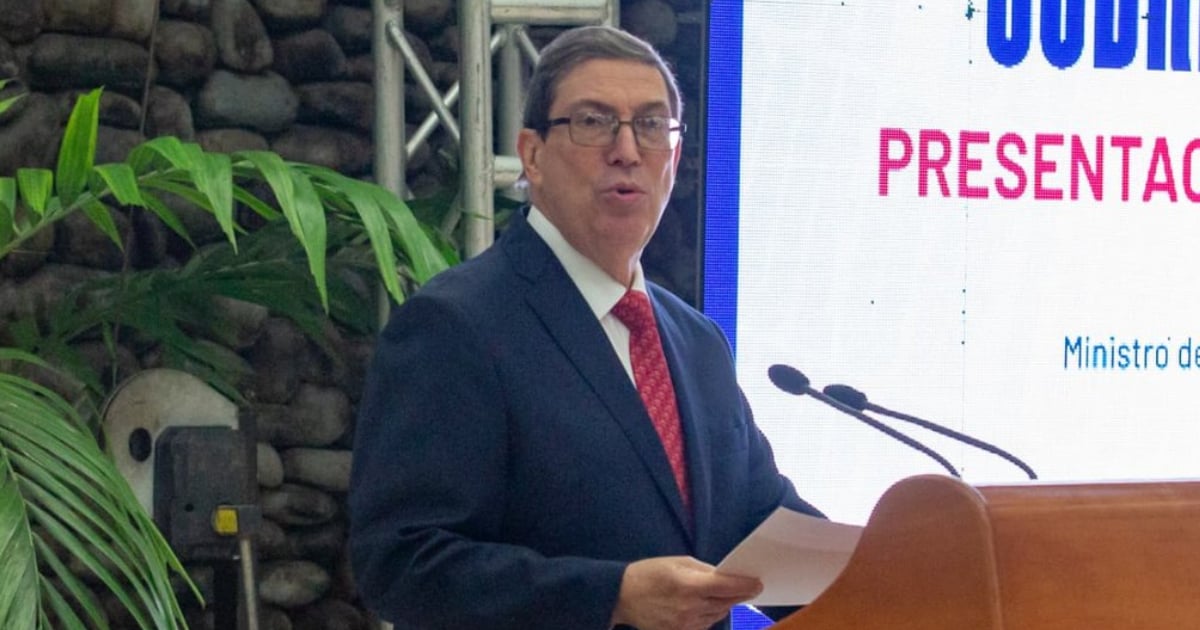
The Cuban Foreign Minister, Bruno Rodríguez Parrilla, accused the U.S. embargo of inflicting $7.556 billion in damages to the country in 2024 during a meeting with the Diplomatic Corps accredited on the island. This claim follows the familiar narrative of blaming the embargo for the nation's troubles. Rodríguez asserted that without such restrictions, the Gross Domestic Product (GDP) at current prices would have increased by 9.2% last year.
Rodríguez mentioned on the social media platform X (formerly Twitter) that "two months of blockade result in damages of $1.6 billion, equivalent to the cost of the fuel needed to meet the country's normal electricity demand," though he did not provide details on how these losses are calculated. He further claimed that just 12 days of embargo would mean losses of $250 million, comparable to the annual cost of maintaining the National Electroenergetic System.
However, these figures starkly contrast with the Cuban government's own admissions. The administration acknowledged that the economy shrank by 1.1% in 2024 and failed to meet the projected 3% GDP growth. In July, the Minister of Economy and Planning, Joaquín Alonso Vázquez, admitted that current revenues are insufficient to cover basic needs like food, fuel, or maintaining the electricity system.
Systemic Crisis and Economic Realities
The stagnation in production, declining exports, and energy collapse have revealed a systemic crisis directly impacting Cuban households. Economist Pedro Monreal pointed out that the officially recognized inflation rate underestimates the loss of purchasing power, and the reduction in the state wage fund indicates that the population bears the brunt of economic adjustments.
Despite the government's persistent attribution of the crisis to the U.S. embargo, independent economists highlight that the deterioration also stems from low productivity, a growing fiscal deficit, lack of foreign investment, and a centralized model unable to generate sustainable foreign exchange. Additionally, a recent investigation exposed that GAESA, a Cuban military conglomerate, holds over $18 billion while the population faces shortages.
Growing Discontent Amid Economic Hardships
The disconnect between the official narrative and economic reality has intensified public discontent. Cubans are grappling with power outages, runaway inflation, and a fragmented currency market that further erodes their purchasing power.
Impact of U.S. Embargo on Cuban Economy
How much has the U.S. embargo cost the Cuban economy according to the government?
The Cuban government claims the U.S. embargo has caused $7.556 billion in damages in 2024.
What growth in GDP does the Cuban government claim would have occurred without the embargo?
The government asserts that the GDP would have grown by 9.2% in the absence of the embargo.
What are some of the systemic issues affecting the Cuban economy?
Independent economists cite low productivity, a rising fiscal deficit, lack of foreign investment, and a centralized economic model as key issues.