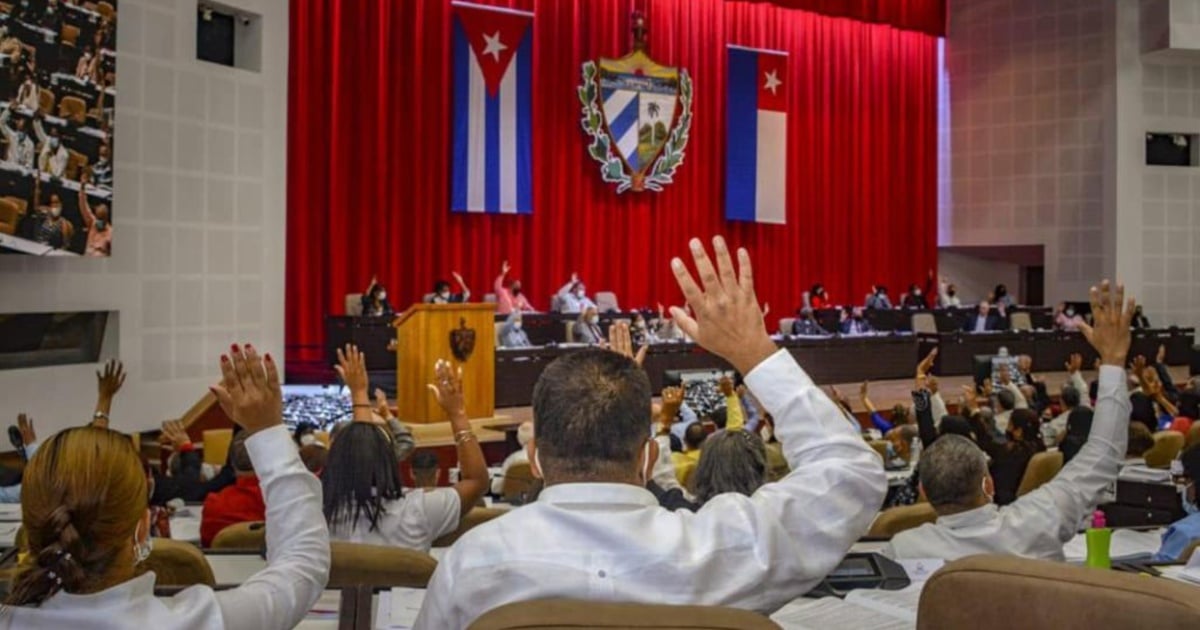
The Cuban National Assembly has approved a constitutional reform that abolishes the age limit of 60 for first-time presidential candidates, claiming it is necessary to uphold "institutionality" and "secure the Revolution's future." This decision, now official via the Gazette, removes the second paragraph of Article 127 of the Constitution, which previously imposed this age restriction.
With the reform now in place, the only requirements are being over 35 years old, a Cuban citizen by birth, holding no other citizenship, and retaining civil and political rights. The State Council advocated for this change, arguing that the aging population made it "unfair" to prevent individuals over 60, who possess full physical and mental capabilities, "demonstrated fidelity," and a solid "political trajectory," from leading the state.
"Given the necessity to ensure the nation's institutionality and secure the Revolution's future, the previous age limit became an obstacle for individuals over 60 with full faculties, experience, proven results, demonstrated loyalty, and a high commitment to the Homeland from assuming such a high responsibility," the text states.
The National Assembly supported the initiative with a "qualified majority," and it is claimed that a Style Commission reviewed the text before being endorsed by the leader Miguel Díaz-Canel. The law takes immediate effect, and the Ministry of Justice is tasked with publishing an updated version of the Constitution.
This move allows older, trusted figures within the ruling elite to access or remain in power without constitutional barriers. The decision, approved in July during the Fifth Ordinary Period of Sessions of the National Assembly, was driven by the "demographic factor of an aging population" and did not involve any public consultation.
The constitutional amendment aims to enable individuals older than the previous age limit to assume the presidency if it aligns with the regime's objectives. The change followed a request from Raúl Castro to address the issue. Esteban Lazo reported that the State Council approved the constitutional reform project and promoted the initiative to amend Article 127 of the Constitution. Before the presentation of the regulation, the Communist Party's Political Bureau reviewed the matter at Raúl Castro's suggestion.
This reform comes at a time when the current leader, Miguel Díaz-Canel, who has already turned 65, is nearing the end of his second term in 2028. Although officials assert that the changes were not tailored for any individual or specific situation, the legal modification clears the way for his potential re-election.
Understanding Cuban Constitutional Changes
What are the new requirements for the Cuban presidency?
Under the new reform, a presidential candidate must be over 35 years old, a Cuban citizen by birth, have no other citizenship, and retain civil and political rights.
Why was the age limit for the presidency removed?
The age limit was removed to accommodate the aging population, allowing individuals over 60 with full faculties and experience to assume the presidency if they demonstrate loyalty and a strong political trajectory.
Does this change affect Miguel Díaz-Canel's presidency?
While officials claim the changes were not designed for any specific person, the removal of the age limit potentially facilitates Díaz-Canel's re-election as he nears the end of his term in 2028.