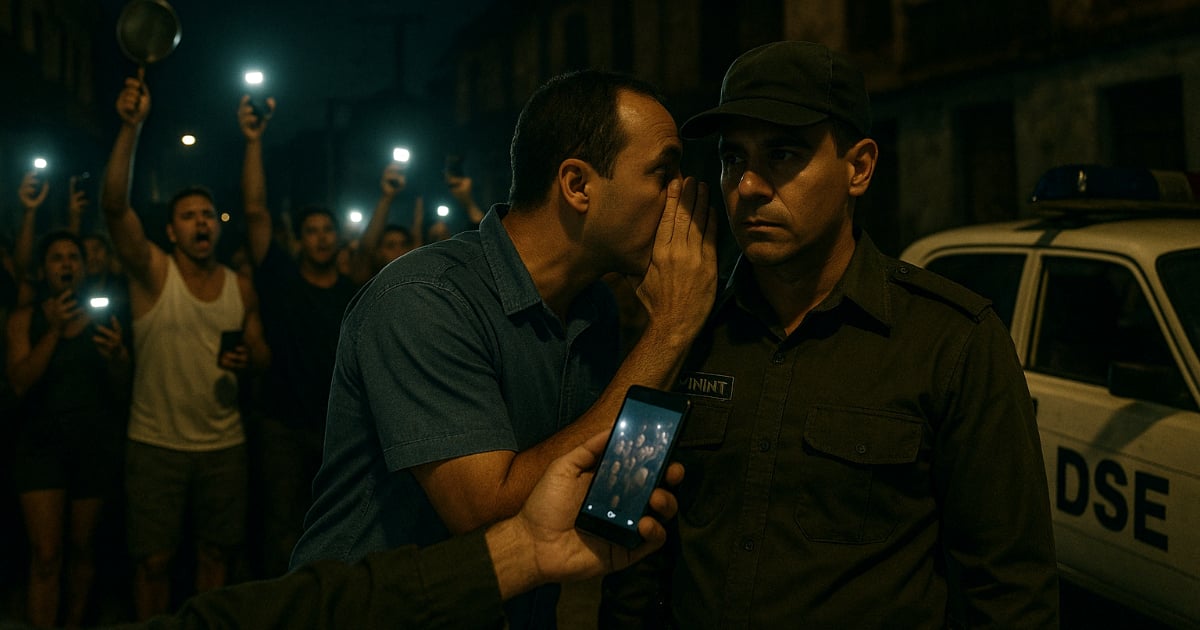
A recent report by CiberCuba unveiling two Holguín residents as informants for the Department of State Security (DSE) has sparked an uproar on Facebook, where thousands of Cubans have vocally expressed their contempt for these informers. The comments on the platform overwhelmingly convey one sentiment: in Cuba, there is no greater stigma than being a "chivato," a snitch working for a repressive and impoverishing regime that targets those who criticize it and demand their rights.
The original article, revealing the alleged collaboration of Adrián Pupo Cuesta, known as El Mocho, and Wilder César Tejeda Ruiz in the arrest of at least seven protesters in Gibara, has fueled readers' anger. For many, these incidents are a painful reminder of the role of informants in Cuba: a tool for political repression.
Lowest of the Low
Initial reactions were unanimous: being an informant is considered an unforgivable betrayal by the majority. Some described informing as "the worst flaw a person can have" and "the lowest rung of humanity." Others highlighted that informing brings collective disdain and public shame. Some noted that "it’s shameful to be a snitch for a government that has destroyed Cuba," while others pointed out that "snitches are more disgusting than the dictators themselves," emphasizing that informants endure the same hardships as the rest of the population.
Social Scorn and Calls for Remembrance
The tone of the comments ranged from moral condemnation to calls to remember the names and faces of the informers. "Never forget" was a frequently repeated phrase. The disdain for informers was also set against the backdrop of the country's precarious situation. Many lamented that "with the hunger and need they're experiencing," they still side "with the dictatorship," labeling them "hungry dogs" who sell out for a bag of food or minor privileges. "They used to get paid 33.33 pesos, now they do it for free," one user sarcastically remarked, alluding to the lack of real incentives for continuing to inform.
Criticism of the Regime and Informant Culture
Beyond direct attacks, some comments pointed to the root of the issue: Cuba's power structure itself. It was said that "the country is full of this" and that informants "are more common than weeds, typical of crisis and misery, where values and dignity are lost." Others accused the State Security of using common criminals as informants and claimed they employ them to carry out vandalism during protests to discredit citizens' demonstrations.
An Atmosphere of Hostility and Distrust
Some messages calling for direct reprisals highlighted the extreme hostility toward informers. "If every time a rat is uncovered it was crushed, no one would do it," one commentator wrote, reflecting the depth of accumulated hatred. These reactions, although violent in tone, underscore the extent of social rejection. To many, the "chivato" is not merely seen as a regime accomplice but as an enemy of the neighborhood, the neighbor, the friend.
Ironically, one comment noted, "It's the only thing we're efficient at in this country."
A Mirror of Public Frustration
The hundreds of comments on Facebook reflect not only the rejection of informers but also the breadth of social discontent. References to shortages, endless blackouts, and the lack of freedoms were mentioned in nearly every comment. "The people of Gibara are asking for what we all want," one reader stated, linking the local protest to the national outcry. Others warned of the possibility that "history could repeat itself" and, as in previous periods, informers might face the community's condemnation when the regime loses power. "Rome pays traitors but despises them," another cited, recalling an old saying that captures the popular sentiment.
The publication about the informers in Gibara has become a reflection of the mood in Cuba: indignation, fatigue, and outright rejection of the informer figure. For most, being a "chivato" is not just a "flaw," but the vilest betrayal of a people who, amidst the darkness of blackouts and scarcity, only demand the basics: light, food, and freedom.
Understanding Cuba's Informant Culture
Why is being an informant in Cuba considered so disgraceful?
Being an informant, or "chivato," is seen as a betrayal because it involves working with a regime that represses and impoverishes its people. Informants are viewed as complicit in the oppression and hardships faced by Cuban citizens.
How did the article about informants in Gibara impact Cuban society?
The article ignited widespread outrage and discussion on social media, reflecting the deep-seated anger and frustration among Cubans towards informants and the regime. It highlighted the social stigma associated with informing and the broader discontent with the current conditions in Cuba.
What are the broader implications of informant culture in Cuba?
Informant culture contributes to a climate of distrust and fear, as people are wary of being reported for dissent. It is a tool for maintaining control and suppressing opposition, exacerbating the societal divides and hardships in Cuba.