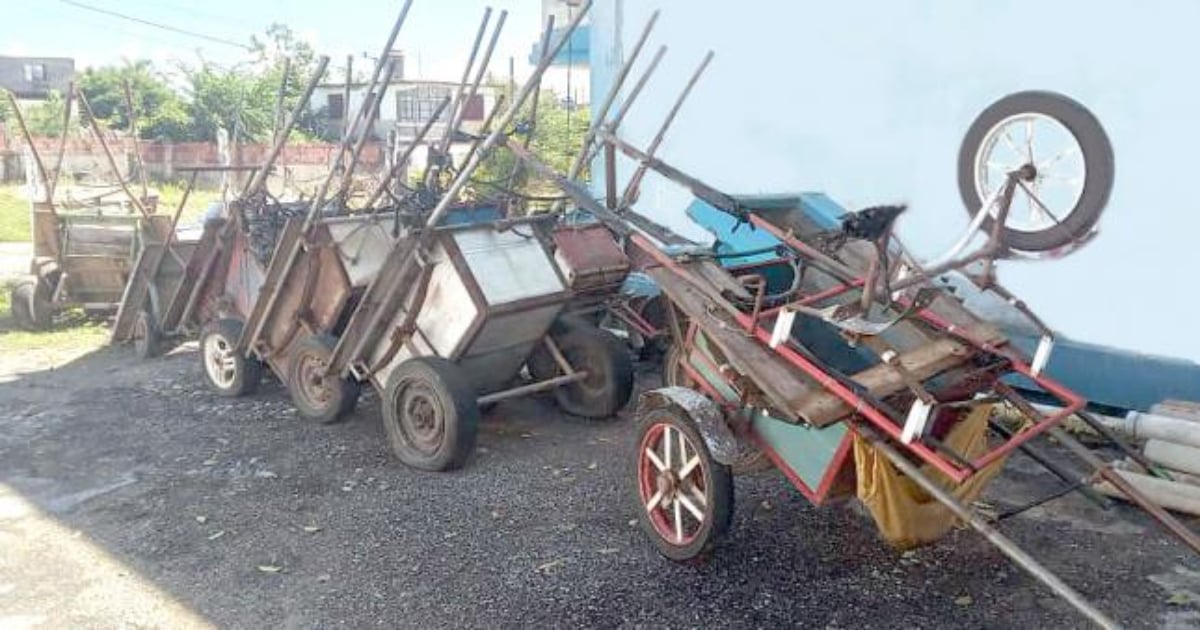
A significant police operation in Pinar del Río aims to curb the surge of illegal motorcycle and horse racing that has increasingly taken over the provincial capital and nearby areas in recent months. As reported by the official Granma newspaper, this enforcement action is part of a broader effort to tackle crimes, illegal activities, and social misbehavior that threaten road safety and public peace.
Lieutenant Colonel Reivan Vázquez Rodríguez, who leads the National Revolutionary Police in the region, stated that numerous fines have been issued, several individuals have been arrested, and motorcycles and carriages connected to these activities have been confiscated. One notable incident involved an underground race held in September on the former airstrip along the road to La Coloma, an event that occurred blatantly under the regime's watch.
Investigations uncovered that the participants also engaged in racing at other locations across the city, such as Vial Colón, Martí Street, and the national highway between the Hermanos Saíz University and the Las Ovas bridge, extending even to Minas de Matahambre. This indicates that such activities have been ongoing without oversight for some time.
The Dangers and Broader Implications
The officer highlighted that these activities are not isolated incidents and pose significant risks. He cited an instance where individuals blocked the road to La Coloma to organize a horse race, obstructing an emergency vehicle transporting an injured girl to the hospital.
Authorities also identified a group involved in training horses for racing and sending videos to owners residing abroad, underscoring the depth of the issue without an effective solution. Consequently, a specialized team comprising traffic motorcycles and patrol cars was formed to counter these activities.
Broader Crime Measures
The crackdown extended to targeting unlicensed motorcycle riders and those who modify exhaust pipes or play loud music. Additionally, actions were taken against crimes like the illegal extraction of rebar from irrigation channels, livestock theft and slaughter, and violent robberies.
Officials assert that the operation aims to address public concerns and halt practices that disrupt daily life in Pinar del Río. Illegal motorcycle and car racing has long been a persistent issue across various Cuban provinces.
Public Outcry and Call for Legalization
The problem has even drawn criticism from public figures, such as a Pinar del Río writer who lambasted the police for allowing such dangerous competitions on public roads, highlighting both the danger and the apparent impunity enjoyed by participants.
Beyond Pinar del Río, the issue is national in scope. In Placetas, a group of motorcyclists challenged other provinces on social media, organizing mechanical showdowns that reveal the existence of a parallel culture surrounding these clandestine events.
With the absence of legal alternatives, many involved parties have begun to push for a regulated avenue to practice motor racing. Pilots and race organizers from various provinces have made public proposals for the official recognition of this activity, arguing it could foster both sporting and economic development.
A group of Cuban pilots has spearheaded campaigns to achieve this goal, while motorcycle collectives have also sought formal permission to safely organize events.
FAQs on Illegal Racing in Cuba
What was the main goal of the police operation in Pinar del Río?
The primary objective was to curb illegal motorcycle and horse racing that threaten road safety and public tranquility in the region.
How did the authorities respond to the illegal racing activities?
Authorities issued fines, made arrests, and confiscated vehicles involved in the illegal races, while forming a specialized team to combat these activities.
Why are public figures criticizing the police?
Public figures criticize the police for allowing dangerous illegal races to occur on public roads, posing risks to public safety and seemingly acting with impunity.
What solution are the race organizers proposing?
Race organizers are proposing the legalization and official recognition of motor racing, which they argue could lead to sports and economic development.