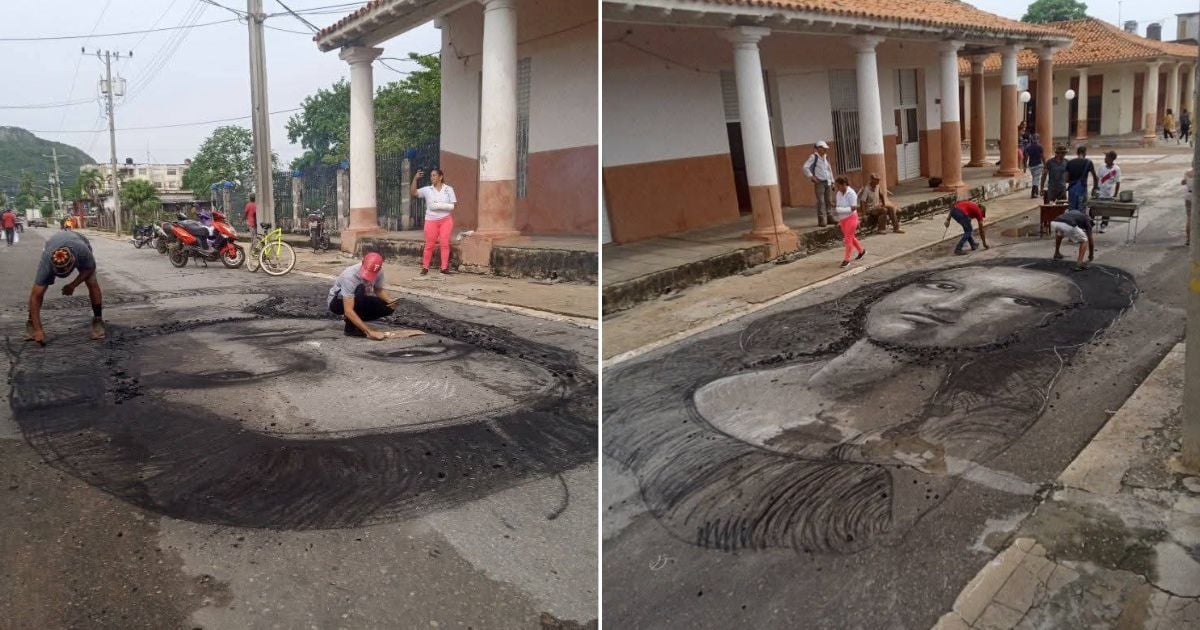
This past Monday, a street in Isla de la Juventud became an unexpected canvas as a group of young artists unveiled an enormous, street-style version of the Mona Lisa using charcoal, leaving both locals and passersby in awe. The event caught the attention of the community and was shared on Facebook by Ramón Leyva Morales, a local broadcaster, who praised the creativity of those involved and posted images of the performance.
The masterminds behind this artistic feat included Carlos Cabrera, also known as “El Lobo,” Emilio Caboverde, referred to as “El Pescao,” along with Elías Heredia and Francisco Leyva. These artists are members of the Asociación Hermanos Saíz (AHS). Utilizing charcoal—a resource commonly used in Cuban households today due to the ongoing electricity and gas shortages—they crafted a Cuban rendition of the Mona Lisa on the asphalt of street 26, nestled between 39 and 41.
Their creation was more than just a street art piece. The enigmatic smile of Leonardo da Vinci’s renowned figure was juxtaposed with an everyday symbol on the island: charcoal, which has become the go-to fuel amidst the nation’s energy crisis. The artwork, enhanced by the aroma of brewing coffee—a luxury many Cuban homes currently lack—suggested more than it revealed.
Beyond showcasing the vibrant talent of young creatives, this street intervention highlighted how scarcity and daily challenges are interwoven into artistic expression. The pavement transformed into a stage, and a basic commodity became a tool for expression, reflecting the resilience and resourcefulness of Cuban artists.
Exploring the Impact of Art in Times of Crisis
Why did the artists choose charcoal for their Mona Lisa?
The artists used charcoal because it is a widely available resource in Cuban households due to the country's current electricity and gas shortages, making it both a practical and symbolic choice.
What does the charcoal Mona Lisa symbolize?
The charcoal Mona Lisa symbolizes the blend of high art with everyday Cuban life, reflecting the resilience and creativity of the artists amid economic hardships on the island.