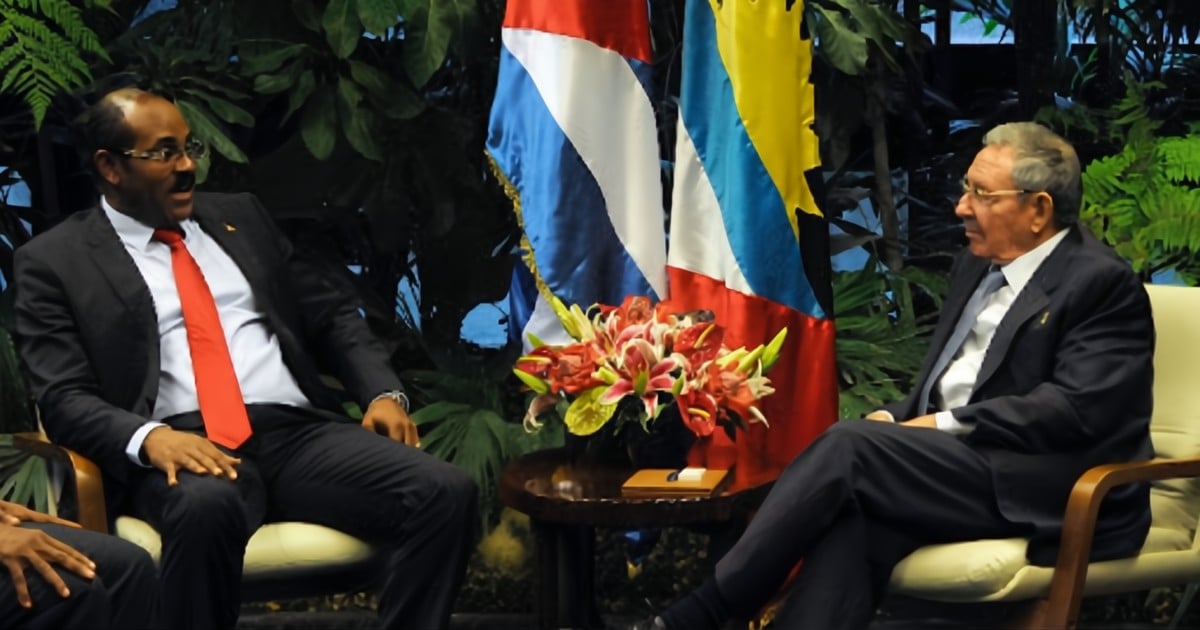
This past weekend, the government of Antigua and Barbuda dismissed rumors that the United States plans to revoke visas or impose travel restrictions on its citizens due to their relationship with Cuba and the hiring of Cuban doctors. Maurice Merchant, the Director General of Communications for the Prime Minister's Office, labeled these claims as "fake news" and confirmed that there is no threat of visa denial or official visit restrictions with Washington.
"There is no threat of withdrawal of visits by officials from the United States or Antigua and Barbuda due to an inability to obtain visas," Merchant stated in comments reported by Antigua Observer. He acknowledged that the State Department has expressed concerns about the medical cooperation programs with Cuba, which Washington views as a form of "human trafficking." Nevertheless, he emphasized that his country maintains a different perspective, considering Cuban doctors vital to local healthcare services.
"The United States considers Cuba's medical missions to be human trafficking. We have a different opinion," Merchant noted, as reported by Antigua News.
The Caribbean's Growing Tensions
This clarification comes amidst escalating tensions in the Caribbean. In late August, Grenada's Finance Minister, Dennis Cornwall, became the first high-ranking official in the region to lose all U.S. visas for openly supporting the presence of Cuban medical brigades in his country. This action barred him from key meetings with organizations like the International Monetary Fund and the World Bank, highlighting Washington's willingness to aggressively counter what it terms "forced labor."
Similar situations have affected Central American governments and the Bahamas, which, under U.S. pressure, decided to pay Cuban doctors directly to avoid sanctions. Secretary of State Marco Rubio has condemned these missions as an "atrocious practice," although he has indicated that Caribbean contracts will be assessed on a case-by-case basis.
Balancing Diplomacy
For Antigua and Barbuda, cooperation with Havana is "crucial" for delivering medical services, but the government also insists on valuing its strategic relationship with the United States. Merchant mentioned that efforts are underway to address Washington's concerns without sacrificing the benefits received from Cuban cooperation.
"The Republic of Cuba remains an important partner for providing and developing healthcare in Antigua and Barbuda," he stressed, "but at the same time, we value our relationship with the United States and are making adjustments to ensure good relations with both countries."
Through this message, the government aims to alleviate the unease caused by rumors and demonstrate that, unlike Grenada, the small island nation prefers a balanced diplomatic approach. This strategy allows them to maintain their healthcare system with Cuban support while keeping diplomatic channels open with Washington.
Antigua and Barbuda's Diplomatic Strategy
What prompted Antigua and Barbuda to address rumors about U.S. visa restrictions?
The government of Antigua and Barbuda addressed these rumors to clarify that there's no threat of U.S. visa restrictions due to their cooperation with Cuba, particularly regarding the hiring of Cuban doctors.
How does Antigua and Barbuda view its relationship with Cuba and the United States?
Antigua and Barbuda consider their cooperation with Cuba essential for healthcare services while also valuing their strategic relationship with the United States. They are making efforts to balance both partnerships.
What impact did the U.S. visa revocation have on Grenada's Finance Minister?
The revocation of U.S. visas for Grenada's Finance Minister Dennis Cornwall prevented him from attending key meetings with international bodies like the IMF and the World Bank.