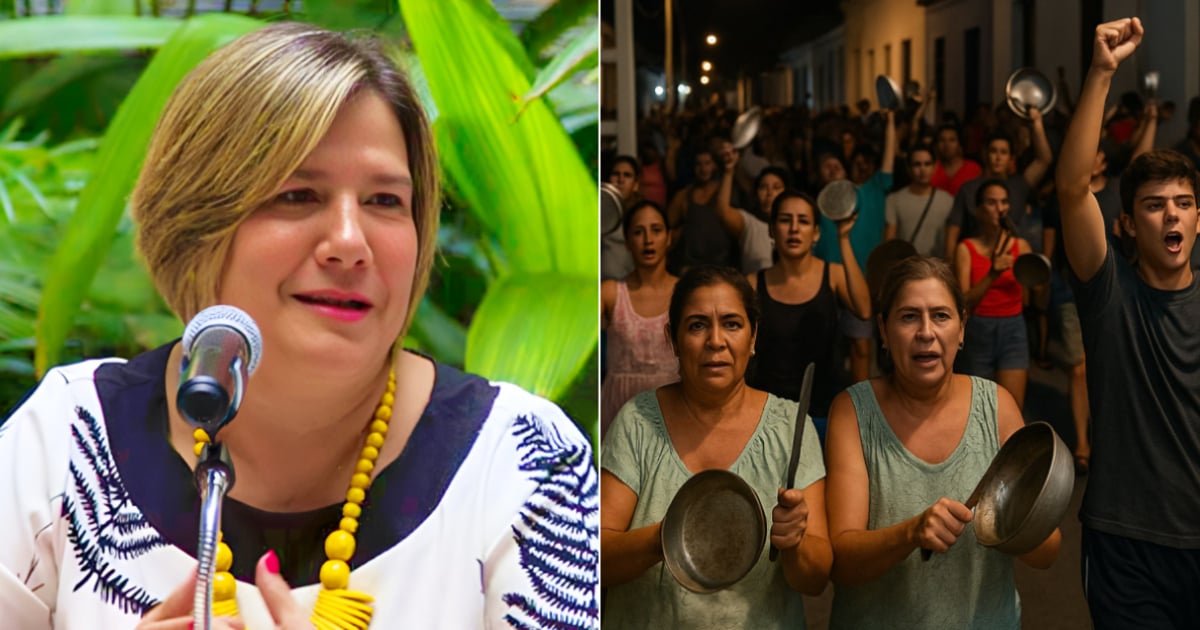
Public outrage erupted on Sunday across social media, particularly on CiberCuba's Facebook page, following a controversial post by Lis Cuesta Peraza. As the wife of Cuban leader Miguel Díaz-Canel, Cuesta's visceral demand for respect towards Venezuela amidst the escalating military tension between the United States and Nicolás Maduro's regime drew significant backlash. Her comment, attached to an official post by her husband, ignited a wave of negative reactions that have left a significant imprint on public opinion. Her emphatic phrase, "Respect Venezuela, dammit!" spurred a massive and forceful response from Cubans: "Respect the Cuban people, dammit!"
In mere hours, the Facebook post garnered over 2,000 comments, mostly fierce criticism aimed at Cuba's unofficial First Lady and the island's ruling elite, who are accused of hypocrisy and double standards.
A Spark Ignites a Nation's Frustration
Cuesta Peraza's use of the expletive "dammit" in her message not only shocked for its informal and aggressive tone but also ignited the frustrations of a nation weary of blackouts, hunger, repression, and institutional neglect. "Respect the Cuban people whom you've plunged into misery," wrote one user, capturing the widespread sentiment. Others highlighted the disconnect between official rhetoric and the realities faced by citizens: "Why should I care about Venezuela? I've been without electricity for nearly a day; that's what concerns ordinary Cubans."
Focusing Abroad While Ignoring Home
The popular saying, "A light on the street and darkness at home," was echoed by hundreds of users, pointing to the Cuban regime's focus on external matters while domestic conditions worsen daily. "Take care of your own people first, then talk about others," expressed one visibly upset user, criticizing the Cuban government's interventionist stance on the Venezuelan conflict.
Criticism extended beyond Cuesta Peraza's specific comment. Many condemned the use of state resources to maintain ideological alliances, such as importing oil from Venezuela to Cuba, while citizens face shortages of food, medicine, and electricity.
Charges of Cynicism and Vulgarity
Cuesta Peraza's language faced intense scrutiny. "A woman in her position shouldn't speak like that," stated one user, labeling the phrase as "an unacceptable vulgarity for a public figure." Others were harsher, suggesting the comment was a desperate attempt to bolster regime rhetoric amid waning popular support.
Comparisons with other authoritarian regimes were frequent. "They're just like Ortega and Murillo, clinging to power and deaf to their people's suffering," wrote another user.
A People Feeling Unrepresented
A recurring theme in the comments was the lack of legitimacy of those currently in power in Cuba. "Neither you nor your husband were elected by the people; you have no right to speak on their behalf," said one user, while others directly questioned Cuesta's role: "Who are you to talk about politics?" echoing the perception that her role exceeds the informal protocol she should adhere to.
Visibly outraged, the population recalled the most immediate hardships: prolonged blackouts, hospital closures, children and elderly without medical care, families torn apart by migration, scarce food supplies, and political repression.
"With what moral authority do you demand respect for another country when ours is destroyed?" questioned another user. "While you travel with designer dresses and a thousand-dollar phone, we don't even have anything to cook with," was another comment widely shared.
A Turning Point in the Official Narrative
The level of rejection, insults, and outrage has reached an unprecedented magnitude. Although criticism of the Cuban government is common on social media, the tone, scale, and intensity of the comments suggest that Cuesta Peraza's statement might have been a symbolic tipping point for many Cubans who no longer tolerate indifference from those in power. By demanding respect for Venezuela with an outburst, Cuesta Peraza has inadvertently sparked a massive call for respect for Cuba and its people. A cry that cannot be ignored.
Public Reaction to Cuban Leadership's Comments
Why did Lis Cuesta Peraza's comment cause such outrage?
Her comment demanding respect for Venezuela came across as hypocritical to many Cubans who feel neglected by their own government, sparking a backlash emphasizing the need for respect and attention to Cuba's domestic issues.
What was the public's main criticism of Lis Cuesta's message?
The public criticized the message for its perceived hypocrisy, vulgar language, and the disconnect between the government's focus on international affairs while ignoring pressing domestic issues like blackouts and food shortages.
How did social media users express their frustration?
Social media users expressed frustration by highlighting domestic struggles such as electricity outages and medical shortages, and by criticizing the government's focus on foreign affairs over pressing local issues.