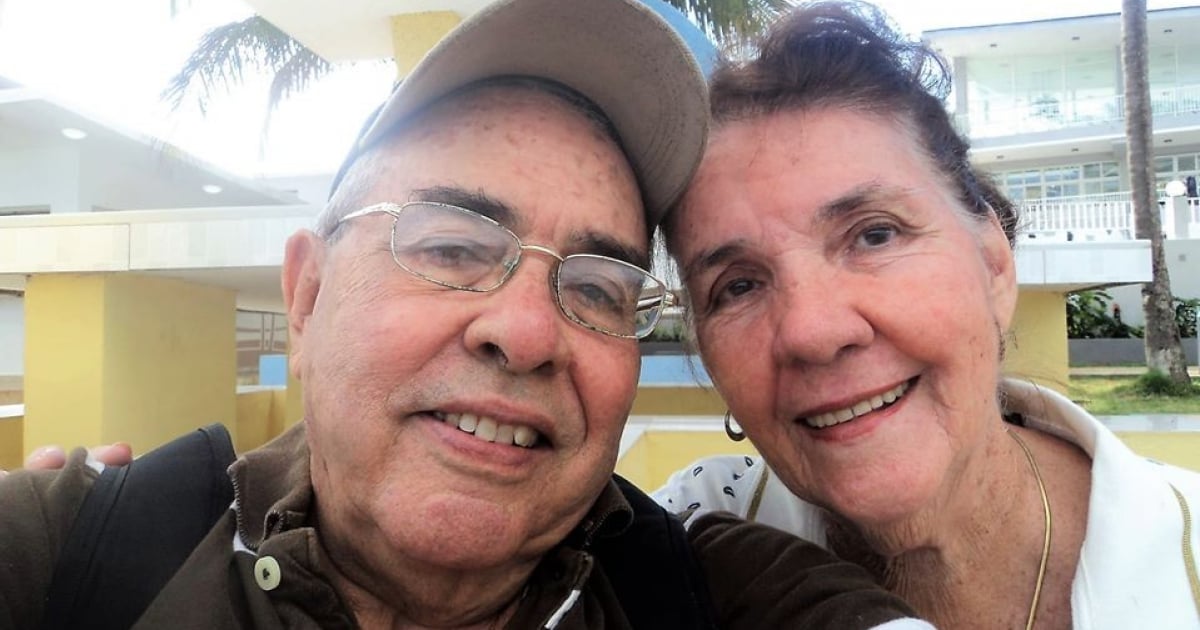
"I never imagined my old age like this." With these stark words, veteran Cuban journalist Roberto Pérez Betancourt, recipient of the José Martí National Journalism Award for lifetime achievement, encapsulated the nightmare facing thousands of elderly individuals in Cuba today. These seniors are suffering under government neglect and the complete breakdown of basic services.
In a personal account shared on Facebook, the 85-year-old former reporter detailed his daily struggles: over four months without access to clean water, a dengue outbreak affecting his entire block and claiming the life of an elderly neighbor, empty local markets, and stores requiring foreign currency devoid of goods, all while uncertain if he'll have gas to cook meals.
"Everything, of course, is much more complicated when you're 85, recovering from relentless dengue, and your 80-year-old wife is dealing with the same, along with other chronic ailments," he elaborated.
Pérez Betancourt, who spent decades working with Girón weekly, provincial Radio 26, and TV Yumurí, described their survival conditions as "abysmal." He pleaded with authorities, "Please, those who are responsible must take action. We can't go on like this."
Colleagues Respond to His Plea
His post was shared by fellow state journalist Yirmara Torres Hernández, who noted that Pérez Betancourt was never "one to mince words." She mentioned that on his recent birthday, he received calls from officials. "A lovely gesture, yes, but... do they see what the maestro writes now? How much more must he and his generation endure?" she questioned.
The story sparked outrage online, with many viewing his account as a symbol of how the regime has condemned the elderly to a life of hardship.
A Watershed Moment in State Media
This isn't the first time journalists tied to the regime have spoken out. In mid-July, Delia Proenza from Escambray in Sancti Spíritus admitted that Miguel Díaz-Canel's mantra of "creative resistance" had reached its breaking point. "All creativity has limits and all resistance, though it may persist, diminishes," she wrote.
In recent months, provincial outlets in Matanzas, Ciego de Ávila, and Cienfuegos have published accounts that starkly depict life on the island: endless power outages, rampant inflation, cooking with charcoal, collapsed transportation, and a discontent that can no longer be hidden.
Other retired journalists have also joined in the denunciation. Iraida Calzadilla, who worked for decades at Granma newspaper, recounted the harsh reality she faces each month to collect her pension: waiting "lying on the threshold of any bank" and not even receiving her full pension. Meanwhile, journalist Ana Teresa Badía, still active, criticized in January the opening of a dollar-only supermarket that didn't even accept MLC, highlighting the absurdity of current economic policies.
The Plight of the Most Vulnerable
The situation of Pérez Betancourt mirrors a national crisis: the elderly, the most exposed and vulnerable, struggle to survive in a country where pensions fall short, services collapse, and food is scarce. Dengue, sewage, garbage on every corner, and power outages have turned daily life into a torment.
The regime continues to squander millions on building empty hotels for a dwindling tourism sector, while abandoning those who dedicated their entire lives to work. "It's the chronicle of a stolen old age," commented one social media user, capturing the general sentiment.
The retired journalist's testimony not only highlights his personal tragedy but also that of an entire nation ensnared in ruin.
Understanding the Elderly Crisis in Cuba
What challenges do elderly Cubans face today?
Elderly Cubans are facing severe challenges including a lack of basic services, such as clean water and reliable electricity, rampant inflation, and inadequate pensions that do not meet their needs.
How has the Cuban government responded to these issues?
The Cuban government has been criticized for its inaction and misallocation of resources, such as investing in tourism infrastructure while neglecting the welfare of its elderly population.
What impact has the situation had on Cuban journalism?
The dire circumstances have led some state-affiliated journalists to break their silence and speak out against the regime, highlighting the growing dissatisfaction and the limitations of the "creative resistance" narrative.