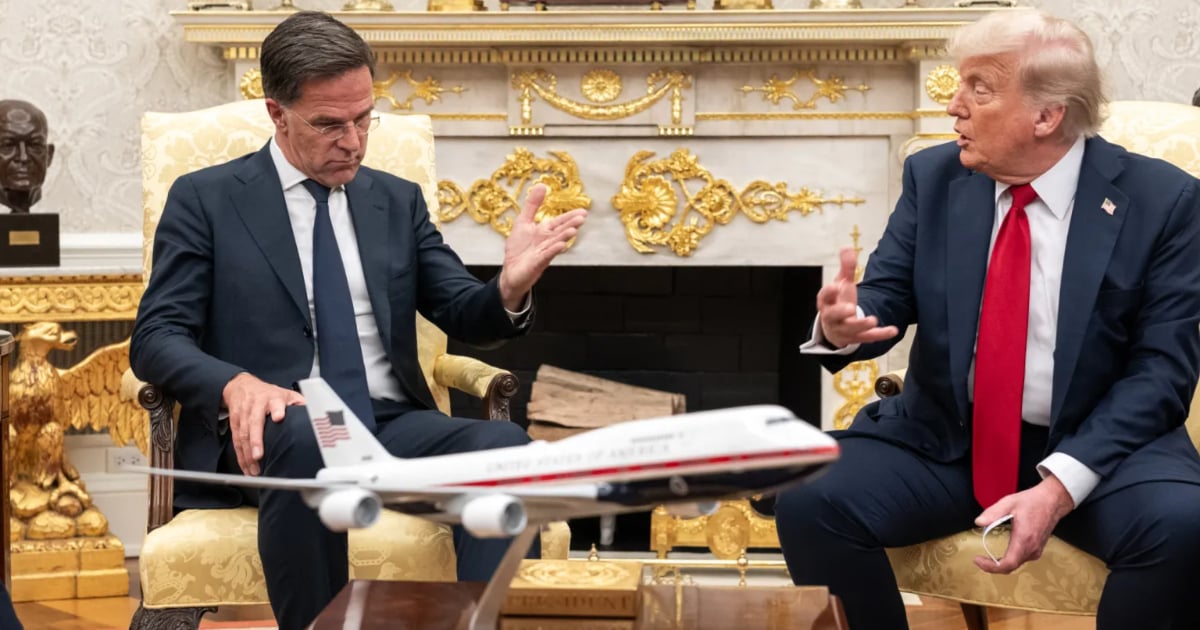
In response to the intrusion of Polish airspace by Russian drones, former U.S. President Donald J. Trump addressed NATO countries this Saturday, urging them to adopt severe economic measures against Russia. However, he insisted that any American action would depend on European allies taking the lead.
Through a letter shared on social media, Trump declared his readiness to enforce "significant sanctions on Russia" but only if all NATO members agree to do likewise and cease purchasing Russian oil. He criticized the alliance's commitment to victory in Ukraine, stating it has been "less than 100%" and found it "astonishing" that some allies continue buying oil from Moscow amid the ongoing conflict.
Trump's Proposal for Economic Pressure
Trump suggested that NATO impose tariffs ranging from 50% to 100% on China, aiming to weaken its economic influence over Russia. He proposed these tariffs remain until the conclusion of the war. Despite his recent verbal threats against China, only India has faced tangible sanctions so far, with an additional 25% tariff on Indian goods due to their ongoing Russian oil imports.
Reactions and Criticism
The President's stance comes amid heightened tensions, as confirmation emerged that at least 19 Russian drones breached the Polish border—a NATO member—prompting Warsaw to invoke Article 4 of the North Atlantic Treaty. Although NATO has increased its military presence in Eastern Europe, the incident has not yet been classified as a direct attack.
Despite the circumstances, Trump avoided explicitly condemning the airspace violation and instead focused on conditioning any retaliation on the collective response of allies. This transactional approach to collective security highlights a departure from the principle of unconditional solidarity that underpins the North Atlantic Treaty.
Trump's position has drawn criticism domestically. A recent Reuters/Ipsos poll cited by La Vanguardia revealed that 54% of Americans—including one in five Republican voters—believe the President is too closely aligned with Russia. Academics like Ukrainian-American economist Roman Sheremeta criticized Trump on social media, arguing he is seeking excuses not to impose serious sanctions on Russia and noting the improbability of NATO countries ceasing Russian oil purchases while allies like Hungary’s Orbán and Slovakia’s Fico remain in power.
Strategic Assessment
Institutionally, Trump's message proposes measures beyond NATO's mandate. The Atlantic Alliance is a collective defense organization without the authority to impose economic sanctions or trade tariffs, which fall under the purview of individual member states or organizations like the European Union or the G7, which recently discussed new sanctions against Russia and potential measures against countries continuing Russian oil imports.
Analysts agree that energy export revenues remain the Kremlin’s main war effort support. However, drastically limiting Russian oil purchases without multilateral economic coordination could lead to a global oil price surge, negatively impacting Western economies and diminishing public support for sanctions.
As of 2023, Turkey—a NATO member—was the third-largest buyer of Russian oil, following China and India. Hungary and Slovakia's inclusion makes achieving a unified stance within the Alliance nearly impossible.
Conclusion
Trump’s message reflects a conditional strategy focused on economic pressure but lacks firm commitment or clear leadership in response to an act that jeopardized a NATO ally's security. His approach leaves uncertainty about whether the United States will respond decisively to future provocations from Moscow or continue to tie its actions to decisions by others.
FAQs on NATO's Response to Russian Actions
What actions did Trump propose against Russia?
Trump proposed significant economic sanctions against Russia, contingent upon all NATO countries agreeing to do the same and ceasing the purchase of Russian oil.
How has NATO responded to the Russian drone breach in Poland?
NATO increased its military presence in Eastern Europe but has yet to classify the incident as a direct attack, despite Poland invoking Article 4 of the North Atlantic Treaty.
What criticisms has Trump faced regarding his stance on Russia?
Trump has been criticized for his perceived alignment with Russia, with 54% of Americans expressing concern, including a significant portion of Republican voters. Critics argue he is avoiding imposing severe sanctions on Russia.