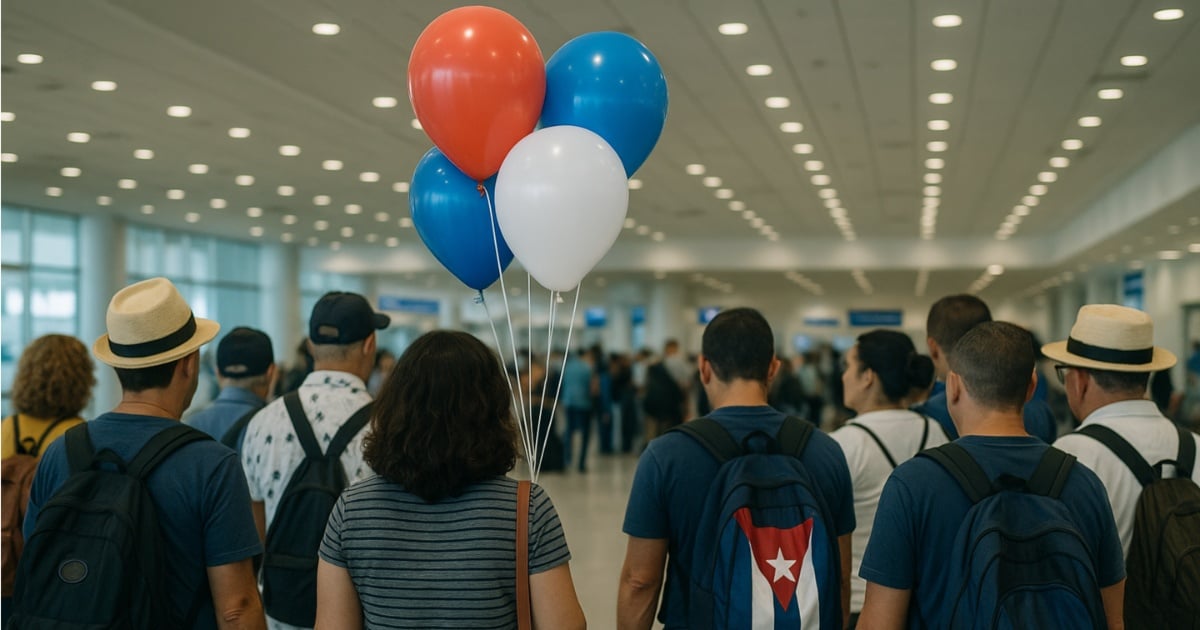
Under President Joe Biden's leadership, the CHNV humanitarian parole programs were established for nationals of Cuba, Haiti, Nicaragua, and Venezuela, allowing up to 532,000 individuals temporary entry into the United States for humanitarian reasons or public benefit. However, in January 2025, with Donald Trump’s return to the presidency, he issued executive orders to terminate all categorical parole programs. By March 2025, the Department of Homeland Security (DHS) announced the immediate cancellation of CHNV and the early revocation of all existing permits, providing only a 30-day notice.
Despite this, the beneficiaries, known as parolees, filed a lawsuit, and the Massachusetts district court granted a preliminary injunction, halting the early termination and allowing the permits to last until their natural expiry. The government subsequently appealed the decision.
The Supreme Court's Landmark Decision
This past Friday, a federal appeals court permitted the Trump administration to proceed with revoking the legal status of over half a million migrants from Cuba, Haiti, Venezuela, and Nicaragua who entered the U.S. under the CHNV humanitarian parole program. The Supreme Court's decision overturns a previous Boston federal judge's order that had temporarily blocked deportation efforts.
The U.S. Supreme Court clarified that while the law demands case-by-case analysis for granting parole benefits, it does not specify the same requirement for revocation. The plaintiffs—a coalition of migrants and support organizations—contended that this mass cancellation was illegal and violated due process. Nevertheless, the First Circuit Court of Appeals endorsed the Trump administration's stance, concluding that the Secretary of Homeland Security, Kristi Noem, is empowered to end the program under the Immigration and Nationality Act (INA).
The ruling cited security considerations, resource pressures, lack of public benefit, and an unfavorable assessment of the beneficiaries' interests. Although the court acknowledges the severe impacts on migrants, such as loss of status, risk of deportation, family separation, and job loss, these hardships do not suffice without a strong probability of legal success in the case.
Key Implications of the Ruling
This decision does not resolve all legal challenges, as constitutional due process claims remain pending in lower courts. Practically, this means that half a million migrants from Cuba, Haiti, Nicaragua, and Venezuela who entered under parole could see their status revoked before their two-year term naturally expires.
The court clearly articulated that the executive branch holds the authority to terminate these parole programs en masse. It also confirms that the Executive branch, including DHS and the President, can end humanitarian parole programs without a case-by-case review. This sets a precedent limiting lower courts from blocking similar measures under the "arbitrary or capricious" argument.
CHNV Beneficiaries at Risk
The 532,000 individuals from Cuba, Haiti, Nicaragua, and Venezuela granted parole during Biden's administration face potential early cancellation of their status, even if their two years have not yet expired. This would automatically strip them of work authorization and temporary legal status, exposing them to:
- Deportation proceedings (either expedited removal or regular processes).
- Immigration detention.
- Future inadmissibility for other immigration benefits.
The court found that DHS provided adequate justifications (security, resource allocation, lack of public benefit), making it challenging for future similar lawsuits to succeed by claiming the measure is "arbitrary and capricious." The only remaining viable path for claims is constitutional (due process), which continue but with diminished likelihood of success.
Immediate Real-World Consequences
This ruling endorses Trump’s view that categorical parole programs fail to meet the legal "case-by-case" requirement. It constrains future administrations from using mass humanitarian parole as an immigration policy tool unless explicitly authorized by Congress.
Migrants in the U.S. under CHNV must seek alternative immigration avenues (such as asylum, TPS, residency) or face the loss of status. The decision renders the CHNV humanitarian parole a precarious and politically revocable status, leaving hundreds of thousands at risk of deportation and reinforcing presidential authority over immigration programs without Congressional intervention.
Understanding the Impact of the Supreme Court's Ruling on CHNV
What was the Supreme Court's decision regarding the CHNV humanitarian parole?
The Supreme Court allowed the Trump administration to proceed with revoking the legal status of over half a million migrants from Cuba, Haiti, Venezuela, and Nicaragua under the CHNV humanitarian parole program.
How does the court's decision affect the migrants under the CHNV program?
Migrants could face early cancellation of their status, losing work authorization and temporary legal status, which exposes them to deportation and other immigration enforcement actions.
What precedent does this ruling set for future immigration policies?
The ruling affirms that the executive branch can terminate parole programs en masse without case-by-case review, limiting the ability of lower courts to block similar measures under arbitrary or capricious claims.