Yirmara Torres Hernández, a journalist aligned with the Cuban government, recently took to social media to express her outrage over the deteriorating conditions in Cuba, particularly as she battles chikungunya amidst a failing infrastructure. Through a heartfelt Facebook post, Torres detailed her physical struggles with the disease while also criticizing the widespread unsanitary conditions, the severe shortage of medications, inadequate nutrition, and frequent power outages affecting her family and her province of Matanzas.
In her post, Torres lamented, "This chikungunya is something I wouldn't wish on anyone. It's kept me bedridden for four days now." She noted that her mother, a nurse cousin, a doctor neighbor, and other acquaintances are also suffering from the virus. She described the affliction as featuring a persistent fever, severe joint pain, loss of appetite, general malaise, and skin rashes. Torres highlighted that only those receiving help from abroad can access necessary medications. "Blessed are those of us with someone from OUTSIDE who can assist us with medications, because relying on private pharmacies is nearly impossible," she wrote.
The Harsh Reality of Daily Life in Cuba
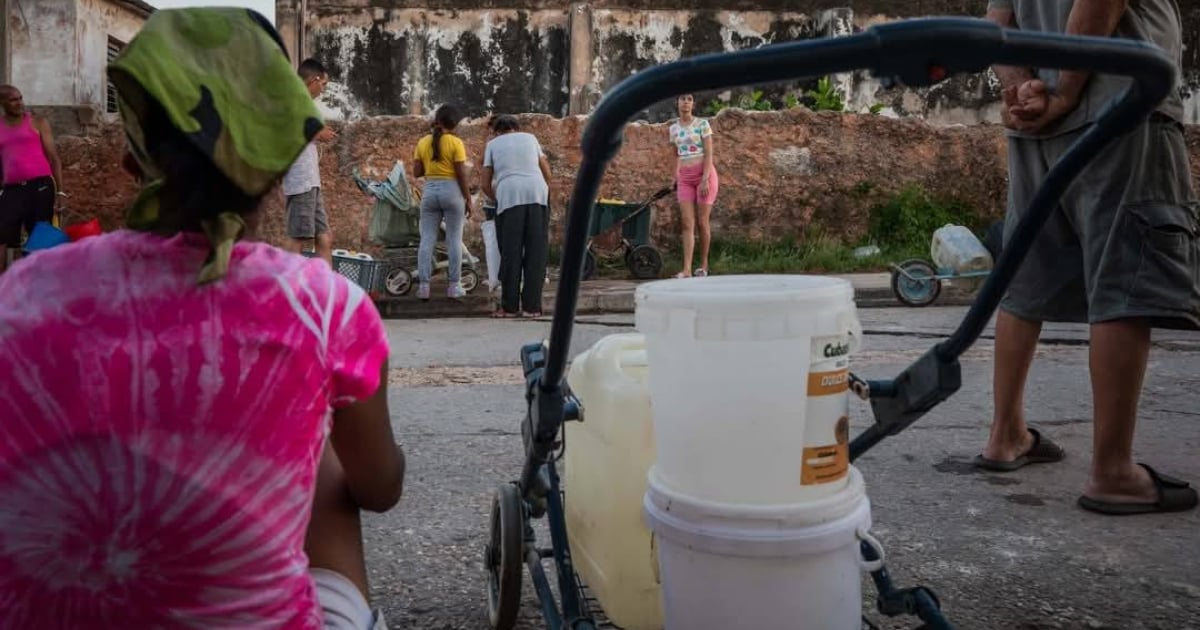
Torres's post is laced with irony toward government rhetoric, pointing out the absence of basic drugs like salbutamol and paracetamol in state pharmacies, and sarcastically referencing the national diet of "ground meat, chicken, eggs, and hot dogs, for those who can afford it." She also criticized the lack of water, the inability to maintain hygiene while ill, and the overall degradation of life quality in Cuba. "Do you really think everything is fine? That everything is normal? Do you believe there is no accountability?" she questioned. "We are a worn-out, exhausted, tortured people (not being able to sleep well and living in constant stress is torture), but our patience has a limit."
Adding to her critique, Torres sarcastically mentioned receiving her 500 mg paracetamol "from the chaotic and brutal north," alongside a rechargeable fan to endure the power outages. "Those who block our economy are actually saving our survival," she noted.
A Pattern of Criticism
Accompanying her post was a personal photo, showing her visibly affected by the illness, lying down with a red fan covering her face. Just three days prior, Torres had shared another brief yet critical message focusing on the power cuts and water shortages. "How do you live with 28 hours of blackout for 2 hours of electricity? How do you live with just trickles of water or none at all? You don't live!" she stated.
Torres's recent posts add to a series of publications where she has voiced concerns about the country's direction. In May, she starkly declared, "In Cuba, many people are hungry. Yes, HUNGRY," emphasizing that the lack of food isn't about delicacies but basic staples like bread, rice, milk, beans, or eggs—when they appear, they are at unaffordable prices. She talked about familiar faces showing extreme thinness, a "crazy way of life" reminiscent of the "very-very" era of the 1990s.
Growing Insecurity and Economic Mismanagement
Months earlier, she recounted with distress how her home was burglarized during a blackout while her son was alone. The thieves entered through the windows, taking appliances, microphones, documents, and even shoes. "What truly terrifies me is that we are not safe within our own homes," she wrote, condemning the police's inaction and warning about the rise of gangs operating with impunity in Matanzas.
Torres has also been critical of the country's economic management. In April 2023, she commented, "Our economy is a ship adrift." In that reflection, she accused the Cuban leadership of being unwilling to face uncomfortable truths. "Everything is diagnosed, we know what needs to be done, but nothing is done... mediocrity reigns," she concluded. After stepping down from the presidency of the UPEC in Matanzas, she expressed a sense of institutional abandonment. In a piece titled "Organizational Amnesia," she lamented not being recognized as a member of the organization she helped to rebuild. "After 15 years dedicated to UPEC's work, I feel I'm no longer considered a member. It's sad, isn't it?"
Even before leaving her position, she spoke with disillusionment: "The Homeland is in danger," "the Cuban people can't take it anymore," "everyone wants to leave, even the elderly." She denounced how official media "look the other way" as if nothing is happening, and defended those who emigrate, stating they "do not cease to be patriots."
The experience shared by Yirmara Torres is not isolated but rather a reflection of the daily reality for millions of Cubans. Diseases without medical attention, blackouts lasting over 20 hours, water scarcity, medications only available from abroad, rationed food, collapsed transportation, scarce bread, constant inflation, unbearable heat without ventilation, rising insecurity, and the daily struggle of surviving without answers or solutions. For many, life in Cuba has become a series of resistances: resisting the mosquito, hunger, fever, blackouts, stress, frustration, and despair. And with each passing day, more voices like that of this journalist dare to ask aloud: How much more?
Understanding Cuba's Current Crisis
What are the main challenges faced by Cubans according to Yirmara Torres?
Yirmara Torres highlights issues such as severe shortages of medications, inadequate nutrition, frequent power outages, and rising insecurity as major challenges faced by Cubans.
How does Yirmara Torres view the Cuban government's response to these issues?
Torres is highly critical of the Cuban government's response, suggesting they are unwilling to address uncomfortable truths and have failed to implement necessary changes, allowing mediocrity to prevail.
What is the significance of the phrase "How much more?" in Torres's narrative?
The phrase "How much more?" encapsulates the growing frustration and desperation among Cubans, questioning the limits of their endurance under the current hardships.