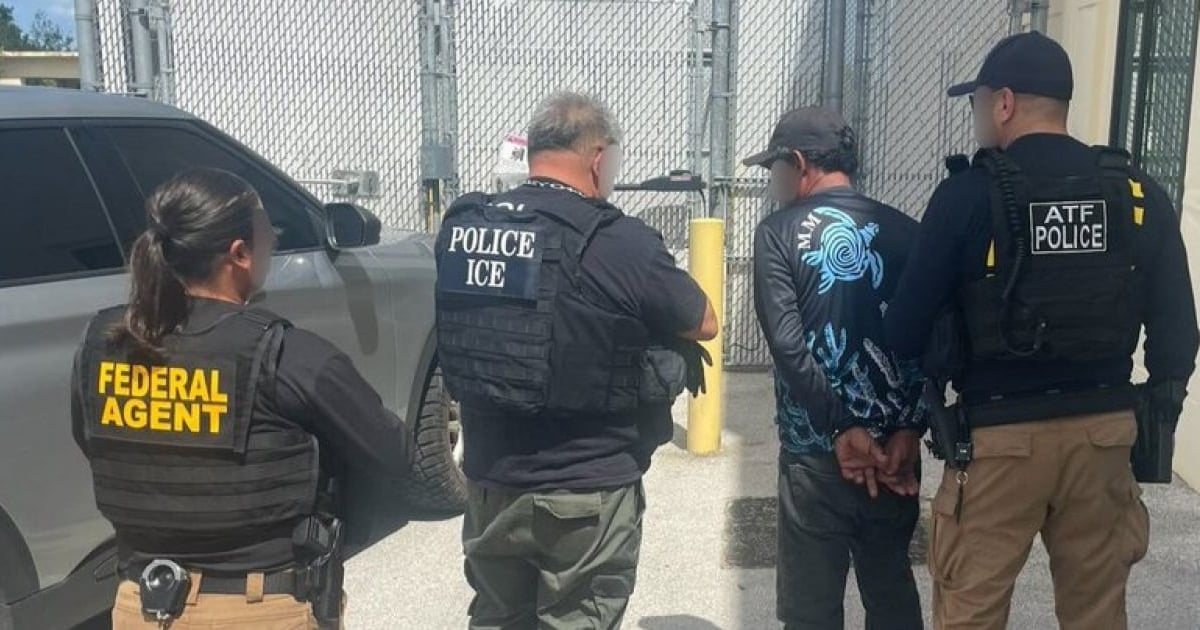
In a significant operational shift impacting immigrants directly, U.S. Immigration and Customs Enforcement (ICE) has eliminated the requirement for agents to fill out the "field operations worksheet" (FOW). This form previously documented the investigative steps taken prior to any arrest. The change, confirmed by officials and former agents to NBC News, has raised serious concerns.
Former operatives, legal experts, and civil rights advocates warn that eliminating this requirement could lead to less planned and more arbitrary mass raids, with a higher potential for racial profiling. For over 15 years, agents were required to complete a worksheet before operations, detailing the target's name, physical description, address, employment, immigration history, and criminal record. This record was not only used to justify the action but also to indicate potential dangers, such as whether the individual might be armed, and served as evidence in case of future legal challenges.
The directive, implemented before summer, was driven by the Department of Homeland Security (DHS), which claimed the FOW was an unnecessary "waste of time." Under President Trump's administration, ICE has faced immense pressure to increase the number of arrests. According to sources cited by NBC, Stephen Miller, then-Deputy Chief of Staff at the White House, urged field offices in May to ramp up detentions, threatening job losses for those failing to meet quotas.
This push for "results" has seemingly influenced the policy shift: less paperwork, more street presence, and broader operations. DHS officially states that there has been no decline in investigative diligence; instead, the FOW has been replaced by "a streamlined technological platform" that consolidates the same information electronically. However, former officials argue that these forms were already completed digitally, suggesting the change does not offer real improvement but rather serves as a pretext to expedite operations.
Critics are alarmed about the practical consequences: raids in parks, neighborhoods, and store parking lots where migrants gather for work, as well as random detentions to boost numbers without distinguishing between those with criminal records and those without. "There was a reason to go after Pedro and not Juan. Now they're interested in numbers, and if you're interested in numbers, you do things like wander around profiling," stated Scott Shuchart, former Assistant Director at ICE.
Immigration attorney Julia Toro highlighted arrests of migrants without any prior investigation to justify them: "It's not like [the agents] know who they're arresting. These are arbitrary detentions," she said. Besides the risks to civil guarantees, the removal of the FOW could endanger the safety of the agents themselves.
Paul Hunker, former Chief Counsel of ICE in Dallas, noted that the forms also documented risks and justified the use of force in court; without this administrative trail, officers' legal exposure could increase. Moreover, the lack of prior documentation could hinder coordination with other local agencies and reduce tactical efficiency.
These changes come as raids are expected in cities such as Chicago and Boston, with recent reports of abrupt and large-scale detentions in Los Angeles and Washington D.C. Witnesses describe these operations as sudden and sweeping. In essence, the removal of the field operations worksheet signals a more aggressive and less structured approach to immigration enforcement.
Key Questions About ICE's New Operational Policies
What is the significance of removing the field operations worksheet?
The removal of the field operations worksheet could lead to more arbitrary and less planned raids, increasing the potential for racial profiling and reducing the safeguards for both immigrants and agents.
How has ICE justified the elimination of the FOW?
ICE and DHS have justified the elimination of the FOW as a modernization effort, claiming it is replaced by a streamlined electronic platform that maintains the same information.
What are the potential risks of this policy change for ICE agents?
Without the FOW, there is an increased legal exposure for ICE agents, as the forms previously documented risks and justified use of force, which are crucial for legal defense.