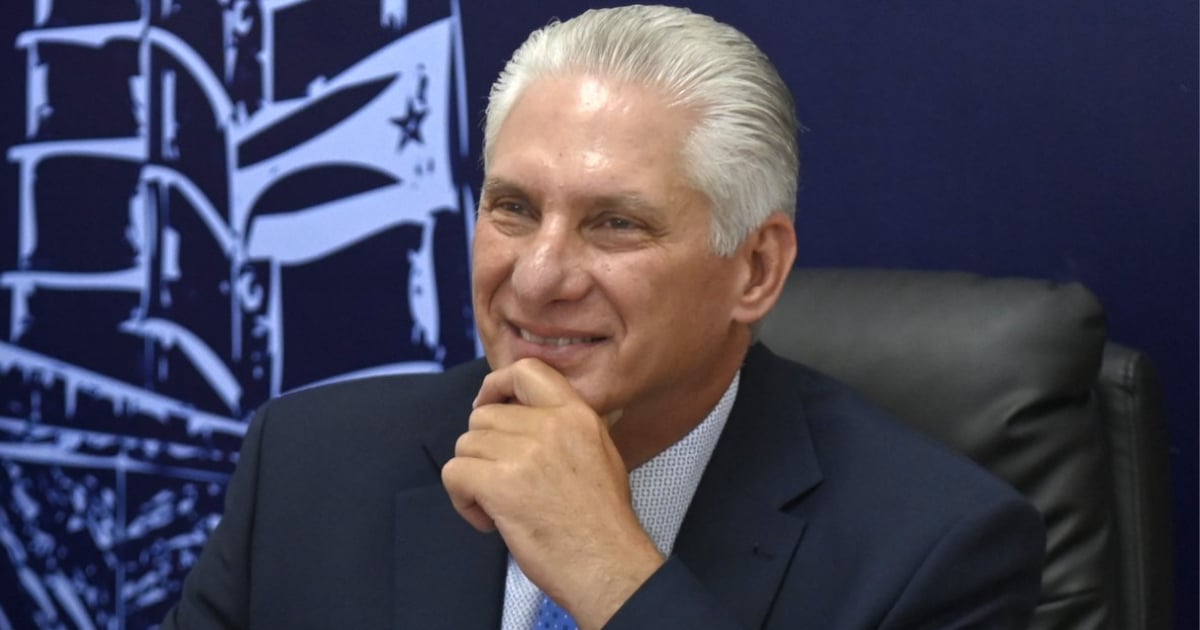
On Thursday, Cuban leader Miguel Díaz-Canel claimed an impressive "swift recovery" of the National Electric System (SEN) after a major blackout that left the entire island in darkness for over 24 hours. This marked the second nationwide outage of 2025 and the fifth in less than a year. "Our gratitude goes to the officials and workers of the Energy and Mines Ministry and the UNE for the record recovery of the SEN," Díaz-Canel stated, while once again blaming the U.S. "blockade" and the outdated plants for the electrical failure.
Despite the official narrative, the harsh reality is that millions of Cubans remain without electricity in their homes. The technical reconnection of the system does not equate to stable service for the population, who continue to face uncertainty and despair over the persistent blackouts.
A Reactive Strategy, Not a Preventive One
Prime Minister Manuel Marrero had mentioned a "well-defined strategy" to tackle the SEN's collapse a day prior, though it was not aimed at preventing such a failure. Marrero was visible at the National Load Dispatch Center during the crisis, while Díaz-Canel stayed silent for hours, focusing instead on commenting about the bombings in Gaza as Cuba remained in the dark.
When Díaz-Canel finally addressed the situation, his statements were limited to encouraging phrases like "hard work is ongoing" or "we stand firm and fighting," which were perceived as hollow rhetoric by a population weary of unfulfilled promises.
The Human Cost Behind the "Record Recovery"
The most recent SEN failure occurred at 9:14 a.m. on Wednesday, triggered by the unexpected shutdown of the Antonio Guiteras thermoelectric plant in Matanzas, the country's most crucial facility. Efforts to restore power relied on units like the one in Mariel, with provinces gradually reconnecting until the network was fully operational by Thursday afternoon.
This latest incident is the fifth national blackout in under a year: three occurred in 2024, including one caused by Hurricane Rafael, and two in 2025. All share a common cause—an outdated infrastructure, lack of investment, and a structural crisis that severely impacts daily life in Cuba.
Beyond the official discourse attempting to frame the situation as a triumph, these massive outages are a daily tragedy: loss of food, damaged appliances, the inability to work or study, and entire families living in constant uncertainty. While Díaz-Canel speaks of "record time," millions of Cubans know the real record is held by an unsustainable electric system that forces the nation to endure broken promises, excuses, and blackouts.
Understanding Cuba's Electrical Crisis
What caused the latest blackout in Cuba?
The most recent blackout was caused by the unexpected shutdown of the Antonio Guiteras thermoelectric plant in Matanzas, a pivotal facility in Cuba's power grid.
How has the Cuban government responded to the electrical outages?
The government has claimed a swift recovery of the electric system, attributing issues to the U.S. blockade and aging infrastructure, but many Cubans remain without stable electricity.
What are the implications of frequent blackouts for Cubans?
Frequent blackouts lead to loss of perishable goods, damage to appliances, disruption of work and education, and a pervasive sense of uncertainty among the population.