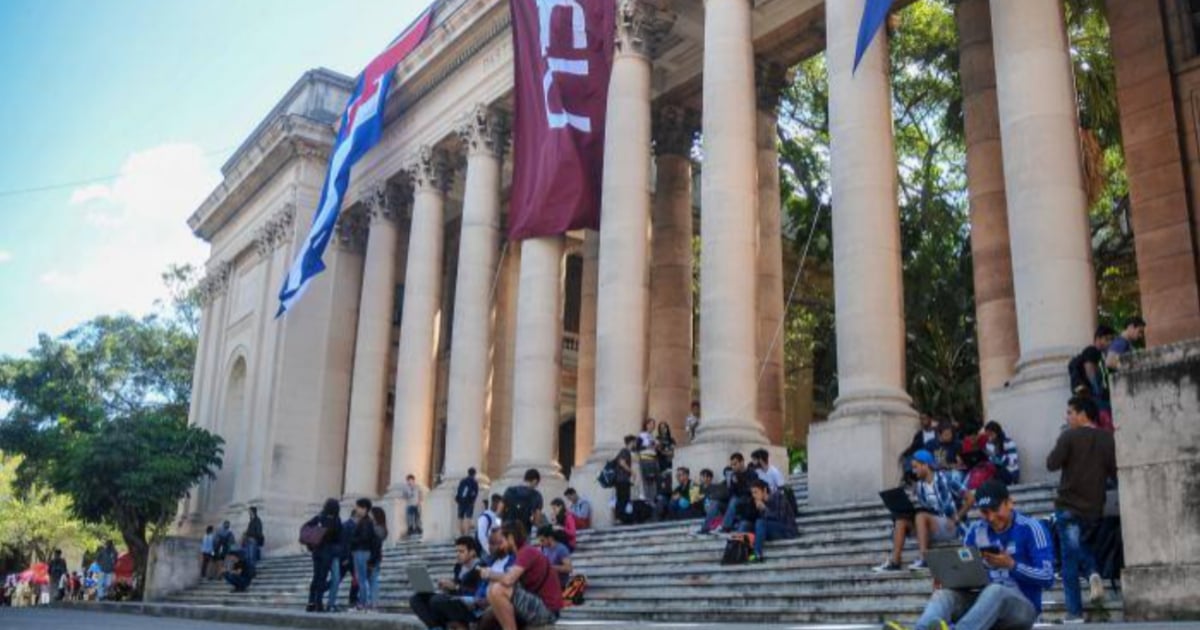
The University of Havana revealed on Wednesday the launch of a "protection system" in response to the energy crisis following the collapse of the National Electric System (NES), which has left the country nearly at a standstill. According to the official statement released by the university, eight-hour patrols will be conducted at the University Hill and SEDER, consisting of five individuals each. Every area is tasked with ensuring the security of its facilities.
These teams, composed of both students and staff, will operate under the guidance of a designated leader. The university environment is thus transformed, effectively becoming an energy fortress.
Within the student residences, services will continue to function, but under strict orders to conserve water and gas. Additionally, a professor will be appointed to oversee scholarships daily, while the Budgeted Units must adjust available food supplies, prioritizing resident students.
University officials stated that the institution possesses a generator to ensure minimal communication capabilities, though this is contingent on "fuel availability," highlighting the vulnerability rather than assuring stability.
These measures will remain in place "until further notice," as teaching, research, and now surveillance duties fall on both students and professors, who are forced to take on roles far removed from their academic pursuits.
In another development, Public Health Deputy Minister, Carilda Peña García, acknowledged on state television that scheduled surgeries and other elective medical procedures have been postponed, with emergency and urgent cases taking precedence. She noted that although the country is not currently facing a critical situation in hospitals, some facilities have less than 24 hours of fuel left, warranting priority attention.
The deputy minister also highlighted that water supply remains a major issue. Several medical institutions were already reliant on water trucks before the blackout due to drought, exacerbating the current crisis.
Similarly, the massive power outage has further strained the already precarious school year. However, local authorities in Villa Clara assure that medical schools and universities are continuing classes as usual.
Impact of Energy Crisis on Cuban Institutions
How is the University of Havana responding to the energy crisis?
The University of Havana has implemented a "protection system" involving patrols by students and staff to ensure security and manage resources during the energy crisis.
What measures are being taken in student residences?
Student residences are maintaining services but under strict conservation orders for water and gas, while food supplies are adjusted to prioritize resident students.
What challenges do hospitals face amid the power outage?
Hospitals are prioritizing urgent and emergency cases, as some have less than 24 hours of fuel left, and water supply remains a significant issue due to the drought.
Are schools in Cuba continuing with classes despite the blackout?
Local authorities in Villa Clara affirm that educational institutions, including medical schools, are continuing their classes as usual despite the blackout.