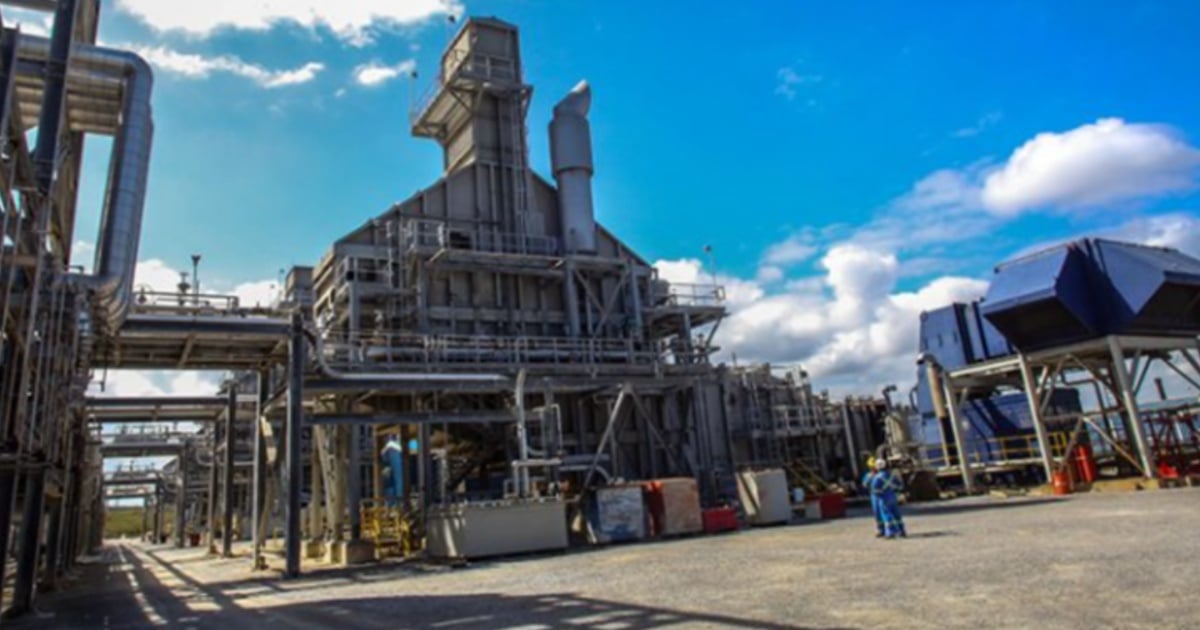
On Wednesday at precisely 1:06 PM, Havana's electrical subsystem crashed, abruptly halting the temporary relief that had reached some neighborhoods in the capital following a widespread blackout affecting the entire nation. This collapse, announced by the city's Electric Company, starkly highlighted the fragility of the makeshift system devised by the government to compensate for the shutdown of the Antonio Guiteras thermoelectric plant, Cuba's largest power station.
Earlier that day, at 11:30 AM, three transmission substations had been energized, enabling the operation of 23 distribution circuits predominantly in the areas of Guanabacoa, Arroyo Naranjo, and Boyeros. However, this relief was short-lived as the disconnection of the subsystem plunged thousands of Havana residents back into darkness.
The energy crisis was triggered by a malfunction at the Antonio Guiteras plant, which left nearly all of Cuba without electricity on Wednesday morning. The Ministry of Energy and Mines (MINEM) reported that Energás Boca de Jaruco had been activated to try and supply power to thermoelectric stations and substations, though it admitted that the process of restoring the National Electrical System would be gradual.
Shortly after, the ministry claimed to have more than 200 MW distributed across Cuba in micro electrical systems to serve "vital objectives" such as hospitals, bakeries, and water pumping stations. Despite the regime's continuous messages of "progress" and "gradual recovery," the harsh reality remains that the system's instability leaves the population in a constant state of uncertainty.
The disconnection of Havana's subsystem underscored that these emergency solutions are merely temporary fixes that fail to address the underlying issue: an outdated, poorly maintained electrical grid that relies on investments that never materialize. Each attempt at restoration becomes a cycle of false hopes followed by renewed disappointments.
For Havana's residents, this collapse is no surprise but rather a confirmation of their daily struggles under a system incapable of providing basic services. The blackout in the capital, coupled with the subsystem's failure, adds to the list of a government's failures that persist in dressing up a crumbling electrical infrastructure with propaganda.
Understanding Cuba's Energy Crisis
What caused the energy crisis in Cuba?
The energy crisis was primarily caused by a malfunction at the Antonio Guiteras thermoelectric plant, which led to a nationwide blackout.
How did the government respond to the blackout?
The government attempted to restore power by energizing transmission substations and activating Energás Boca de Jaruco, though restoration efforts have been gradual and inconsistent.
What areas of Havana were initially energized?
Initially, the areas of Guanabacoa, Arroyo Naranjo, and Boyeros were energized through 23 distribution circuits.