Amidst a nationwide blackout caused by the collapse of Cuba's National Electric System (SEN), President Miguel Díaz-Canel has remained conspicuously absent. While the nation plunged into darkness on Wednesday, Díaz-Canel's focus shifted elsewhere. On his social media account, where he usually posts propaganda or implores citizens to "be creative" in the face of adversity, he chose instead to comment on the bombings in Gaza. He questioned if "barbarism is becoming normalized."
The Cuban populace, grappling with severe domestic issues, quickly took to social media to demand his attention on their struggles. "It's easy to talk about Gaza to divert attention. But Cuba faces its own bombardments: hunger, repression, and fear. Look first at the chaos you oversee," one young man urged. Another commented, "Focus on fixing the mess you've left here; we're living worse than in Gaza. All you do is talk nonsense and jet around." Yet another remarked, "In Fidel's Cuba, there was no need for bombs; you executed and destroyed the country yourselves."
The official account of the Cuban Presidency offered no comment on the blackout, merely sharing a post from the Ministry of Energy and Mines about establishing micro-systems to serve critical areas. Meanwhile, Lis Cuesta has been silent since her return from a trip to Asia, where she expressed joy at coming back to the "rebellious and beautiful island."
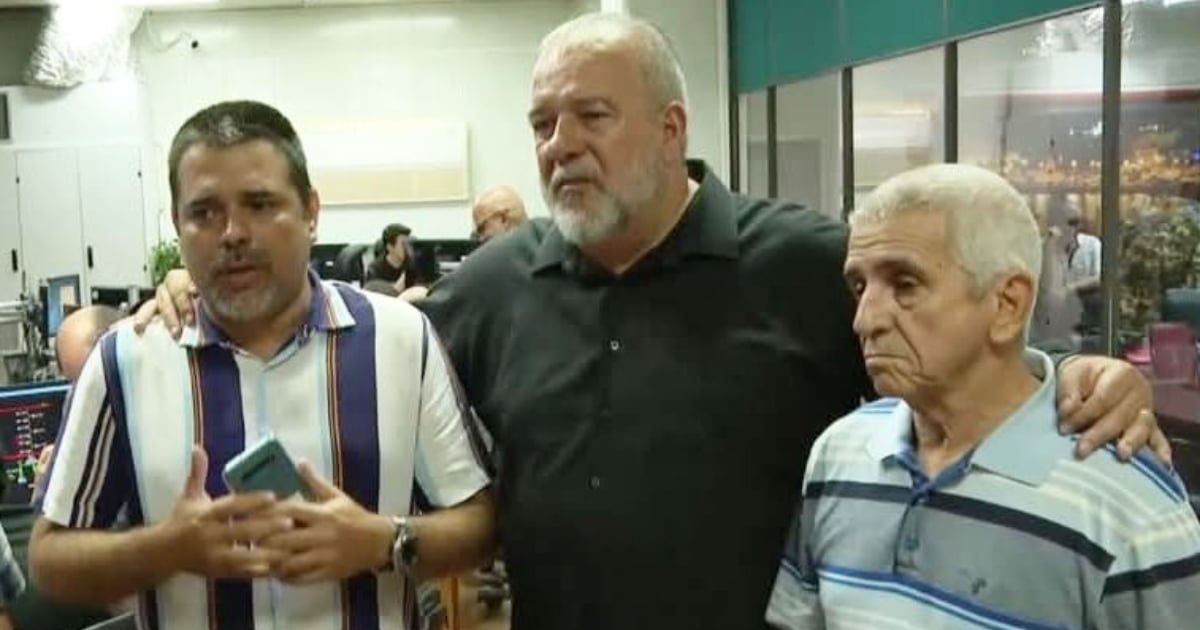
Prime Minister Manuel Marrero, however, has been visible, boasting about a "well-defined strategy" to tackle the SEN collapse, sparked by the unexpected shutdown of the Antonio Guiteras thermoelectric plant. "We have a clear plan to address this situation, and we rely on the professionalism of UNE workers to restore the system as quickly as possible," Marrero posted on his profile.
From the National Load Dispatch office, where Marrero was overseeing the recovery efforts, he promised to keep the public informed, though this assurance rarely translates into swift or effective action. Similarly, Foreign Minister Bruno Rodríguez stated that "the Party and Government are closely monitoring the situation," referring to the SEN disconnection. However, for millions of Cubans suffering from the energy crisis, monitoring isn't enough—they demand real and urgent solutions to ensure electrical stability and ease daily uncertainty.
Ongoing Energy Crisis in Cuba
This recent blackout marks the fifth nationwide outage in less than a year, starkly highlighting the fragility of Cuba's SEN and the regime's inability to resolve a crisis impacting millions. The latest breakdown happened at 9:14 am on Wednesday when the Antonio Guiteras plant, the largest and most crucial on the island, unexpectedly went offline, resulting in a total system failure.
The pattern of recent collapses is telling:
- October 18, 2024: General blackout due to failure at the Antonio Guiteras plant in Matanzas.
- November 6, 2024: Total SEN failure during Hurricane Rafael, which severed connections.
- December 4, 2024: Another national outage from a Guiteras plant malfunction.
- March 14, 2025: Collapse due to a high system oscillation at the Diezmero substation in Havana.
- September 10, 2025: Latest SEN failure following Guiteras' abrupt shutdown.
This new outage comes just days after another major event primarily affected the eastern part of the country. On September 7, a fault in the 220 kV Nuevitas-Tunas line caused a complete disconnection of the electrical system from Las Tunas to Guantánamo, leaving millions without power.
Frequently Asked Questions About Cuba's Energy Crisis
What caused the recent nationwide blackout in Cuba?
The blackout was triggered by the unexpected shutdown of the Antonio Guiteras thermoelectric plant, the largest and most important facility on the island.
How often has Cuba experienced national blackouts recently?
Cuba has experienced five nationwide blackouts in less than a year, underscoring the fragility of its National Electric System.
What are the main criticisms of Díaz-Canel's handling of the crisis?
Critics argue that Díaz-Canel is ignoring domestic issues, focusing on international events while failing to provide solutions to the energy crisis affecting the daily lives of millions of Cubans.