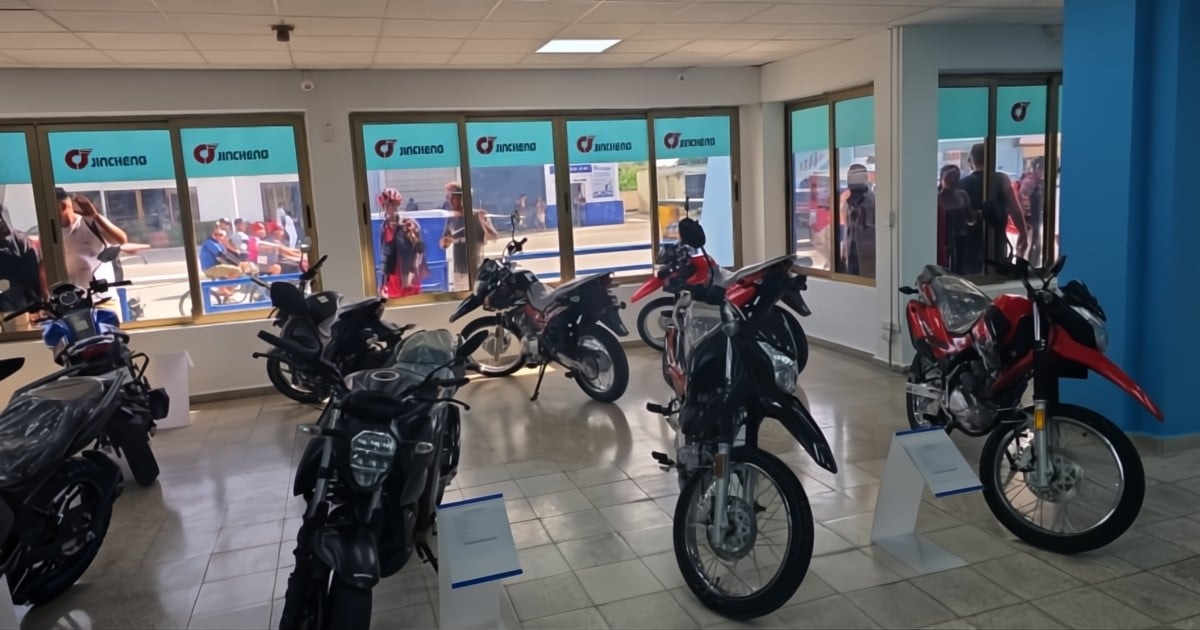
In Cienfuegos, Cuban authorities have dismantled a network profiting from queues for purchasing motorcycles at the Obourke store following numerous citizen complaints. According to the pro-government Facebook page Las Cosas de Fernanda, those involved charged between $200 and $500 for a spot in line.
The report described the operation as a "lucrative business" that turned these queues into a spectacle more fitting for Las Vegas than Cuba. These so-called "line holders" functioned as clandestine brokers for access to in-demand goods.
Specialized forces apprehended 12 individuals who had essentially made the queues their "office." These individuals are now recorded in an automated surveillance system, as stated by the regime's spokesperson. The publication noted that the detainees face official warnings and could be charged with disobedience and illegal economic activity, facing up to 10 years in prison if they reoffend.
Citizen reports on social media led to the official intervention, according to the page affiliated with the Ministry of the Interior. It was emphasized that there will be no leniency for those exploiting the public, asserting that queues should be spaces of patience, not exploitation.
The message concluded with a moralizing tone: "Queues belong to the people, and the people do not tolerate shamelessness," referring to what they termed "white-collar queue criminals." However, the spokesperson neglects to mention that the scarcity, inflation, and overall economic crisis—created and unresolved by the regime—are the root causes of these issues.
Amid the rising market for motorcycles in foreign currency, the Cuban government has authorized new entities to sell these vehicles in an effort to reorganize the sector and manage the increasing demand. The measure has legitimized several distribution companies, including Tiendas Caribe, TRD, CIMEX, and Copextel, which can now sell electric and combustion motorcycles, requiring payment in Freely Convertible Currency (MLC).
Nevertheless, prices have sparked controversy. In Holguín, a GLE brand motorcycle cost nearly $7,000, a price unaffordable for most citizens. These high prices, coupled with the shortage of units, have fueled speculative practices and the emergence of illegal networks selling queue spots.
Meanwhile, the General Customs of the Republic began the official clearance of imported combustion motorcycles months ago, which is seen as a relaxation of import policies. This shift responds to the growing demand for individual transportation in a country with a collapsed public system and limited fuel access.
However, the increase in imported motorcycles has created new logistical bottlenecks. Correos de Cuba directly blamed these imports for the collapse of its warehouse network, claiming that the unexpected volume of motorcycles exceeded its operational capacity.
Understanding the Motorcycle Queue Scandal in Cienfuegos
What led to the dismantling of the motorcycle queue scheme in Cienfuegos?
Citizen complaints on social media about individuals charging for spots in line to purchase motorcycles prompted Cuban authorities to dismantle the network.
What penalties do the apprehended individuals face?
The detainees face warnings and could be charged with disobedience and illegal economic activity, with potential sentences of up to 10 years if they reoffend.
How has the Cuban government responded to the increased demand for motorcycles?
The government authorized multiple entities to sell motorcycles, aiming to manage demand by allowing sales in Freely Convertible Currency through companies like Tiendas Caribe and CIMEX.