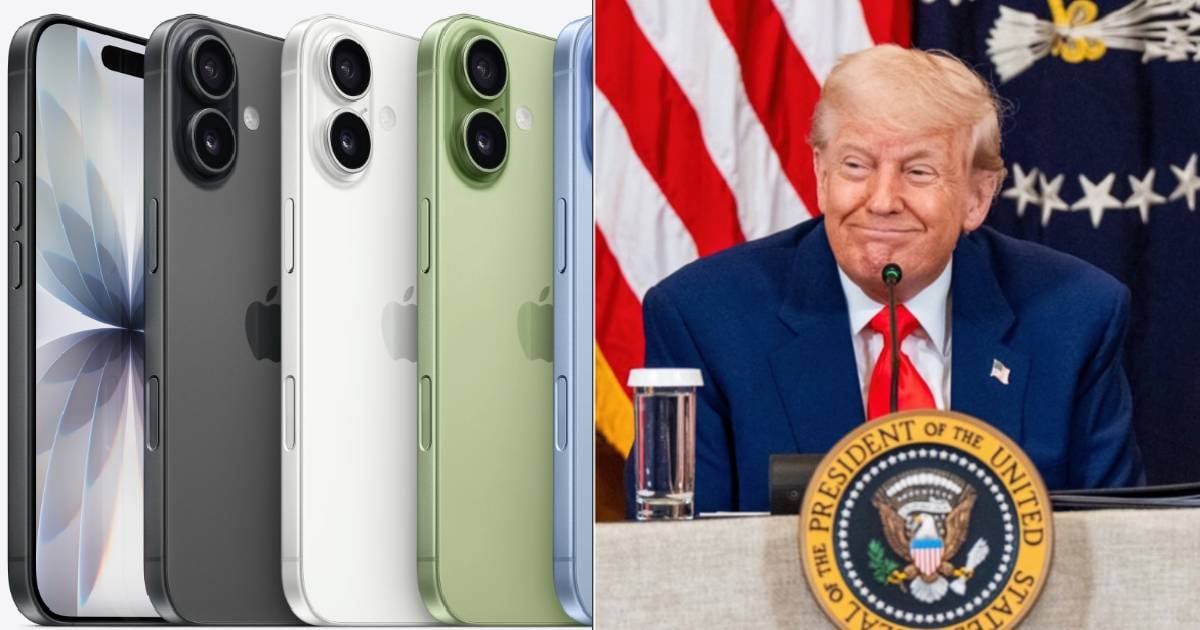
On Tuesday, Apple introduced the eagerly awaited iPhone 17 during an event overshadowed by ongoing trade tensions between the tech giant and President Donald Trump's administration. The U.S. government has been pressuring Apple to shift its manufacturing from Asia to the United States.
The release of the new iPhone models follows Trump's imposition of a 25% tariff on imports from China, affecting products like Apple phones. Although the company has managed to avoid the harshest penalties, analysts predict that Apple may implement its first significant price increase in five years to preserve profit margins.
Traditionally, the base price for an iPhone has been $800, with premium versions costing around $1,200. However, experts anticipate that the latest models could see a $50 to $100 price hike. This potential increase comes just weeks after Google decided to maintain stable prices for its Pixel line.
Features and Innovations in the iPhone 17
While no groundbreaking changes are expected, the iPhone 17 lineup will feature enhancements in camera quality, battery life, and a sleeker design. The standout announcement may be a super-thin model dubbed the iPhone Air, aligning with other product lines from the company.
Apple highlights that the iPhone 17 integrates a more durable design, an advanced camera system, the powerful A19 chip, the new iOS 26, and Apple Intelligence for AI-driven features that enhance daily use. The device boasts a Ceramic Shield 2 for added durability, an 18 MP front camera with Center Stage for group selfies, and a 48 MP rear Fusion camera system with 2x zoom and ultra-wide capabilities.
Additional features include the Clean Up function to remove unwanted objects from photos, the robust A19 chip for all-day battery life, and fast charging that reaches 50% in just 20 minutes. The 6.3-inch Super Retina XDR display with 120 Hz ProMotion promises a smooth experience, while new Apple Intelligence introduces live translation, Genmoji, and writing tools. The device also supports next-gen connectivity with Wi-Fi 7, 5G, eSIM, and satellite messaging.
Political and Economic Pressures on Apple
Despite these innovations, experts point out that artificial intelligence remains a crucial focus. Apple's inability to deliver on all promised innovations in the iPhone 16, such as an advanced version of Siri, resulted in lower-than-expected sales, with updates deferred to future generations.
Concurrently, Apple remains entangled in U.S. trade politics. Both Trump and Secretary of State Marco Rubio have pushed for domestic production, a move experts deem unrealistic due to the potential doubling or tripling of current phone prices.
Apple CEO Tim Cook has attempted to quell White House pressure by pledging $600 billion in U.S. investments and making symbolic gestures toward Trump. These actions have helped Apple avoid more severe retaliations so far.
Despite the uncertainty, Apple's stock has shown signs of recovery following an initial 4% decline earlier this year. A recent court decision also cleared the way for Apple to continue receiving $20 billion annually by keeping Google as the default search engine on its devices.
With the launch of the iPhone 17, Apple faces the challenge of proving it can continue to innovate in the age of artificial intelligence while managing political and commercial pressures from Washington.
FAQs on Apple's iPhone 17 and Trade Tensions
What are the new features of the iPhone 17?
The iPhone 17 includes a more durable design, an advanced camera system, the A19 chip, iOS 26, and AI-driven features. It also offers a Ceramic Shield 2, an 18 MP front camera, a 48 MP rear Fusion camera system, and fast charging capabilities.
How have trade tensions affected Apple's pricing strategy?
Due to tariffs on Chinese imports, Apple may raise iPhone prices for the first time in five years to maintain profit margins, with potential increases ranging from $50 to $100.
Why is Apple under political pressure to move production to the U.S.?
The Trump administration, along with Marco Rubio, has urged Apple to shift production to the U.S. to boost domestic manufacturing, although experts argue this could significantly increase phone prices.