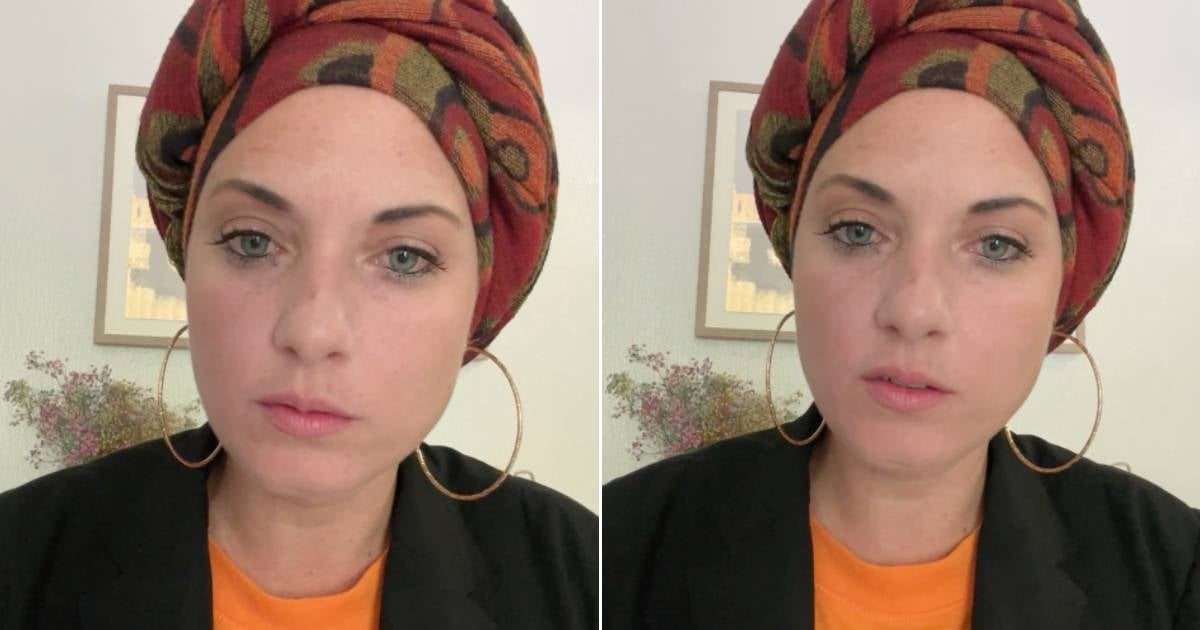
Maylen Díaz Delgado, a Cuban exile and participant in the July 11, 2021 protests, has criticized the Cuban legal system for failing to safeguard her daughter, who has suffered continuous sexual abuse at the hands of her own father. In a Facebook video, Díaz Delgado revealed that the perpetrator—convicted in 2019 and sentenced to four years in prison for sexual crimes against the minor—could potentially regain parental rights three years after serving his sentence, according to a 2023 ruling by a court in Camagüey.
"The Cuban judicial system has allowed my daughter's abuser, after serving his sentence, to regain parental authority. This decision puts her at risk once again," Díaz Delgado declared. She argues that this ruling is in direct conflict with Cuba’s own legal framework.
Legal Contradictions and Feminist Support
Both the Penal Code and the new Family Code, along with the nation's Constitution, stipulate that individuals who commit sexual offenses against minors should permanently lose parental responsibilities. The feminist platform Yo Sí Te Creo Cuba has supported Díaz Delgado's claims, highlighting that Article 43 of the Penal Code mandates the permanent loss of parental rights in such situations. Furthermore, Articles 190 and 191 of the Family Code reinforce this provision, while Article 86 of the Constitution emphasizes that the best interests of the child must be prioritized in all judicial actions.
The organization warned, "Easing these legal standards opens the door to the re-victimization of children and adolescents."
Struggles in Exile and Institutional Silence
Since leaving Cuba, Díaz Delgado has encountered numerous challenges, including difficulties obtaining medical evidence, refusals to secure legal representation, and, most notably, an institutional silence that has obstructed the reopening of her case. "I have sought help both within and outside of Cuba to have the ruling reviewed, but the response is always evasive," she lamented.
Díaz Delgado is demanding that the principle of the child's best interest be upheld and that any rulings contradicting child protection laws be reassessed. She has addressed a letter to the Supreme People's Court, the Council of Ministers, and leader Miguel Díaz-Canel, requesting a review of the decision.
Broader Support and Challenges
The Gender Observatory of the Alas Tensas magazine (OGAT) has publicized her complaint, gaining the backing of Cuban feminist organizations. These groups have reiterated their readiness to offer legal and psychological support to mothers and families in similar situations.
In her life in exile, Díaz Delgado has faced additional hurdles. Recently, the U.S. Citizenship and Immigration Services (USCIS) dismissed her asylum application, informing her that the next step will be a "credible fear" interview—a procedure that could ultimately lead to her deportation.
Frequently Asked Questions About Legal Rights in Cuba
What legal actions has Maylen Díaz Delgado taken regarding her daughter's case?
Maylen Díaz Delgado has appealed to the Supreme People's Court, the Council of Ministers, and Miguel Díaz-Canel for a review of the decision that could restore parental rights to her daughter's abuser.
What do Cuban laws say about parental rights for those convicted of sexual crimes?
Cuban laws, including the Penal Code and Family Code, stipulate the permanent loss of parental rights for individuals convicted of sexual offenses against minors.
How has the feminist community in Cuba responded to Díaz Delgado's situation?
Feminist organizations in Cuba have supported Díaz Delgado's claims and have offered legal and psychological assistance to those facing similar issues.
What challenges has Díaz Delgado faced in her asylum process in the United States?
Her asylum application was rejected by USCIS, and she is now facing a "credible fear" interview that might lead to her deportation.