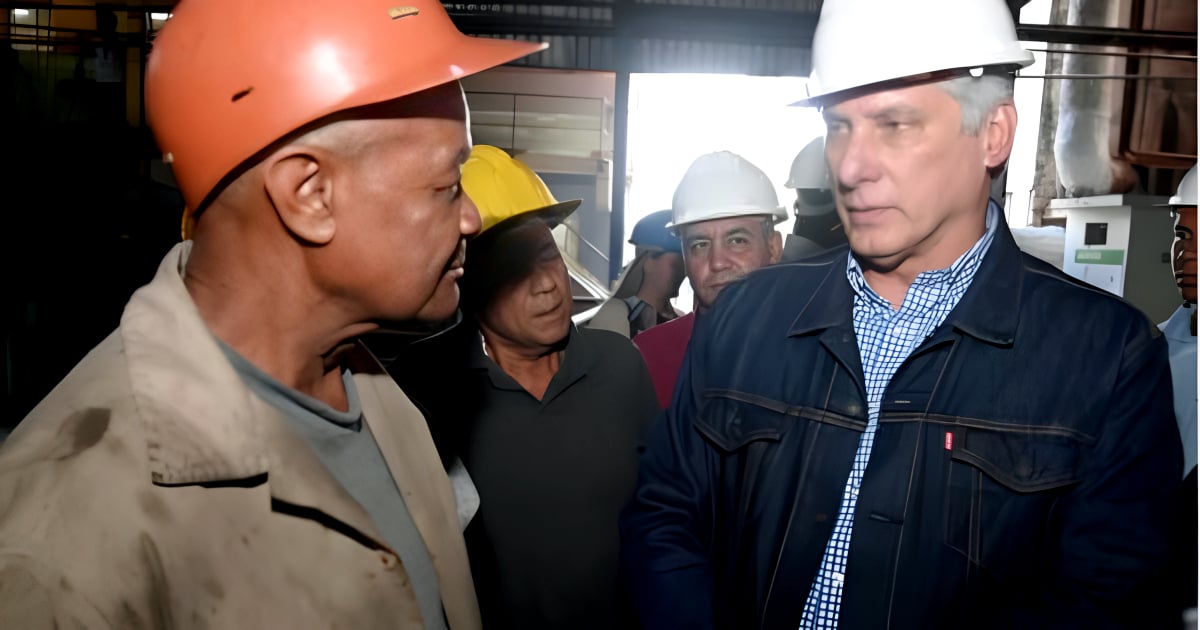
Miguel Díaz-Canel addressed the tragic death of Carlos Rafael López Ibarra, a 33-year-old turbine operator who succumbed to severe burns following a workplace accident at the Antonio Maceo Grajales thermoelectric plant, known as "Renté," in Santiago de Cuba. On Monday, the Cuban leader expressed his condolences on social media, stating, "I join the profound sorrow of the authorities and people of Santiago de Cuba for the passing of Carlos Rafael López Ibarra... Condolences to family, colleagues, and friends," offering little more than sympathy.
The incident occurred on August 31 when a steam pipe malfunctioned during the startup of unit 5, releasing high-temperature steam that inflicted burns on 89% of López Ibarra’s body. He passed away on September 8 after several days in critical condition. Díaz-Canel’s message came amidst a severe energy crisis characterized by frequent collapses of the National Electric System (SEN). Just hours before his return from a tour of Asia, the eastern region of Cuba experienced a widespread blackout, exacerbating the already long power outages and sparking protests in Santiago de Cuba.
Official condolences have failed to quell public dissatisfaction. While the virtues of the deceased young man are praised, Cubans point to the absence of structural solutions for the crumbling electrical infrastructure, where technical failures, improvisation, and poor working conditions pose lethal risks to workers. López Ibarra's tragedy has become emblematic of the human cost of the SEN's deterioration, which cannot be addressed with mere expressions of mourning but requires profound changes in an infrastructure on the brink of collapse.
Unconfirmed Reports of Hospital Blackouts
Following the confirmation of López Ibarra's death, unverified reports emerged on social media, adding further tension to the situation. Independent journalist Yosmany Mayeta Labrada reported that, according to witnesses, the Juan Bruno Zayas hospital—where López Ibarra received treatment—experienced two power outages during his time in intensive care, with the emergency generator allegedly taking over 20 minutes to activate.
According to these accounts, the delay might have impacted the operation of life support equipment at a critical moment, potentially hastening the tragic outcome. These claims have not been officially verified, and the recorded cause of death was "severe generalized sepsis due to burns on 89% of the body."
The potential mix of a deadly workplace accident and electrical failures in a hospital fuels doubts and anger among family and colleagues. Although these are unconfirmed rumors, they reflect the growing distrust in a healthcare and energy system in crisis, where structural precariousness endangers lives.
Understanding the Energy Crisis and Worker Safety in Cuba
What caused the accident at the Renté thermoelectric plant?
The accident was caused by a malfunctioning steam pipe during the startup of unit 5, which released high-temperature steam and severely burned the operator, Carlos Rafael López Ibarra.
How has the Cuban government responded to this tragedy?
Cuban leader Miguel Díaz-Canel offered condolences via social media, expressing sympathy but not addressing the underlying issues of the energy system's failures.
What impact has the energy crisis had on Cuban society?
The energy crisis has led to frequent blackouts and public protests, highlighting the Cuban government's inability to provide stable power and prompting widespread dissatisfaction among citizens.