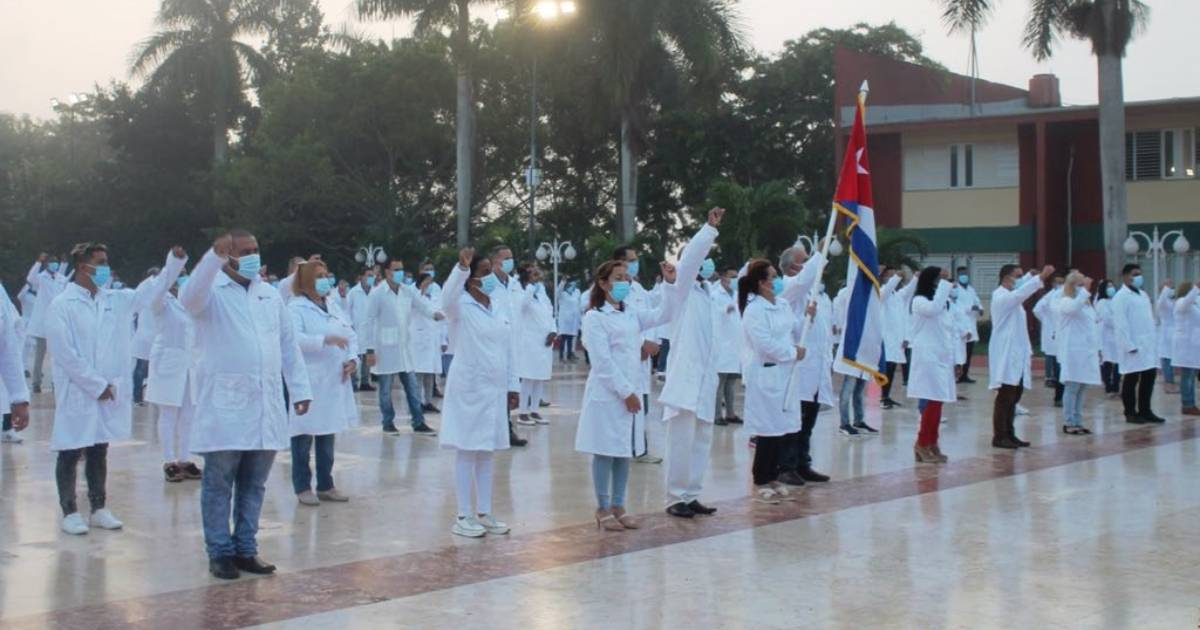
Dr. Antonio Guedes, a Cuban physician who has lived in exile in Spain since 1981, has dismantled the myth of Cuba being a "medical powerhouse" in an interview with Spanish outlet El Debate. He criticized the regime's medical brigades as mere schemes of labor exploitation, political propaganda, and espionage. "It's a lie that the communist revolution turned Cuba into a medical powerhouse. Without understanding the exploitation, you understand nothing," stated Guedes, originally from Matanzas, who was expelled from medical school in his fourth year for being Catholic rather than Marxist. His account adds to the rising chorus of Cuban doctors, both on and off the island, decrying the abusive conditions of these missions.
Guedes fled to Spain on Christmas Eve 1981 with his pregnant wife and young daughter. After validating his studies and completing his training, he served nearly 30 years as a family doctor and health center director in Madrid. Now, through his book "From Saying to Doing: The Legend of Healthcare in Cuba 1902-2024," he debunks the regime’s propaganda using official and international data. "The Cuban government has always repeated the mantra that the country is a medical powerhouse, but it never was, not even in the 70s and 80s with Soviet support," he declared.
The Hidden Truth Behind Cuba's Medical Missions
Guedes explains that the regime manipulated statistics, concealed shortages, and relied on pre-1959 infrastructure and massive external subsidies, initially from the Soviet Union and later from Venezuela. He points out that the real face of the medical missions is one of labor exploitation and social control. "Professionals have up to 80% of their salaries withheld, and many work under surveillance, coercion, or indoctrination," he revealed.
These statements align with numerous reports. The European Parliament has described the brigades as a form of "modern slavery"; Cuban doctor Daycee Zamora disclosed that physicians endure indoctrination, threats, and forced exile; and accounts from Italy have reported extreme surveillance and penalties, including an eight-year ban on returning to Cuba if they abandon the missions.
Cuba's Medical Brigades: A Lucrative and Political Tool
Official data confirm that Havana earns over $4.9 billion annually by exporting approximately 26,000 health workers to more than 50 countries, while in Cuba, thousands of patients face medicine shortages, dilapidated hospitals, and a deep healthcare crisis. For Guedes, these brigades are not only a lucrative business but also an intelligence tool. "Foreign students are indoctrinated, blackmailed, and then sent back to their countries as regime allies or informants. It's not solidarity; it's political manipulation and espionage," he said.
Guedes concludes that the myth of Cuba's medical strength can only be maintained through propaganda and the compliance of international organizations that perpetuate statistics manipulated by the regime itself.
Understanding the Reality of Cuba's Medical System
What is the reality behind Cuba's medical missions?
Cuba's medical missions are described as schemes for labor exploitation and social control, where professionals face withheld salaries and surveillance.
How does the Cuban government maintain the myth of medical power?
The Cuban government perpetuates the myth through propaganda and manipulated statistics, often with the complicity of international organizations.
What financial impact do Cuba's medical brigades have?
Cuba's medical brigades generate over $4.9 billion annually by exporting health workers to more than 50 countries.
What are the conditions for Cuban doctors in these missions?
Cuban doctors in these missions face indoctrination, threats, and potential exile, with many working under strict surveillance.