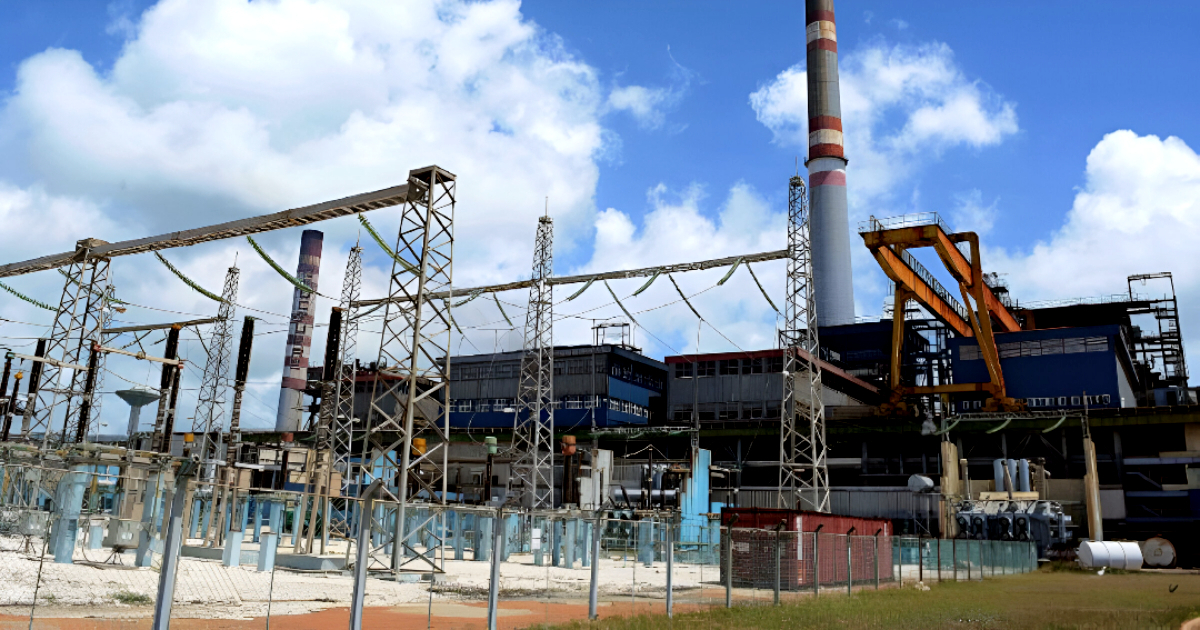
The provincial newspaper Sierra Maestra, an official publication of the Cuban Communist Party in Santiago de Cuba, initially reported on social media that a sabotage was responsible for the collapse of the National Electric System (SEN) in Eastern Cuba. Within minutes, this report was deleted and replaced with a much shorter statement that made no mention of any alleged intentional actions.
The original post cited statements from Santiago de Cuba's governor, Manuel Falcón Hernández, shared on his Telegram channel. According to that account, "unscrupulous individuals" had sabotaged facilities in Nuevitas, leading to the triggering of the 220 kV Nuevitas-Tunas line and, consequently, a total disconnection of the power system from Las Tunas to Guantánamo. The incident was described as a "cowardly and criminal act" against the welfare of the people.
However, the note soon vanished from Sierra Maestra's Facebook page, replaced by a brief message stating only that the eastern region had been reconnected to the SEN near midnight and that electricity services were gradually being restored in the area. This abrupt change sparked questions on social media, even among pro-government figures. The Vice President of the Cuban Journalists Union (UPEC), Francisco Rodríguez Cruz, commented under the new post, asking, "What was this?" and included a screenshot of the original note referring to sabotage.
This confusion contrasted sharply with earlier reports by other official sources. On social media, journalist Lázaro Manuel Alonso had initially attributed the system disconnection to "adverse weather conditions" in the area and the low power generation capacity in the region at the time of the collapse.
The blackout began on the night of September 7 following the triggering of the Nuevitas-Tunas line, leaving millions of Cubans without electricity for more than six hours. In Santiago de Cuba, the power outage led to a pot-banging protest in the streets, with residents chanting "We want power!"
This episode not only highlights the SEN's fragility, which suffers from a chronic generation deficit, but also underscores the contradictions within the official narrative, unable to provide a clear and coherent explanation for the collapse that impacted the entire eastern region of the country.
Understanding the Power Crisis in Eastern Cuba
What caused the power outage in Eastern Cuba?
The power outage in Eastern Cuba was initially attributed to sabotage by unscrupulous individuals targeting facilities in Nuevitas, according to official sources. However, this claim was later retracted, and other reports cited adverse weather conditions and low power generation as the causes.
How did the public react to the blackout?
In Santiago de Cuba, the blackout led to public demonstrations, including pot-banging protests in the streets with residents demanding the return of electricity.
What does this incident reveal about Cuba's power system?
This incident exposes the fragility of Cuba's National Electric System, which is plagued by a chronic deficit in power generation. It also underscores inconsistencies in the official narrative regarding the causes of the collapse.