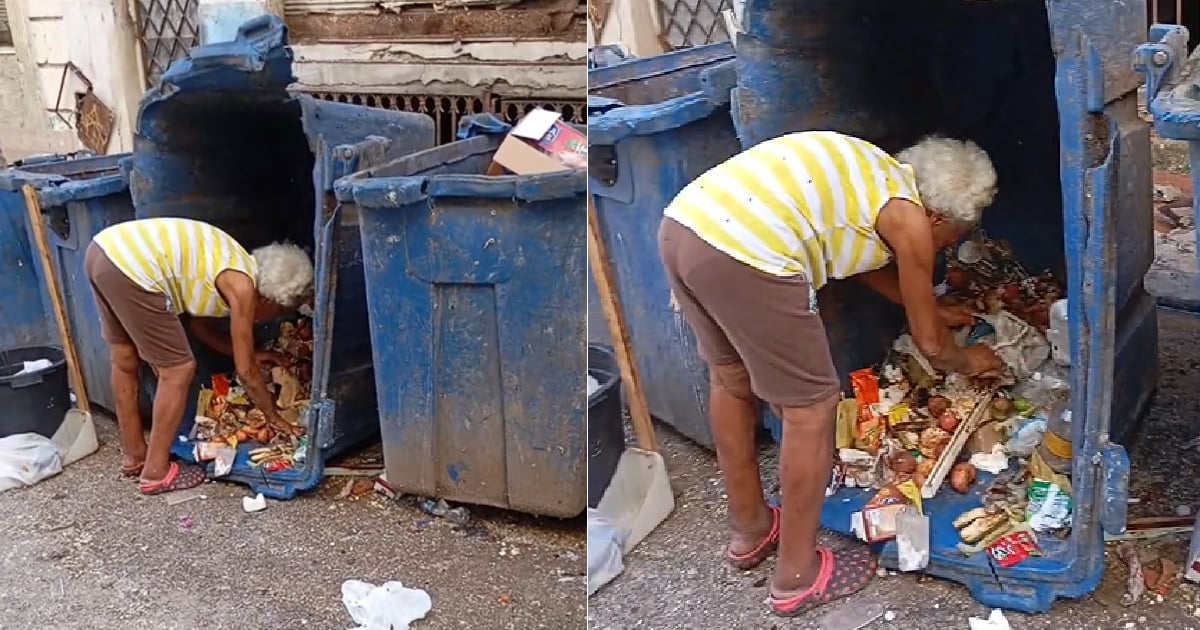
A recent nationwide survey conducted by the Food Monitor Program (FMP) has unveiled staggering results: 94% of Cuban households express skepticism towards the government's willingness or capability to address the ongoing food crisis. A mere 6% of respondents believe that official efforts have been directed towards enhancing food security.
The study, detailed in the report “(Re)living the Crisis in Cuba: Anatomy of a Fractured Society,” highlights the profound distrust citizens have in state institutions. It paints a grim picture of unprecedented structural deterioration, marked by what it terms as a "polycrisis"—encompassing economic, energy, demographic, monetary, and social dimensions.
This report underscores that hunger, poverty, and insecurity have become widespread, with independent estimates suggesting over 80% of Cubans live in poverty. Between 2022 and 2023, deaths due to malnutrition surged by 74%, ranking among the leading causes of mortality. The incidence of diseases such as diabetes, hypertension, cardiovascular issues, anemia, and chronic gastritis has risen, all linked to poor nutrition.
Alarming Health and Social Impacts
The FMP warns that dietary habits have shifted towards empty calories and ultra-processed foods, creating a scenario of hidden hunger that jeopardizes the long-term health of millions of Cubans. The report also connects food insecurity with significant social phenomena. Mass emigration, which started in the 1990s, has sharply increased, with the nation losing at least 18% of its population. Meanwhile, the birth rate has plummeted to historic lows, at just 7.2 births per 1,000 inhabitants, with a quarter of the population over 60 years old. By 2030, it's projected that older adults will constitute 30% of the population, positioning Cuba as one of the most aged countries in Latin America.
Psychosocial and Criminal Consequences
The survey and report also reflect the psychosocial toll of a life marked by repeated crises. The FMP reports a rise in anxiety, depression, and suicides. In 2020, there were 1,548 self-inflicted deaths, nearly 100 more than the previous year, with municipalities like Diez de Octubre experiencing a 23% increase in recent years.
Living under constant food insecurity and sustained hardship not only erodes physical health but also depletes the emotional and mental capacity to cope daily. This decline is mirrored in the rising use of homemade and synthetic drugs, particularly among teenagers. Medical studies from 2023 showed that 80% of synthetic drug users were aged 15 to 18, and 20% were between 12 and 14. A year later, the Ministry of the Interior reported 83 cases related to drug trafficking and consumption, involving 51 young people and 72 minors.
Growing Homelessness and Crime
The report also highlights the expansion of homelessness. While the Ministry of Labor and Social Security reported 3,690 homeless individuals until 2024, independent sources estimate that by 2025, over 1.2 million Cubans could be without a home. Many elderly adults live in overcrowded and extreme poverty conditions, with some dying on the streets due to starvation.
Crime is on the rise as well. The Cuban Citizen Audit Observatory recorded 1,317 crimes in 2024, a 50% jump from the previous year, with up to three daily crimes related to thefts and assaults. The report indicates that socioeconomic decay and institutional failure create a fertile ground for criminal activity.
Struggles and Survival
Beyond the statistics, the FMP gathers testimonies that reflect the collective fatigue. A 72-year-old woman from Havana remarked, “In the 90s, there was solidarity, we helped each other more. Now everyone is out for themselves, trying to get by. It's as if returning to the crisis has made us more miserable.” A 64-year-old man from Guantánamo summed it up: “I feel the country is more broken than ever, and there's no desire to move forward.”
The report concludes that Cuban society has been forced to normalize the crisis as a way of life, with a regressive adaptation that encourages individual survival, opportunism, and the loss of collective projects. According to the FMP, the more citizens become accustomed to each crisis, the more enduring the marginalizing system becomes.
The Food Monitor Program has persistently warned about the worsening food insecurity in Cuba. One of its recent studies indicated that an increasing number of Cubans eat only once a day, a pattern reflecting extreme dietary deprivation and the collapse of the food distribution system.
In addition to hunger, there have been reports of the appalling conditions under which many people cook their meals. Around 9 million Cubans cook under precarious conditions, lacking stable access to gas, electricity, or potable water, which heightens health risks and illustrates the decay of domestic infrastructure.
The organization has also documented the exorbitant costs of basic food. According to its estimates, a Cuban couple needs at least 40,000 pesos just to eat, not including other essential expenses, rendering nutrition an unattainable privilege for most households.
The impact on public health has also been highlighted. The regular consumption of empty calories and ultra-processed products has led to an increase in diseases like diabetes, hypertension, anemia, and chronic gastritis. The Food Monitor Program warned of the growing risk of diseases stemming from the food crisis, including conditions linked to severe malnutrition already affecting millions.
Impact of Food Crisis on Cuban Society
What is the main finding of the Food Monitor Program's survey?
The survey found that 94% of Cuban households distrust the government's efforts to solve the food crisis.
How has the food crisis affected health in Cuba?
The food crisis has led to a rise in malnutrition-related diseases such as diabetes, hypertension, anemia, and chronic gastritis.
What are some of the social impacts of the food crisis in Cuba?
The crisis has contributed to increased emigration, a declining birth rate, homelessness, and a rise in crime and drug use.
How has the Cuban population adapted to ongoing crises?
Cuban society has normalized the crisis as a way of life, leading to individual survival strategies and a decline in collective efforts.