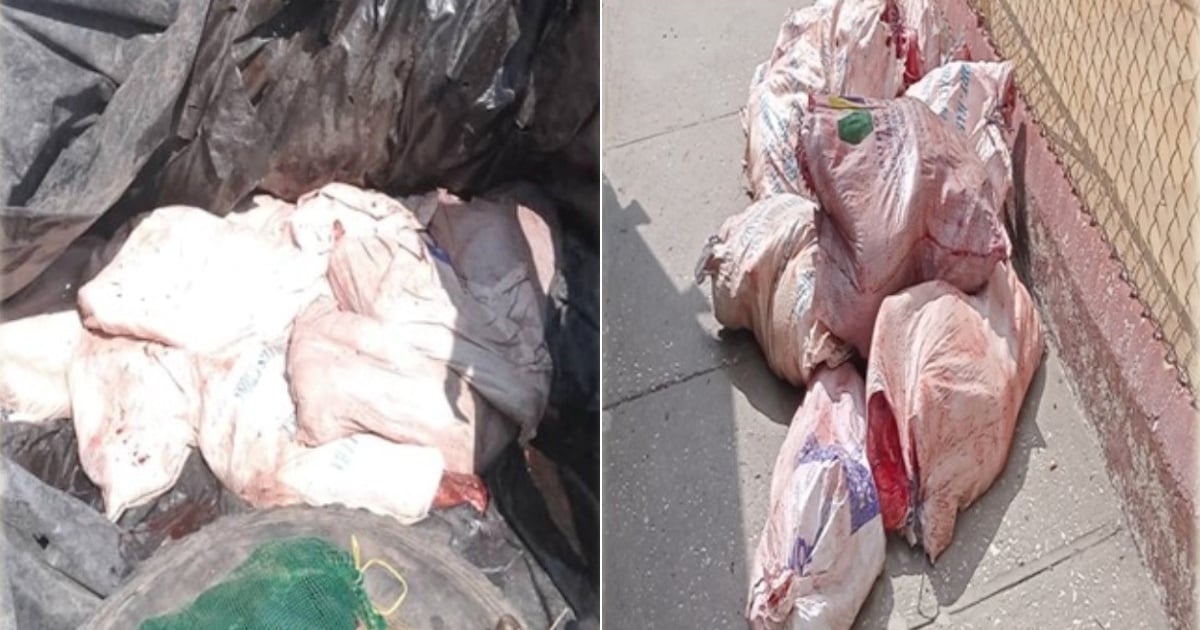
Two individuals from Laguna Blanca in the Contramaestre municipality of Santiago de Cuba have been apprehended while transporting hundreds of pounds of beef in a truck. The cargo, cleverly concealed under a heap of vegetables and root crops, was reportedly intended for illegal sale, as revealed by the pro-government Facebook page Héroes del Moncada. The operation was carried out by members of the National Revolutionary Police (PNR) in the Guaninao area.
During a thorough inspection, authorities uncovered more than 700 pounds of beef, allegedly obtained from illegal slaughtering, which is considered a serious offense under Cuban law. However, the news has sparked a heated social debate on social media, highlighting public frustration, chronic food shortages, and perceptions of institutional impunity, instead of a unanimous condemnation.
The Dilemma of Law vs. Necessity: Public Voices
The post generated a flood of comments, exposing a divided society torn between those demanding justice for affected livestock owners and others viewing these actions as a desperate response to dire poverty.
Many advocated for strict action against the crime, particularly from the perspective of cattle owners: “This isn't fair; they take what others have worked hard to raise. Anyone with children knows you need to provide food, but not like this," "The animal owners were left in tears. It's something all cattle farmers suffer: we raise them, and they're taken just like that," and "Theft is never a justification to solve a problem. Those who work honestly would never see it as an option," were some opinions shared.
Conversely, voices highlighted the context of hunger, corruption, and structural inequality as underlying causes. “Thanks to these people, we can barely feed ourselves. They don't even send anything for the children anymore; now all they distribute is soy mince and skin," "The biggest thief lives in the palace and spends his life traveling the world with his family," and "If beef were legalized and sold like in any normal country, there wouldn't be illegal slaughters," others argued.
Another commentator noted, “What exists in this country is hunger. They should distribute that meat to children and pregnant women. But we all know where it’s going," adding, “In this country, everything is illegal. How do you make a living? Even children's milk has to be acquired outside the system."
The Red Meat Conundrum: A Symbol of Systemic Failure
The incident involving the 700 pounds of beef is not an isolated event but a symptom of a collapsing system. In Cuba, beef is more than just food—it symbolizes scarcity, strict government control, repression, and for some, resistance.
While the state attempts to portray these operations as victories in the fight against illegality, the unseen figures of children without milk, desperate parents, and plundered farmers reveal a much harsher reality. "Ask inmates why they're in prison, and 99% will say it's because of beef or horse meat. It's a sign of widespread hunger," lamented one commentator.
Another pointed out the irony in the official discourse: “Not even a smidge of leniency towards crime... Then there would be no leaders left.”
The events in Contramaestre are more than just a police case. They highlight the contradictions between legality, morality, and survival in a Cuba where the lines between what is right and what is necessary have blurred. A punitive approach, without deep reforms, will not solve a structural problem. As one user expressed, “Legalize the meat, and the black market will disappear.”
Questions About Cuba's Beef Crisis
Why is transporting beef illegally a serious offense in Cuba?
In Cuba, illegal slaughtering and transporting beef are serious offenses due to strict state controls over meat production and distribution. This is part of broader efforts to manage resource scarcity and prevent black market activities.
What sparked the social debate following the arrest of the two individuals?
The social debate was fueled by public frustration over chronic food shortages, perceived institutional impunity, and the wider context of hunger and corruption, rather than a unified condemnation of the crime.
How does the beef issue reflect broader systemic problems in Cuba?
The beef issue is symptomatic of systemic failures in Cuba, where food scarcity, government control, and economic desperation create an environment where illegal activities become survival strategies.