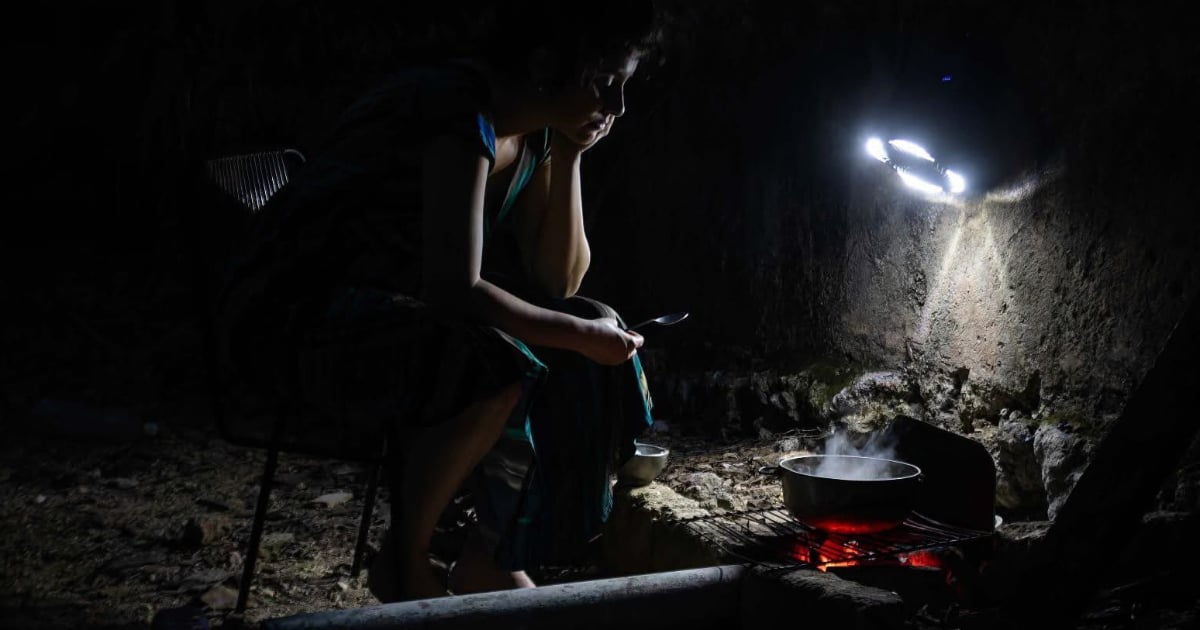
Cuba's energy crisis shows no signs of easing, as the latest figures from the Unión Eléctrica (UNE) reveal the country's ongoing and relentless electrical collapse, affecting millions of citizens day and night. According to Sunday's report, the electrical service experienced disruptions throughout the entire previous day, continuing into this morning. The peak impact reached 1,809 MW at 8:30 pm, coinciding with the highest demand period, underscoring the National Electrical System's (SEN) failure to maintain even a basic level of stability.
This morning, the available generation capacity was a mere 1,650 MW against a demand of 2,885 MW, leading to an immediate shortfall of 1,250 MW. By midday, the deficit was estimated at around 1,300 MW. During peak hours, the UNE projected a demand of 3,450 MW, with only 1,810 MW available, resulting in a potential shortfall of 1,640 MW and affecting up to 1,710 MW of the population's needs.
Structural Deficits Persist
Breakdowns in Nuevitas, Felton, and Renté, combined with maintenance stoppages in Santa Cruz, Cienfuegos, and Felton itself, exacerbate the crisis. Additionally, 335 MW are restricted due to thermal generation limits, with an even more alarming 623 MW unavailable in distributed generation because of fuel and lubricant shortages.
Havana in Darkness
The Electric Company of Havana confirmed that the capital experienced a continuous 24-hour blackout, affecting all six sectors into which the city is divided for blackout planning. As of the report's closure, power had yet to be restored.
Green Promises Amidst Darkness
The report highlighted the contribution of the 28 photovoltaic solar parks, generating 2,812 MWh with a maximum output of 523 MW. However, despite being touted as an achievement, this production remains woefully insufficient given the scale of the crisis, which subjects the entire country to endless blackouts.
A Suffocating Crisis and a Government Without Answers
Official data paints a bleak picture that can no longer be hidden: blackouts exceeding 20 hours, fuel shortages, and an outdated thermoelectric system. The population suffers with no real prospects for improvement, as the government continues to release technical reports that, instead of offering solutions, serve as death certificates for the already fragile SEN stability.
Amid the daily suffering of millions of Cubans, the official rhetoric tries to sugarcoat the situation with solar statistics in a landscape dominated by darkness, distrust, and social desperation.
Understanding Cuba’s Ongoing Power Struggles
What is causing the severe power outages in Cuba?
The power outages in Cuba are primarily due to an outdated and inefficient electrical system, compounded by breakdowns in key power plants and maintenance stoppages. Additionally, there are significant limitations in fuel and lubricant supplies, which further exacerbate the crisis.
How is the Cuban government addressing the power crisis?
While the government has highlighted contributions from solar energy initiatives, these efforts have been insufficient to meet the country's energy demands. The official reports often lack actionable solutions, focusing instead on technical details.
What are the implications of the ongoing power crisis for Cuban citizens?
The ongoing power crisis significantly impacts daily life in Cuba, leading to extended periods without electricity, which disrupts basic services and increases public discontent and social despair.